Atacama Desert – See The Most Flattest Place On Earth

A hand in the sand, inspired by the natural surroundings of the Atacama Desert

The Atacama Desert is an arid yet cool area, which covers 990-mile long land in northern Chile. It is arguably the driest place on earth and has been widely compared to Mars due to its diverse geological formations. NASA has been using the Atacama Desert as a research area for several years and major movies such as Space Odyssey. Voyage to the Planets have been filmed here.

Let’s explore this wondrous otherworldly region in a little more detail

Where is the Atacama Desert?

The Atacama Desert is present in the western direction of the Andes mountain range on the Pacific coast. More specifically, it is located between the mountains that demarcate the drainage basin of Salado-Copiapó and the southern end of Loa River. While Cordillera de la Costa is present on the desert’s western side, its eastern side has the Cordillera Domeyko or the Andes foothills. The topography of the Atacama Desert mainly comprises salt pans, alluvial fans, pebble accumulations, and dunes.
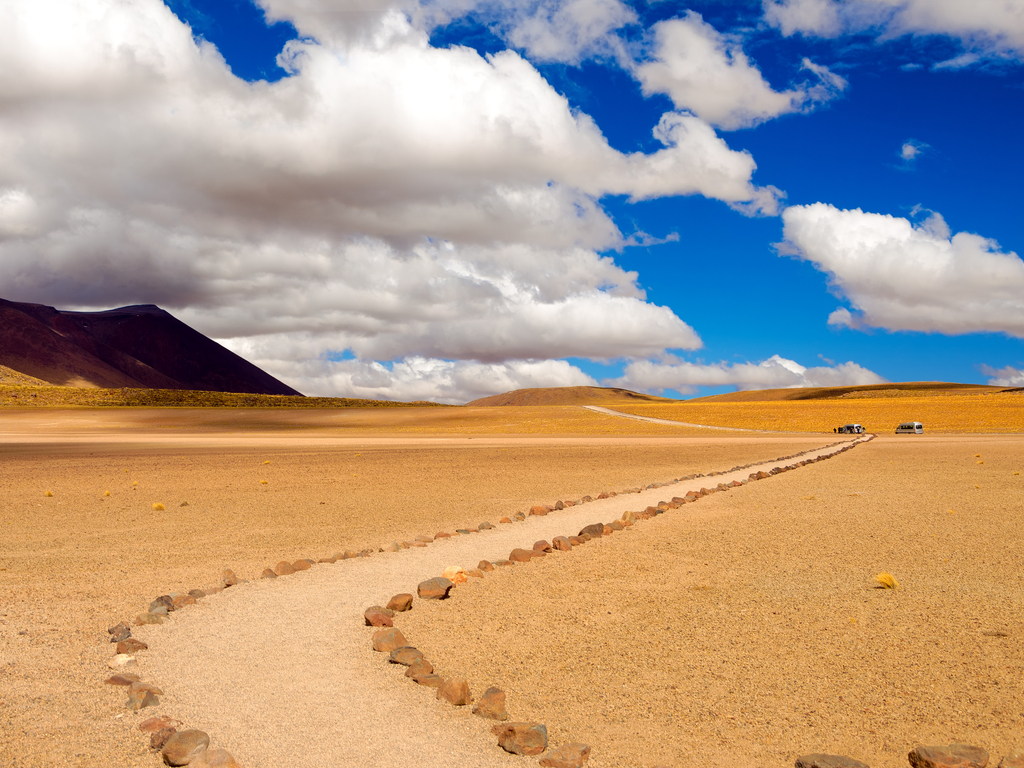
The vast, arid expanse of the Atacama Desert under a clear blue sky, embodying tranquility.
Experience the vastness and tranquility of the Atacama Desert, a serene escape into nature’s beauty.

Why is the Atacama Desert so dry?

The Atacama Desert Chile is the driest place on earth due to the high-pressure cell in the South Pacific region. The Humboldt or Peru Current also contributes to the hyper aridity by facilitating the upward movement of water from the oceanic depths. This cold water, in turn, results in thermal inversion wherein warmer air is present in elevated areas and colder air is located at sea level. Consequently, stratus clouds and fog are formed without any likelihood of rain.
Silhouette of a deer seen through the fingers of an outstretched hand at sunset in the Atacama Desert.
Capture the silhouette of a desert deer through an artistic perspective with your hand against the backdrop of an Atacama sunset.

Moreover, moisture advection is prevented due to Atacama Desert’s location between two mountain ranges, namely, the Chilean Coast Range and the Andes Mountains. Contrary to popular opinion, however, the Atacama Desert temperatures are quite low, soaring to 19 degrees Celsius in the summer months.

What is the best time to visit the Atacama Desert?

Although the weather at the Atacama Desert is largely determined by the Bolivian Andes, it is an all-year-round travel destination. The sun is bright during the day and the nights are resplendent with sparkling stars.

However, occasionally heavy rainfall is perceived between January and February while snow prevents crossings from the Atacama Desert to Argentina and Bolivia due to snowfall between June and September. So, you might want to avoid traveling to this region during this time period.
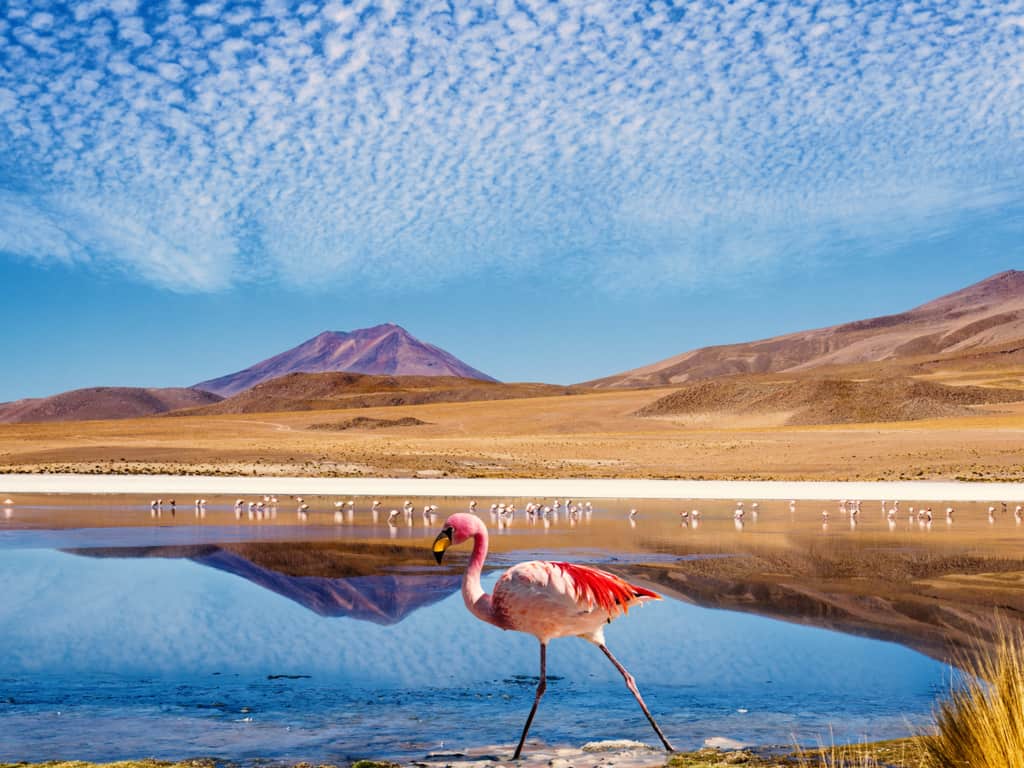
Flamingos wading in the Chaxa Lagoon in the Atacama Desert, showcasing the region's diverse wildlife.
“Discover the diverse wildlife of the Atacama Desert at the Chaxa Lagoon, home to beautiful flamingos.

Top 3 Facts about this unique place

Take a look at the top 3 mind-boggling facts about the Atacama Desert:

Archaeological Wonder: The earliest mummified human was first discovered in the Atacama Desert in 7020 BC, predating the Egyptian discovery by several thousand years.

Habitable or Not? The desert aridity does not stop the Atacama Desert from being inhabited by one million people who have established a home base in oasis towns, fishing villages as well as mining regions.

Astronomical Haven: The famous European Southern Observatory is located within the Atacama Desert. The dry weather conditions and high altitude make this desert a perfect place for stargazing.
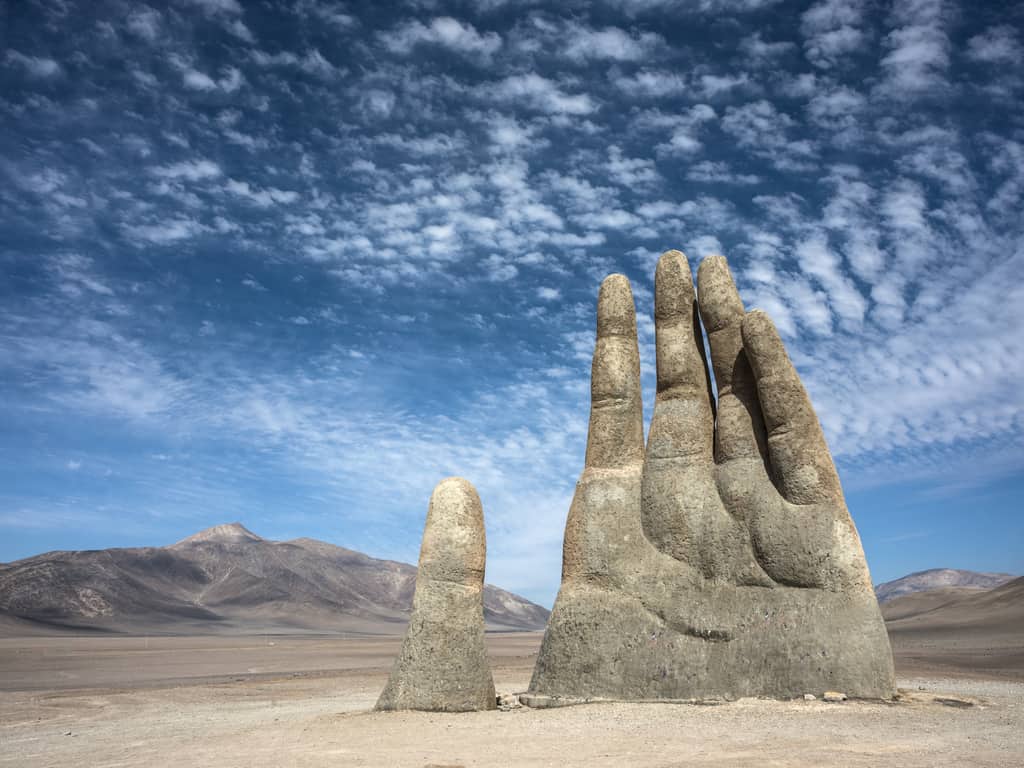
A hand in the sand, inspired by the natural surroundings of the Atacama Desert
Experience a respectful encounter in the Atacama Desert, a gentle touch bridging nature and humanity.

Now that you are equipped with all the information you need about this unique dessert, start creating your travel plans to Mars on earth already!
Easter Island – Exposition of hidden treasures amidst the Pacific

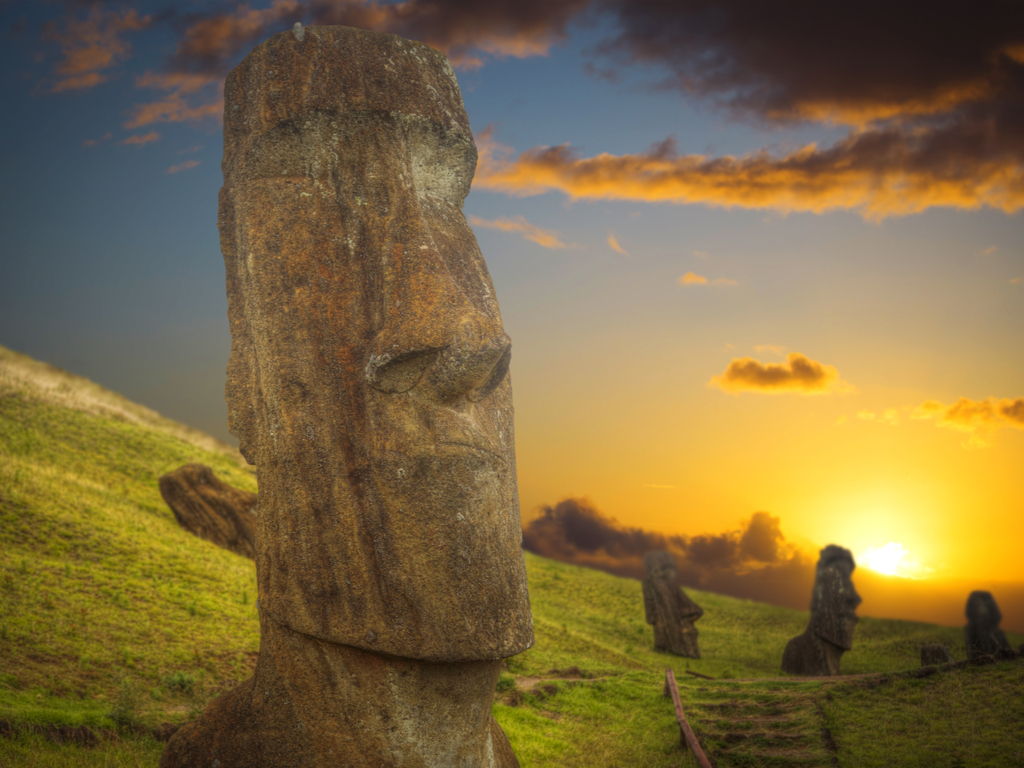
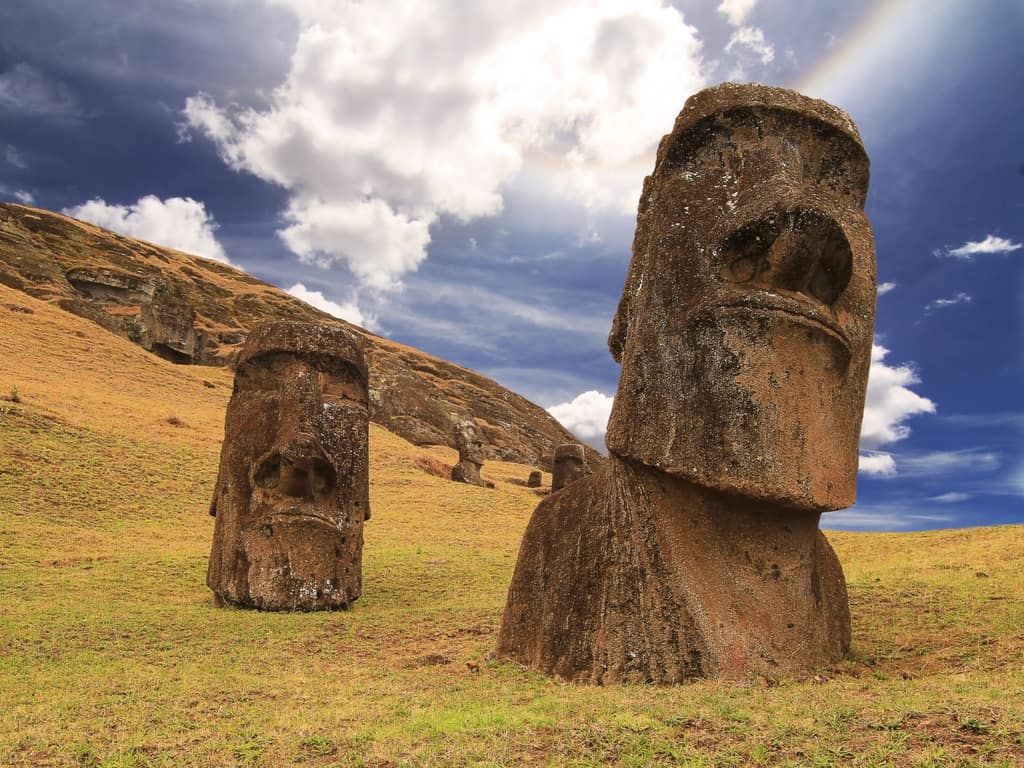
Close-up of the intricate carvings on a moai statue on Easter Island, reflecting the skill of the ancient Rapa Nui people

Searching for a unique travel destination for your next trip? Your search ends here. Rapa Nui National Park & Easter Island are located in the Pacific Ocean, approximately two thousand miles away from South America. Rapa Nui National Park comprises approximately 42 percent of Easter Island.

This destination is a part of the Polynesian triangle along with New Zealand and Hawaii. The 900 monumental sculptures of Easter Island have made this a major travel destination.

How to get to Easter Island?

Tourists dedicate two days to travel to Easter Island. You will have to travel to Santiago, the Chilean capital, first. LAN Airlines offer six-hour one flight from Santiago to Easter Island on a regular basis. The approximate travel time is around one and a half days.

Close-up of the intricate carvings on a moai statue on Easter Island, reflecting the skill of the ancient Rapa Nui people

How much does it cost to go to Easter Island?

You can gain access to Rapa Nui National Park by buying a ticket worth 80 dollars at the National Park booth at Mataveri Airport. Alternatively, tickets are also available at Ma’u Henua Indigenous Community Central Office in Hanga Roa.

The ticket facilitates you with an entry in Rano Kau Quarry and Ahu Tongariki. We promise that the experience is worth it and justifies the slightly higher entrance fee.

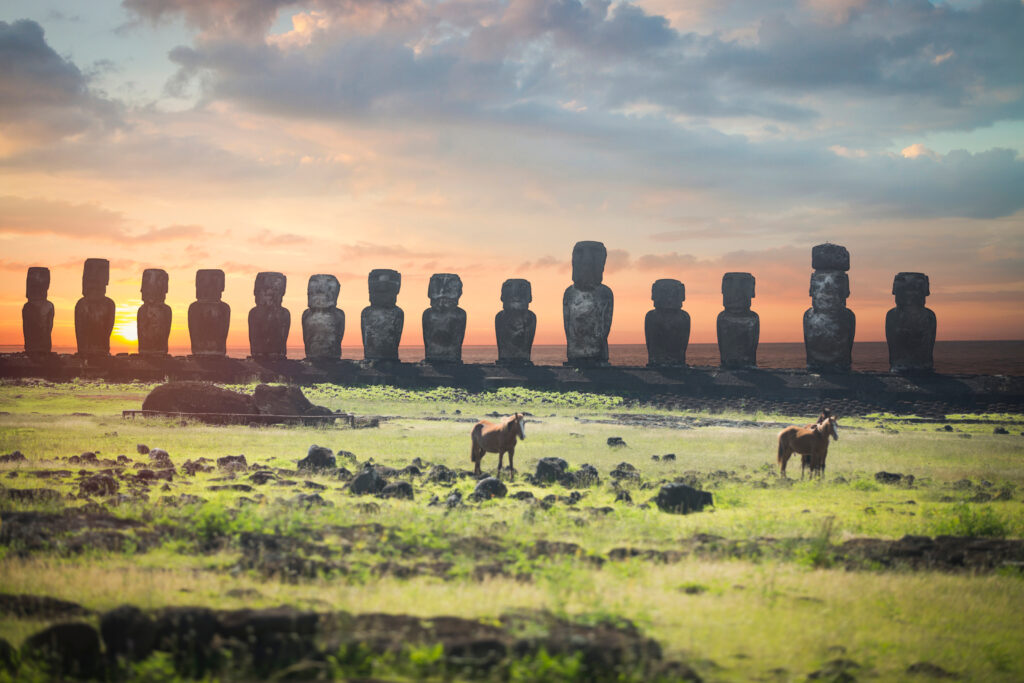
Sunset casting a golden glow over the moai statues at Ahu Tongariki on Easter Island, creating a mystical atmosphere
Witness the captivating sunset at Ahu Tongariki, where the moai statues of Easter Island are bathed in golden light.

Why is Easter Island called Easter Island?

It’s time for a history lesson. Contrary to popular opinion, Jacob Roggeveen – a Dutch explorer – discovered this eponymous island while sailing south Pacific on April 5, 1722.

This date coincided with the Easter holiday, according to the Christian calendar. Feeling inspired, Jacob named this island ‘Paasch-Eyland’, which stands for ‘Easter Island’ in Dutch. Isn’t this Easter Island fact mesmerizing?

The Top 3 Easter Island Facts

  1. Easter Island was the first Pacific island nation to be classified as a UNESCO World Heritage Site.
  2. None of the monumental sculptures of Easter Island were erect when they were first discovered. The ones you see today have been re-erected.
  3. The statues are believed to harbor spirits of tribal ancestors. They are perceived as the symbol of good fortune by locals.
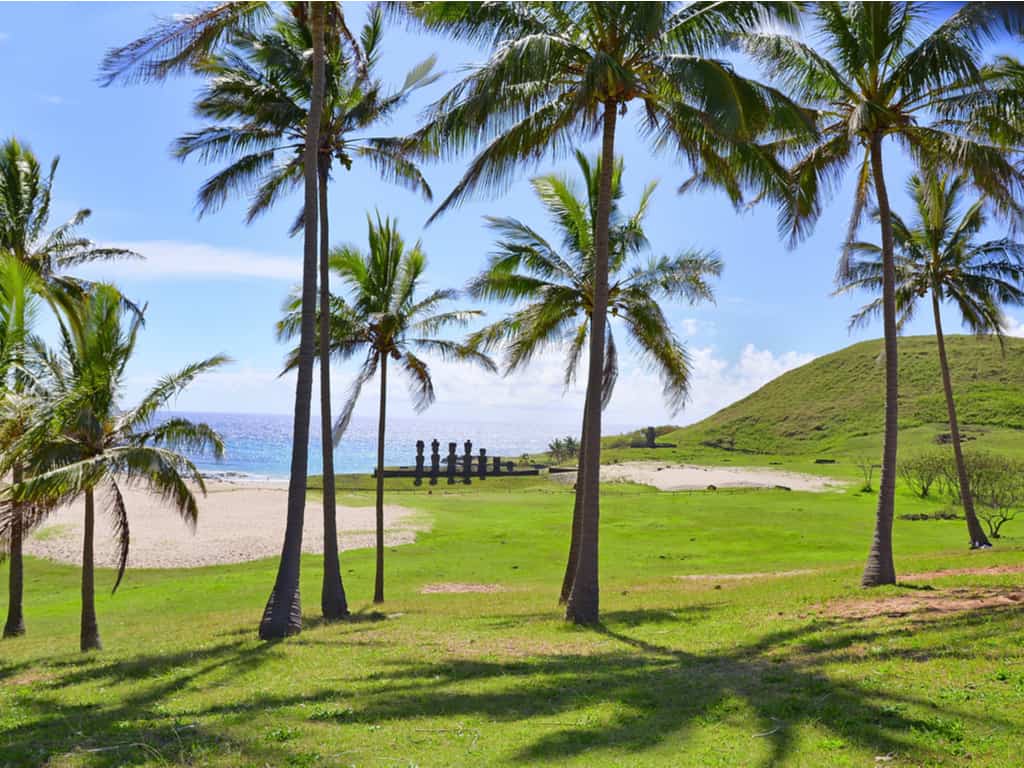
The serene Anakena Beach on Easter Island, with its white sands and moai statues overlooking the Pacific Ocean
Relax on the pristine Anakena Beach of Easter Island, a perfect blend of historical intrigue and tropical beauty.

What is the best time to visit Rapa Nui National Park & Easter Island?

The best possible time of the year when you should visit Rapa Nui National Park & Easter Island is between October and December and April and June. The temperate climate makes sightseeing easy and the prices are quite reasonable.

If you wish to attend the Tapati Rapa Nui Festival, you will have to visit during February. The cool ocean breeze effortlessly complements the tropical weather, thereby making tourism comfortable.

However, the temperatures can sometimes exceed 27 degrees Celsius, so make sure that you carry ample water and apply sunscreen.

"Iconic moai statues standing against a backdrop of a clear blue sky on Easter Island, a symbol of the island's mysterious past
Explore the enigmatic moai statues of Easter Island, a testament to the island’s rich and mysterious history.

Where should you stay in Rapa Nui National Park & Easter Island?

Hare Nua Hotel Boutique: Provides the coziest rooms filled with greens and antique straw furniture, with a traditional wooden bathtub to calm your nerves at the end of your adventures.

Hotel Maea Hare Repa: The choice for minimalistic and comfortable accommodation and delicious breakfast buffet.

Pikera Uri Eco Lodge: Classy and vintage with a mesmerizing ocean view, it never fails to please the visitors.

Inaki Uhi Hotel: One of our top picks, thanks to its convenient location along with its homely feel and highly co-operative and gentle staff.

Hotel Hangaroa Eco Village & Spa: Fantastic service and celebrity style treatment right on the seashore! Also, it is at a walkable distance from the Hanga Roa.