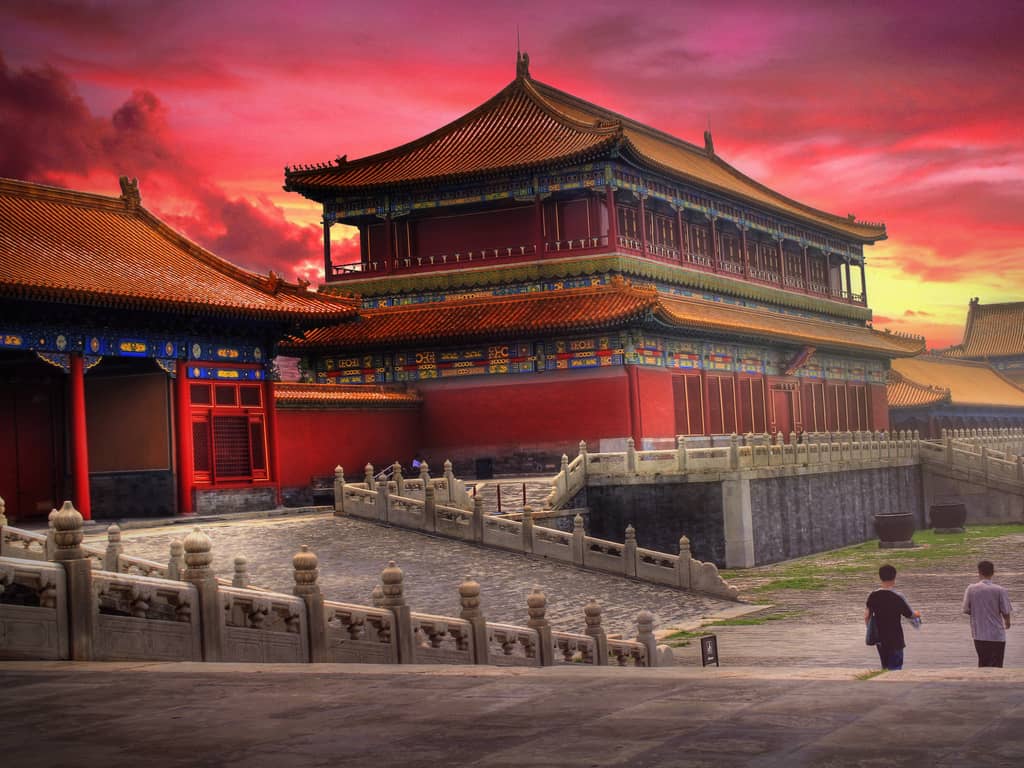
The Forbidden City is the name given to a palace complex in central Beijing, China. It is now a world-famous tourist attraction, well known for its unbelievably large land area, and medieval architecture. It harbors the famous Palace Museum of China.
Neither is it forbidden nor is it a city!
Why was the Forbidden City built?
It was built as a residence for Emperors and their families. Though it also played the role of a central political and ceremonial center in China during the mighty Ming and Qing dynasties.
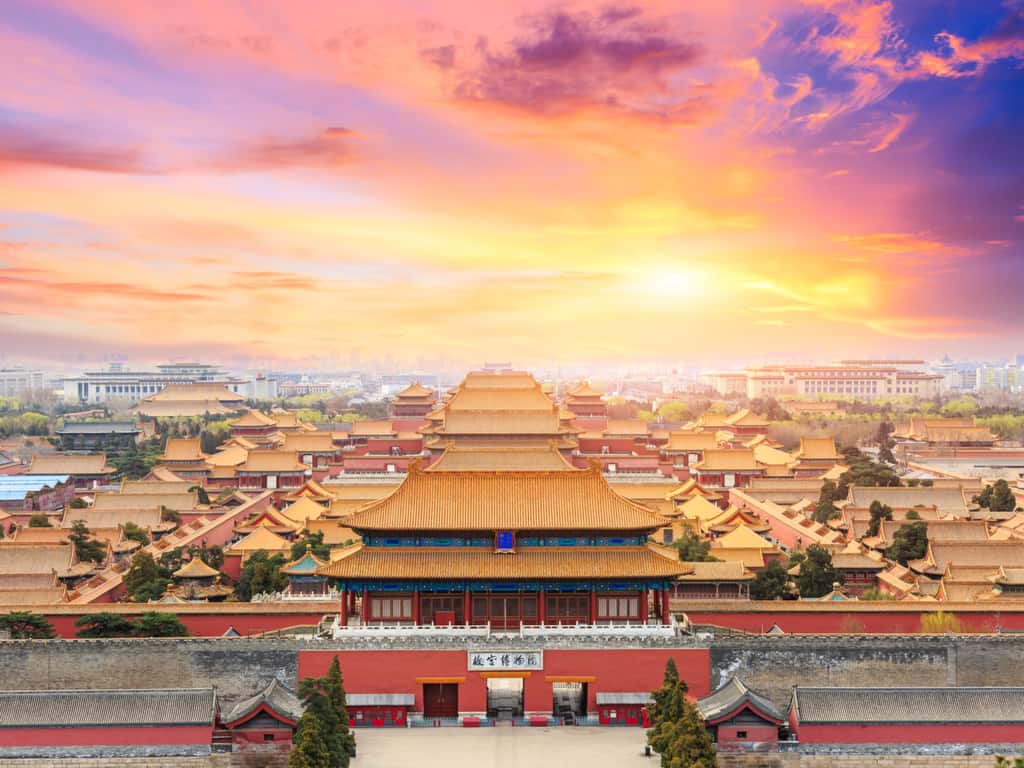
Marvel at the panoramic view of the Forbidden City, a sprawling complex that epitomizes traditional Chinese architecture.
Who built the Forbidden City?
Building this place was started under Emperor Chengzu of the Ming Dynasty. After he suddenly thought of moving the capital to Beijing, upon his ascend to the throne in 1402.
Laborers, artisans, engineers and architects took 14 long years to get this magnificent palace complex designed and constructed. It was built from 1406 to 1420. Since then, it has been home to 24 of China’s Emperors.
Why is the Forbidden City forbidden?
As of now, it is not forbidden, but it used to be in the past. Common people were prohibited from entering the palace complex without permission, and only imperial families and relations, along with invited officials, were allowed entry. So you are lucky to have been born into this era.
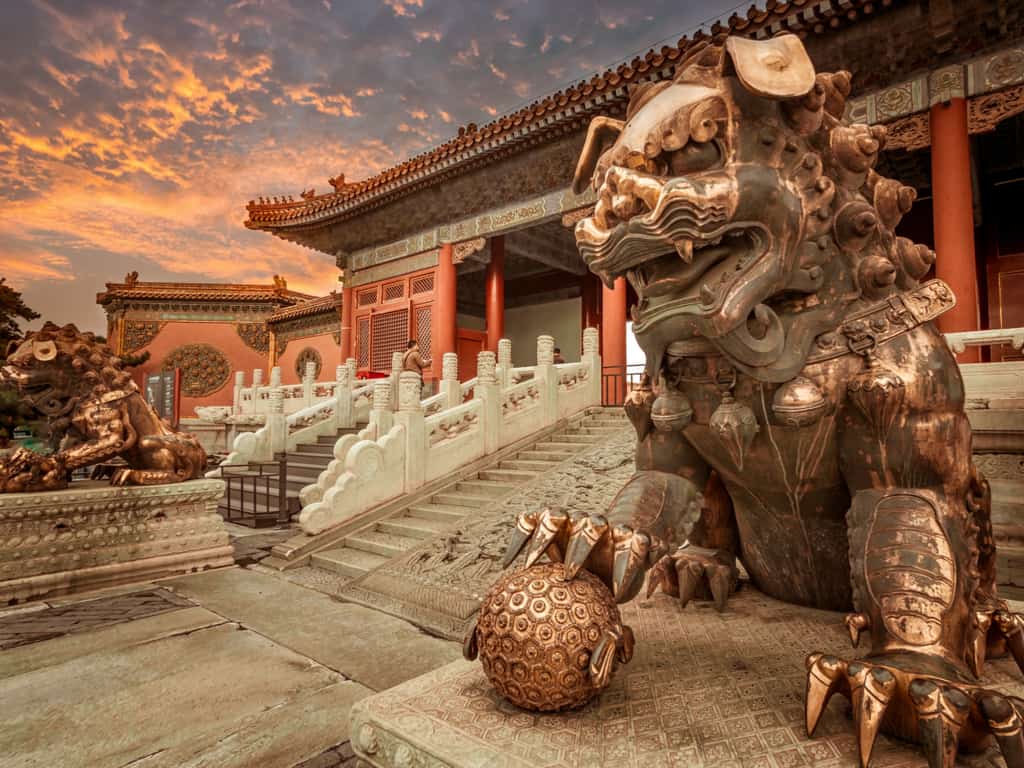
Discover a treasure trove of ancient artifacts and imperial relics inside the Palace Museum at the Forbidden City.
The meaning of numbers in the Forbidden City
Numbers play a special role in the architecture of this monument. The key to this originates from the philosophy of Yin and Yang. The Yang is the opposite of Yin and is not the male element associated with the emperor, but also the element of odd numbers.
Thus, the numbers three, five and seven are found particularly often in the architecture of the Forbidden City.
For example, five marble bridges lead across the Golden Water, three terraces support the three halls of harmony. In total, the Forbidden City is said to have 9999 rooms. And since nine times nine is supposed to bring special luck, many doors have 81 brass knobs.
Is there a best time to visit the Forbidden City?
The ideal time is from late March up to early June as well as from late August to early November. The goal is to avoid vacations and public holidays so that you get to face a considerably lesser crowd.
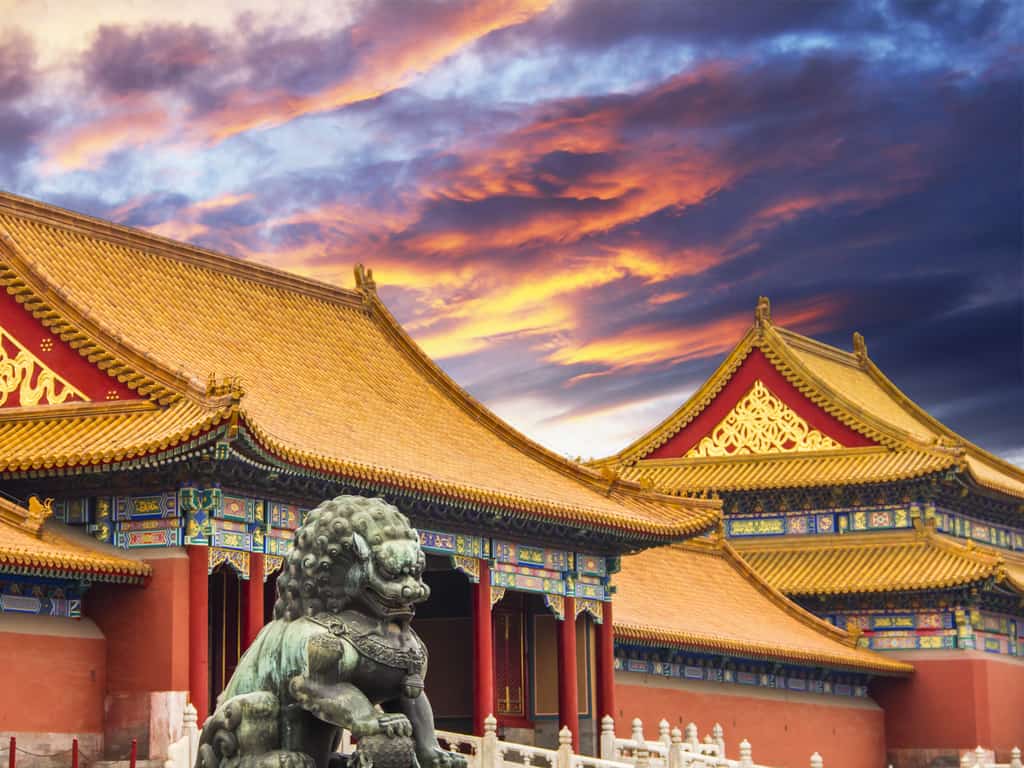
Step through the Meridian Gate, the majestic entrance to the Forbidden City, and experience the grandeur of China’s imperial past.
How to get to the Forbidden City?
The only possible way of entry is from the Meridian Gate. You can easily get there by subway or a bus from around the city. Talking of the tickets, you can purchase them online as well as on the spot. For on-spot purchase of Forbidden City tickets, don’t forget to bring your passport along with you. The exhibits of the Treasure Gallery and the Clock and Watch Gallery demand additional tickets.
Make sure to visit this area with a local guide – Not only will that bring the place to live, but also save you from the crowd.
Some spicy Facts about the Forbidden City
Planning a visit to Beijing? Here are some lesser-known Forbidden City facts:
According to estimates, it took over a million laborers to construct this humongous palace complex!
This area is the largest imperial palace in the whole world and thus holds a place in the Guinness Book of World Records.
The complex harbors a total of 8,728 rooms distributed in 980 buildings!
It is spread over an area of unbelievable180 acres!
According to theories, the Majestic Outer Court is completely devoid of trees for a reason – It would ensure that assassins get no place to hide and the family lives happily ever after
Delve into the beautifully preserved interiors of the Forbidden City, offering a glimpse into the life of ancient Chinese royalty.
Where to stay when visiting the Forbidden City?
Depending on your preference you might find below the most recommended places to stay.
Beijing Downtown Travelotel: If you are on a budget this is a perfect base with good value for money and see what the “real” Beijing is like.
The PuXuan Hotel and Spa: A modern Chinese style hotel which provides exceptional luxury amenities to relax after a long day visiting the Forbidden City.
Hotel Cote Cour Beijing: A very nice boutique hotel, furniture with old-world charm upscale Hutong style. We liked the rooftop terrace very much.
Conrad Beijing: For a high-end luxury stay, this brand new hotel will elevate your China experience to higher levels.
The UNESCO acknowledges it as the world’s largest assemblage of preserved antique and ancient wooden structures. As of 1987, the Forbidden City was finally declared as a World Heritage Site.
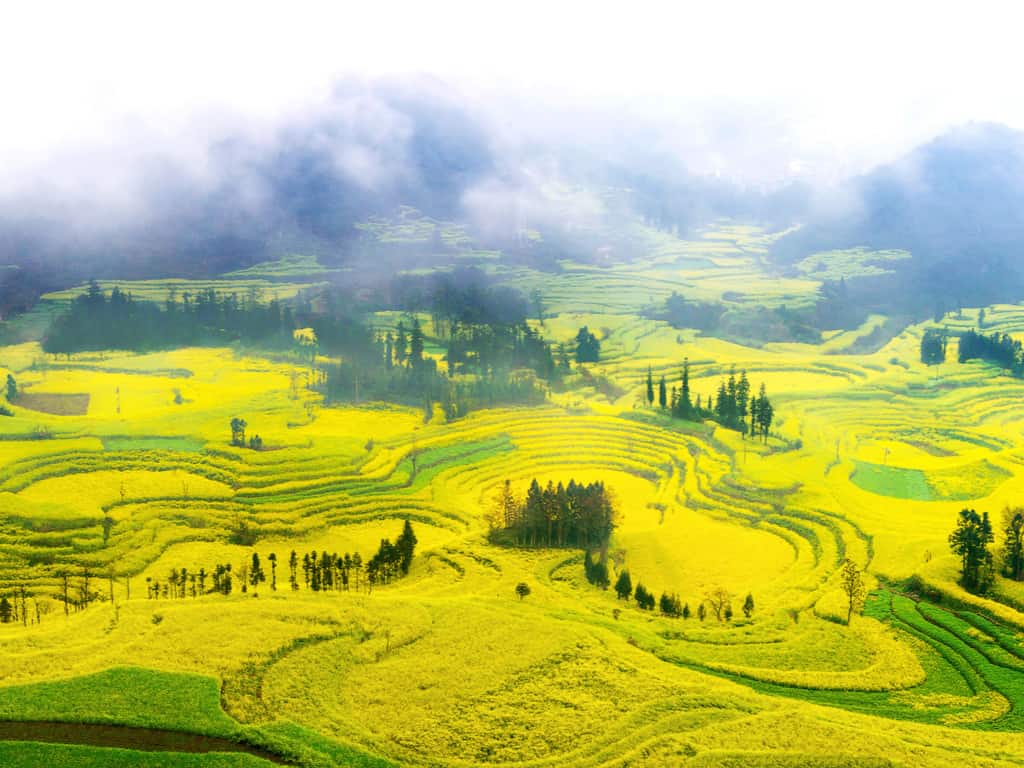
The Canola flower fields in China are vast stretches of land that transform annually into an unbelievable golden yellow landscape.
In early spring, wild yellow flowers having rapeseed or canola, bloom and the whole stretch of land look like the shore of a golden sea stretching beyond the horizon, as far as the eye can see.
These blossoming yellow flowers are such a beautiful sight to see.
Where are the Canola Flower Fields in China?
These beautiful fields of yellow flowers are found in Luoping, in the Yunnan province of southern China.
Out of all the canola fields, the best and the most famous place to see the canola flowers is Jinjifeng.
It’s just a few miles outside the main town and is easily accessible by bus. The flat golden yellow fields are interrupted by peaks here and there to break the monotony
Experience the vibrant beauty of China’s Canola Flower Fields, a sea of bright yellow blossoms under the open sky.
When to get to the canola flower fields?
The perfect time to visit looping for this visual feast is during February and March. The show is completely over by June! But beware of bees, as the fresh scent of the canola flowers attracts thousands of bees, and this can be irritating at times. But hey, not only do you get to see the magnificent canola flower fields, but you also get to taste wild and raw honey, all freshly prepared during these two months.
Spend your day here and explore these large natural gardens and engage in the local fests that are ongoing.
What else to do while you visit these Canola Fields?
Since you have come all the way, you shouldn’t miss out on some really scenic places in and around Luoping. A day or two is sufficient to spend on visiting the canola flower fields.
You may then engage yourself in:
Duoyi River lookout.
Visiting the Jiulong waterfall and clicking some amazing pictures.
Admire the delicate beauty of canola flowers up close, a joyful symbol of spring’s arrival in China.
How to get to the ‘Sea of gold’ in China?
Planning a trip to the canola flower fields? Here is how to get there: Get started from Kunming, which is also a tourist hub.
Bus – buses connecting Kunming and Luoping run every hour, and it takes a minimum of 4 hours of journey to get to Luoping.
Trains – Everyday special trains dedicated to tourists operate from Kunming to Luoping. They are a cheaper way of traveling.
Inside Luoping County, you may hire private taxis or public buses, whichever seems convenient to you.
Why is it called rapeseed?
It is called rapeseed, deriving its name from the Latin word ‘rapum’ which means turnip. After the flowers have bloomed to their full, they subsequently wither away. This is the time when rapeseeds are harvested to manufacture cooking oil.
The canola blossoms are a wonderful sight to see and are considered to be a photographer’s heaven. During the peak season of February to March, the town of Luoping is filled with overseas visitors and local tourists as well.
Stroll along the picturesque pathways of China’s Canola Flower Fields, surrounded by a sea of yellow.
Where to stay when visiting the ‘Sea of gold’ in China?
Kunming Jin Jiang Hotel: This fabulous hotel is near to Kunming train station and brings all the convenience for a smooth trip.
Shanshui Youming Garden Homestay: If you would like to stay in a more traditional way and slow down from the stress of the journey, this place might be perfect.
Spring Guesthouse: If you are traveling on a budget you will be surprised about the value you get for your money
From above, marvel at the geometric beauty and vast scale of the Canola Flower Fields in China.
Binhai Library, located in China is the futuristic knowledge center that adores and fills its visitors with immense pleasure linked with knowledge. The Tianjin Library will leave the visitors dumbfounded with the beauty and the structure.
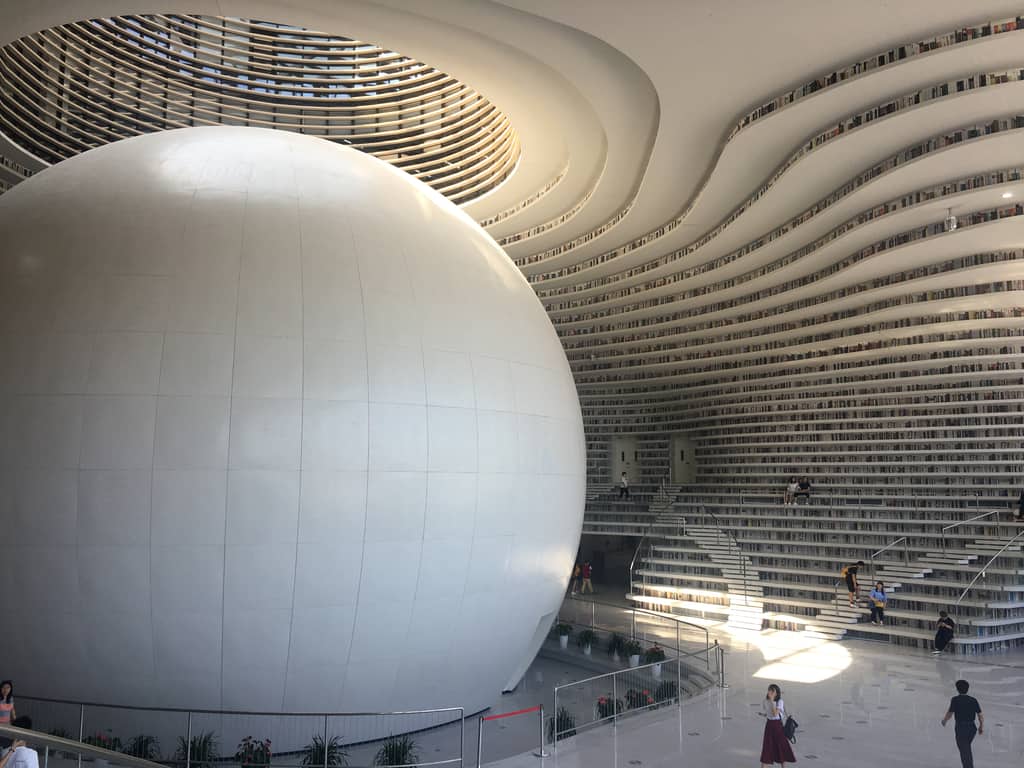
The spectacular collection of books, a big eye in the middle of the place, 5 floors of books stacked from the ground to top at each, and every staircase, makes this place sheer beautiful, and fun to explore. For a book lover, this place is heaven on earth.
What is Binhai Library?
A beautiful center filled with books to impart knowledge and skills, to make you go awe with every step, and fill you will awe-interesting facts, the Binhai library will leave every visitor speechless.
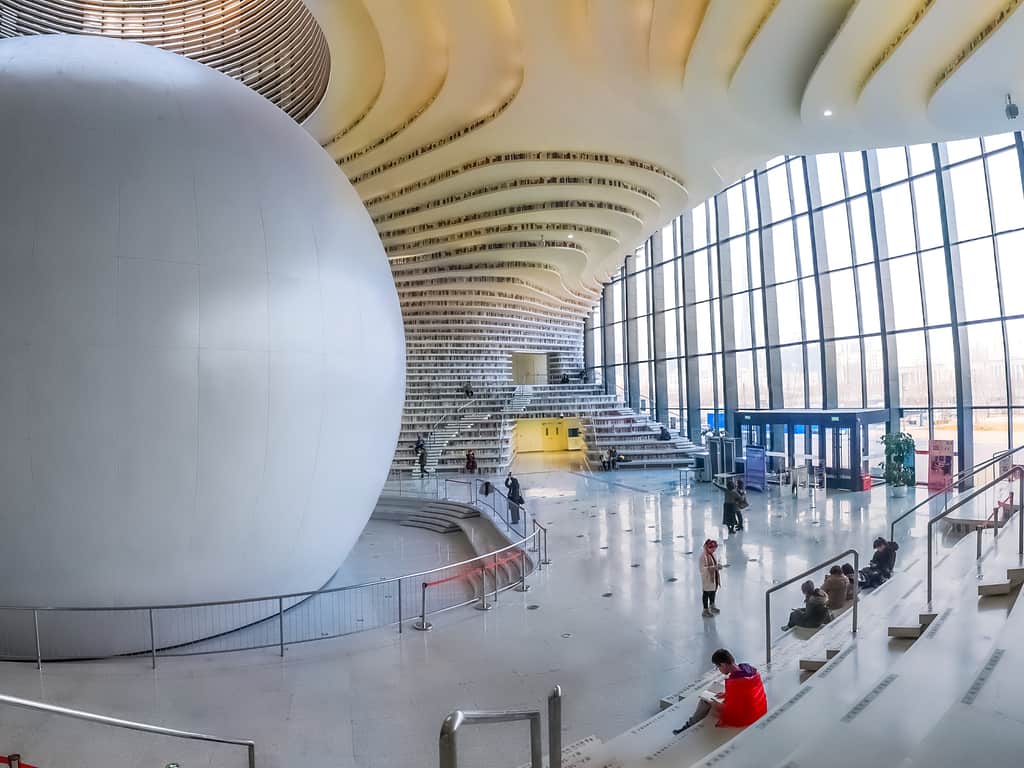
Translated to The Eye in literal terms, the 362,000-square-foot library is an unbelievable garden of books ready to enlighten you anytime. The spherical multimedia cascade embedded with the LED panel popularly known as the Eye at Tianjin Library leaves everyone flabbergasting.
Bask in the natural light of Binhai Library’s airy atrium. A serene spot for bookworms!
Where you can find the Tianjin Library?
The architecture marvel and house of knowledge is in China’s district of Binhai municipality. The coastal city of Tianjin is the home of this astonishing education center.
With around 1.2 million books holding capacity, stacked in the 5 floored building and every serving the role of shelves and sitting facility will allow you to spend your time with peace.
No matter where you start in the Tianjin library, the book-world with every step you move ahead will leave you gazing at the beauty and astonished with hundreds of books to fill you up.
Witness the stunning modern architecture of Binhai Library. A must-visit spot in Tianjin
Who designed the Tianjin Binhai library?
The free-flowing Tianjin Binhai library of imagination and dreams was designed by Rotterdam-based architectural firm MVRDV and profoundly supported by the local group of architects, Tianjin Urban Planning and Design Institute (TUPDI). Such a thrilling sight of books and a vast area for knowledge, this vast cave transformed into a home that can hold 1.2 million books in just 3 years.
Just turn your head and go round in the dreamland of books, Binhai library is ready to amuse you every time to visit.
Explore the architectural wonder of Binhai Library’s cascading bookshelves on your visit.
What makes the Tianjin Binhai library exclusive?
With the brand new design and concept, the Tianjin Binhai Library is an architectural marvel and one of the finest libraries all around the world. With so much knowledge to offer, this place will leave to startle. And gathering everything at once is impossible, but still to start the Tianjin Binhai Library is speechless. The exclusive and distinct features of this dazzling library are:
Spread in the area of 362000-square-foot
5-floored introverted center
Home to around 1.2 million books which hole 200000 books currently
82 seat spherical auditorium in the middle
LED-screen-covered multimedia display on the Eye
Stairs for holding books and for walking, stepping, sitting, lying, and exploring.
Where to stay in Binhai on your visit to Binhai Library?
With so much to explore and read, the Binhai library at Tianjin is the perfect destination for book lovers. Staying and exploring the city and library is a breathtaking experience. With so many budget-friendly and luxurious hotels at this place, you can book your stay with comfort.
Some of the spectacular hotels to book are:
Atour Hotel
Tianjin Binhai Saint Light Hotel
Hilton Tianjin Eco-City
Sheraton Tianjin Binhai hotel
Immerse in a reading experience like no other at Binhai Library’s spherical auditorium.
With knowledge free flowing in the air, and books to surround you, the Binhai Library is mind-blowing. The marvelous structure and display, a phenomenal collection of books, and the architectural beauty, a visit of this paradise of the book are totally admirable. So plan your travel today!
The Tianzi Mountains in China’s Zhangjiajie National Forest Park and the surrounding Wulingyuan Scenic Area offer visitors a chance to experience some of the most stunning natural landscapes and cultural heritage in China. Whether you’re exploring the Avatar Mountains, hiking through the park’s lush forests, or taking in the breathtaking views from the glass bridge or cable cars, there is something for everyone in this incredible destination. With a little planning and preparation, you can make the most of your visit to Zhangjiajie National Forest Park and create memories that will last a lifetime.
If you’re fascinated by the natural scenery of the Avatar movie and also want to physically experience it, then you need to visit the Zhangjiajie mountains in China.
In this article, we will take you on a journey through the top things to see and do at Tianzi Mountains in China’s Zhangjiajie National Forest Park.
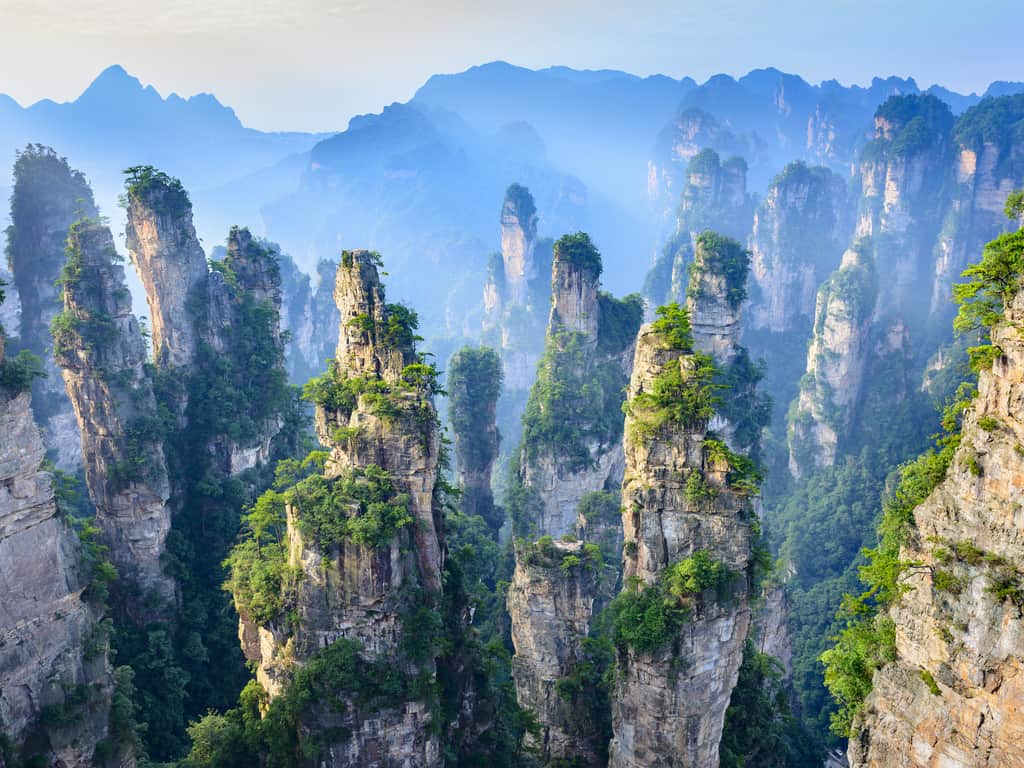
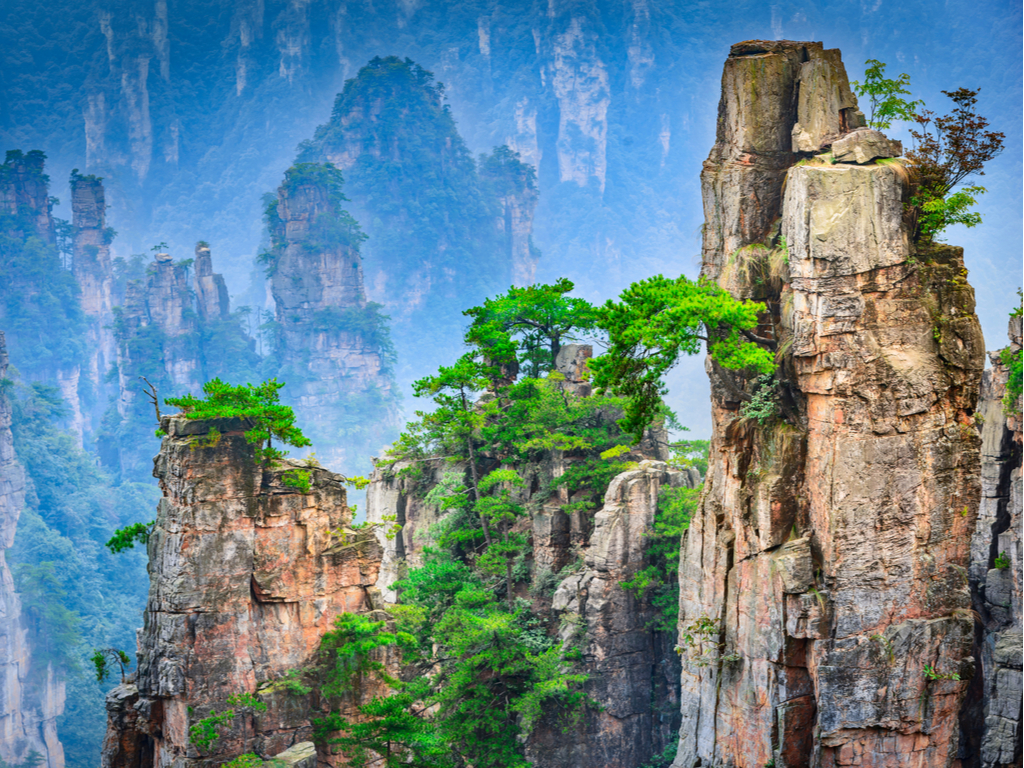
Explore the stunning Tianzi Mountains in Zhangjiajie’s Wulingyuan Scenic Area, known for their towering sandstone pillars and lush forests.
Exploring the Avatar Mountains: A Guide to Tianzi Mountains’ Iconic Peaks
The Tianzi Mountains are famous for their iconic peaks, which inspired the floating Hallelujah Mountains in the blockbuster movie Avatar. The most famous of these peaks is the pillar-like formation called the Southern Sky Column, which stands 1,080 meters tall. To get a bird’s-eye view of the Avatar Mountains, take a cable car up to the summit of Tianzi Mountain. From there, you can see panoramic views of the park’s peaks and valleys.
Another must-see peak is the Yuanjiajie Scenic Area, which is home to the Bailong Elevator, the world’s tallest outdoor elevator. The elevator takes visitors up 326 meters to a viewing platform at the top of a sheer cliff face. From there, you can take in stunning views of the surrounding peaks and forests.
Tips for Hiking in Zhangjiajie: What to Know Before You Go
Zhangjiajie National Forest Park is a hiker’s paradise, with trails that wind through some of the most stunning landscapes in the world. However, hiking in the park can be challenging, especially for those who are not used to steep inclines and rugged terrain. Here are some tips for hiking in Zhangjiajie:
Wear comfortable, sturdy shoes with good traction.
Dress in layers, as the weather can change quickly in the mountains.
Bring plenty of water and snacks, as there are limited places to buy food and drinks in the park.
Carry a map and a compass, as some of the trails can be confusing and poorly marked.
Be prepared for steep inclines and narrow paths, especially in the more remote areas of the park.
A Guide to Tianzi Mountains Glass Bridge: The World’s Longest and Highest Glass-Bottomed Bridge
The Zhangjiajie Glass Bridge is a marvel of modern engineering, stretching 430 meters across a deep canyon and standing 300 meters above the ground. It is the world’s longest and highest glass-bottomed bridge, and offers visitors a heart-pumping experience unlike any other. Walking across the bridge can be terrifying, as the glass panels beneath your feet allow you to see all the way down to the canyon floor.
To avoid long lines and crowds, it is recommended that you book your visit in advance. Visitors are only allowed to cross the bridge in groups of 10, and tickets are limited. It is also important to note that the bridge can be closed in inclement weather, so be sure to check the forecast before you go.
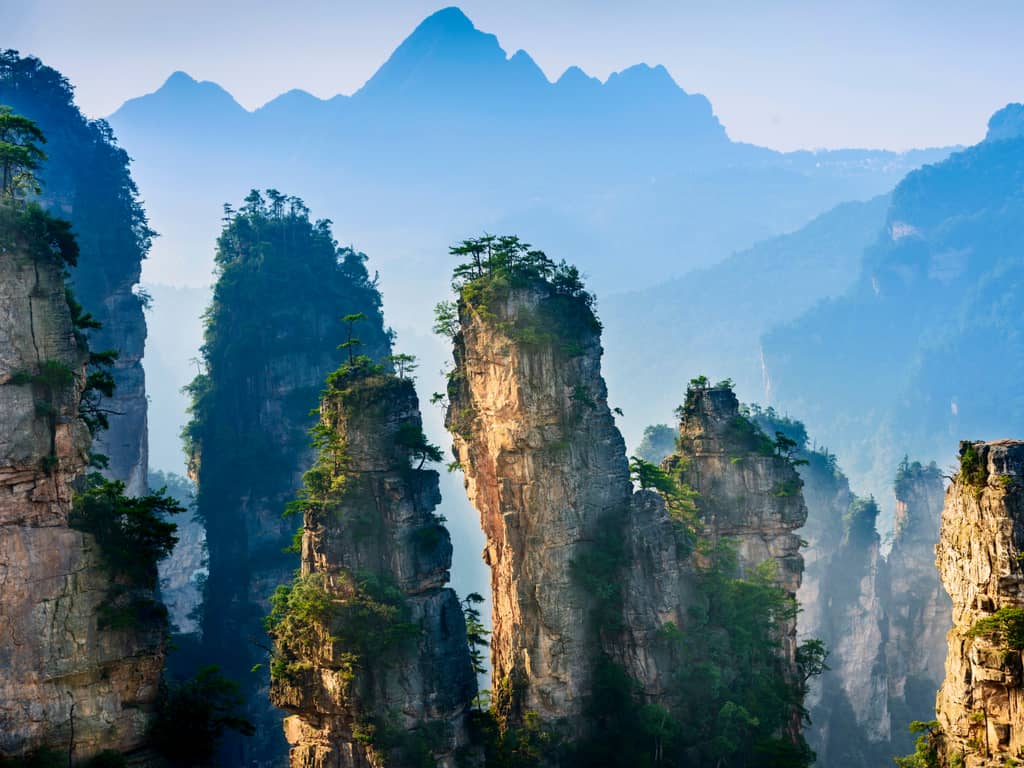
Witness the mystical beauty of a misty morning in the Tianzi Mountains, part of the enchanting Wulingyuan Scenic Area in Zhangjiajie.
Discovering the Beauty of Tianmen Mountain: A Day Trip from Zhangjiajie
Just a short distance from Zhangjiajie National Forest Park is Tianmen Mountain, another natural wonder that is not to be missed. The mountain is home to the Tianmen Cave, a natural arch that is 131 meters tall and 57 meters wide. To reach the cave, visitors must take a cable car up the mountain and climb 999 steps.
The mountain is also home to a glass walkway that extends out over the edge of a cliff, as well as a stunning waterfall and a temple that is built into the side of a cliff. There are plenty of hiking trails and scenic spots to explore, making Tianmen Mountain a great day trip from Zhangjiajie.
How to Avoid the Crowds in Zhangjiajie
Zhangjiajie National Forest Park is one of China’s top tourist destinations, so it can get quite crowded, especially during peak travel seasons. However, there are some off-the-beaten-path destinations within the park that are worth exploring, and can help you avoid the crowds. Here are a few options:
Golden Whip Stream: This scenic area is located in the center of the park, and features crystal-clear waters, towering cliffs, and lush vegetation. The trail along the stream is a pleasant, leisurely walk that is suitable for all fitness levels. While it can still get busy, it is generally less crowded than some of the park’s more famous attractions.
Huangshi Village: This area is located in the western part of the park, and offers stunning views of the surrounding peaks and valleys. The trail can be quite steep and strenuous in places, but the payoff is worth it. The area can get crowded during peak season, but it is generally less busy than the Avatar Mountains or the Glass Bridge.
Baofeng Lake: This scenic lake is located in the southern part of the park, and can be reached by a short boat ride. The lake is surrounded by towering cliffs and dense forests, and is a peaceful, relaxing oasis in the midst of the park’s hustle and bustle.
Exploring Zhangjiajie’s Unique Flora and Fauna
Zhangjiajie National Forest Park is home to a rich array of flora and fauna, much of which is unique to the area. Some of the park’s most interesting plants include the Chinese yew, which is a slow-growing, long-lived tree that is used in traditional Chinese medicine, and the Chinese dove tree, which is known for its distinctive, fragrant flowers.
The park is also home to a wide range of animals, including macaques, civets, and many species of birds. The park’s most famous resident, however, is the rare and endangered South China tiger. While it is highly unlikely that you will see one of these elusive creatures during your visit, the park is working hard to protect and preserve the species.
Admiring the Stunning Landscapes of the Wulingyuan Scenic Area
Zhangjiajie National Forest Park is just one part of the larger Wulingyuan Scenic Area, which covers more than 26,000 hectares of stunning natural landscapes. In addition to the Avatar Mountains and other famous peaks, the area is home to dense forests, deep canyons, and rushing rivers.
One of the most popular ways to explore the Wulingyuan Scenic Area is by taking a leisurely boat ride down the Baofeng Lake. The lake is surrounded by towering cliffs and dense forests, and the boat ride is a peaceful, scenic way to take in the area’s beauty.
Sunset illuminating the peaks of Tianzi Mountains, casting a golden glow over Zhangjiajie’s Wulingyuan Scenic Area.
Zhangjiajie’s Cable Cars: Which One to Take and What to Expect
Zhangjiajie National Forest Park is home to a number of cable cars that can take visitors up to some of the park’s most stunning peaks and viewpoints. The cable cars are a convenient and efficient way to get around the park, but they can also be quite crowded during peak season. Here’s a rundown of some of the park’s cable cars:
Bailong Elevator: This is the world’s tallest outdoor elevator, and takes visitors up to the top of the Yuanjiajie Scenic Area. It can be quite crowded, but the views from the top are worth it.
Tianzi Mountain Cable Car: This cable car takes visitors up to the top of Tianzi Mountain, where you can see panoramic views of the Avatar Mountains and surrounding areas.
Huangshizhai Cable Car: This cable car takes visitors up to the Huangshizhai ScenicArea, which is located in the western part of the park. From the top, you can see sweeping views of the surrounding valleys and peaks.
Jinbian Cable Car: This cable car takes visitors up to the Jinbian Stream, which is a popular area for hiking and exploring. The cable car ride offers stunning views of the park’s rugged landscapes.
While the cable cars can be a bit pricey, they are generally a worthwhile investment, as they can save you time and energy in getting to some of the park’s more remote areas.
What is Zhangjiajie famous for?
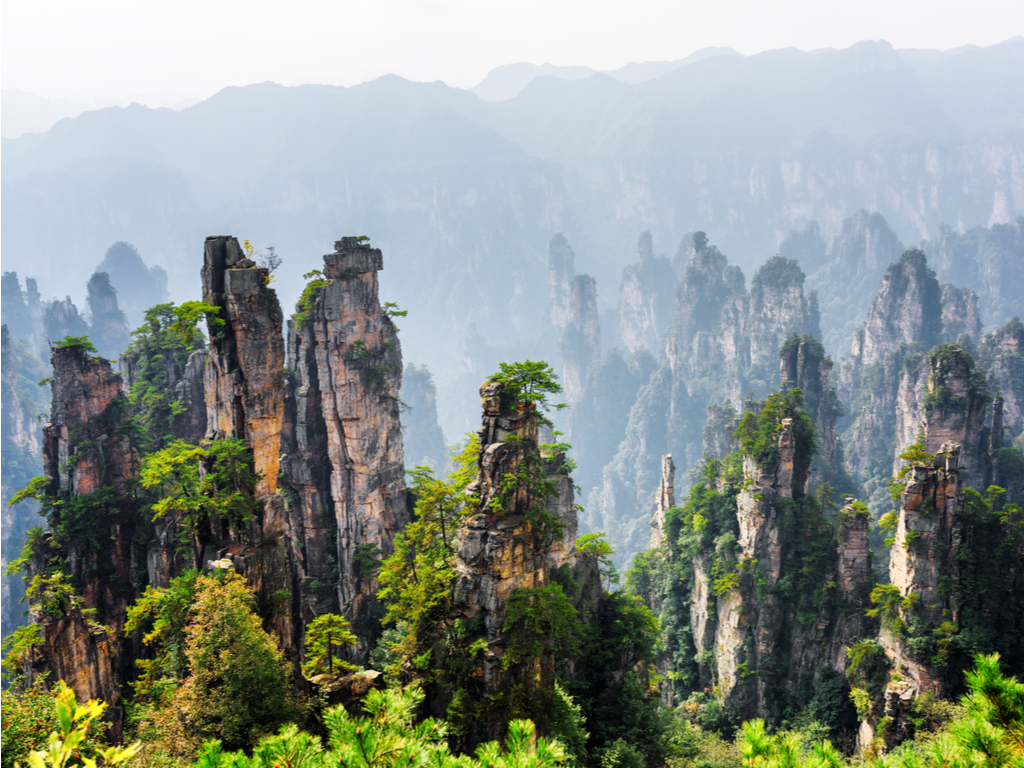
Zhangjiajie is popular for its 3,000 rock pillars. These pillars are over 1,000 feet tall and densely covered with green foliage. They were formed naturally by erosion and now they bring in at least 30 million tourists each year.
Among these pillars, one was known as the “Southern Sky Column” and its height crossed 3,544 feet in the air, which is equal to 78 school buses in length.
In 2010 it was renamed “Avatar Hallelujah Mountain” – after the movie “Avatar”. The movie used pictures of the pinnacles and took inspiration for the floating mountain of Pandora.
The Cultural Significance of Zhangjiajie and Its Place in Chinese History
The Tianzi Mountains in China’s Zhangjiajie National Forest Park and the surrounding Wulingyuan Scenic Area have played an important role in Chinese history and culture for centuries. The area is home to several minority groups, including the Tujia, Miao, and Bai people, who have their own unique languages, traditions, and customs.
One of the most important cultural sites in the area is the Huangshi Village, which was once a strategic military outpost during the Ming Dynasty. The village is now a popular tourist destination, and offers stunning views of the surrounding peaks and valleys.
Another cultural highlight is the Zhangjiajie Grand Canyon Glass Bridge, which is designed to look like a traditional Chinese ink painting. The bridge is not only an engineering marvel, but also a nod to China’s rich artistic and cultural heritage.
In addition to its cultural significance, Zhangjiajie National Forest Park is also an important site for scientific research and preservation. The park is home to more than 3,000 plant species, as well as a wide range of animals, many of which are rare and endangered.
Discover the Tianzi Mountains from above, with an aerial view showcasing the lush valleys and sandstone formations in Wulingyuan.
How to get to Zhangjiajie in China
Zhangjiajie can be accessed by either air or railroad. Other major tourist cities in China nearby are Guilin, Chengdu, Shanghai, and Beijing. However, the most convenient way to get to Zhangjiajie is by air.
Once you get to Zhangjiajie, there are several local means of transportation. Recommended are the buses from the city to the Wulingyuan Scenic Area and Zhangjiajie National Forest Park China.
Accessing Zhangjiajie by air
Zhangjiajie Hehua International Airport is located in Yongding District in Zhangjiajie. From there you will get direct flights to and Shenzhen, Guangzhou, Shanghai, Beijing, Changsha, and other important Chinese cities.
In case you are in any other Chinese city that doesn’t offer a direct flight to Zhangjiajie, you can take a connecting flight at Changsha, Guangzhou, or Shanghai.
Note that most flights to Zhangjiajie land in the evening. You can easily get city buses, airport shuttle buses, and taxis from the airport to various areas in Zhangjiajie city.
Accessing Zhangjiajie by railroad
Zhangjiajie Railway Station offers a well-structured rail network that directly links Zhangjiajie to most cities in China like Changsha, Guiyang, Shenzhen, Guangzhou, Shanghai, and Beijing.
The rail station is located 2km south of the center of the city and 1km away from the Tianmen Mountain cableway station.
One reason why getting to Zhangjiajie by railroad is not advisable is because the journey usually takes long hours. Nevertheless, if you’re traveling to Zhangjiajie from Guilin or Yichang, going by train can be the better option.
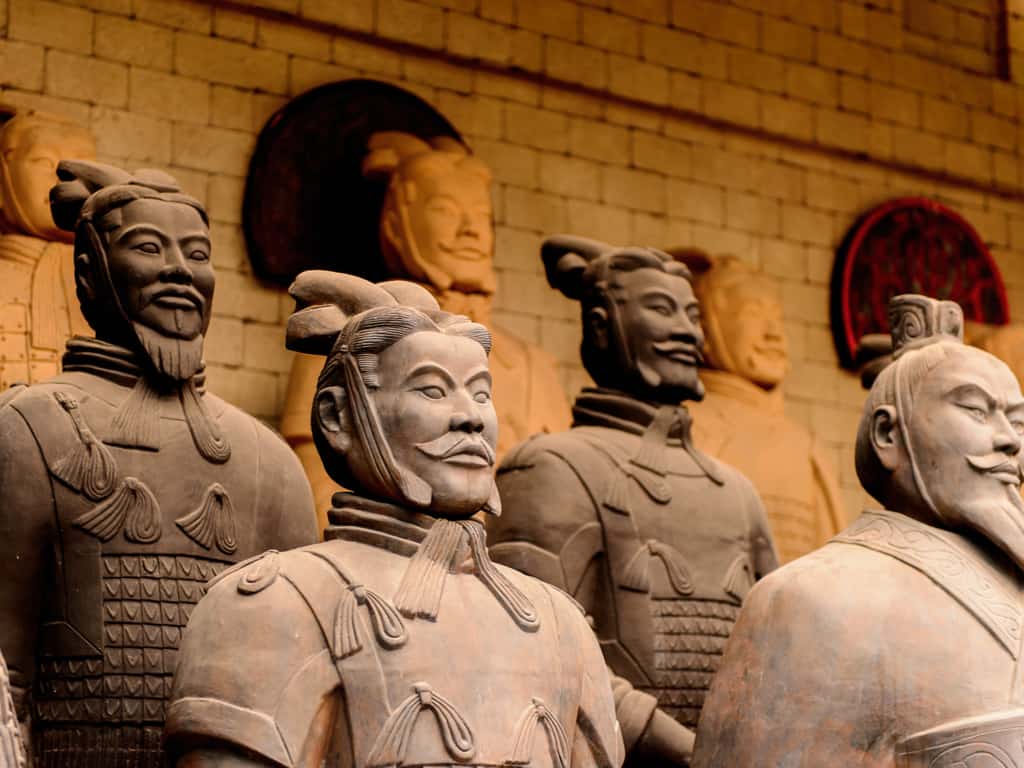
No chapter in the annals of history is as intriguing as the story of how a few peasants stumbled upon this historical monument in Shaanxi, China. The archeological value of the Terracotta Army is only compounded by the extremely individualized figurines. Do you still have to wonder why this UNESCO World Heritage site is on our radar?
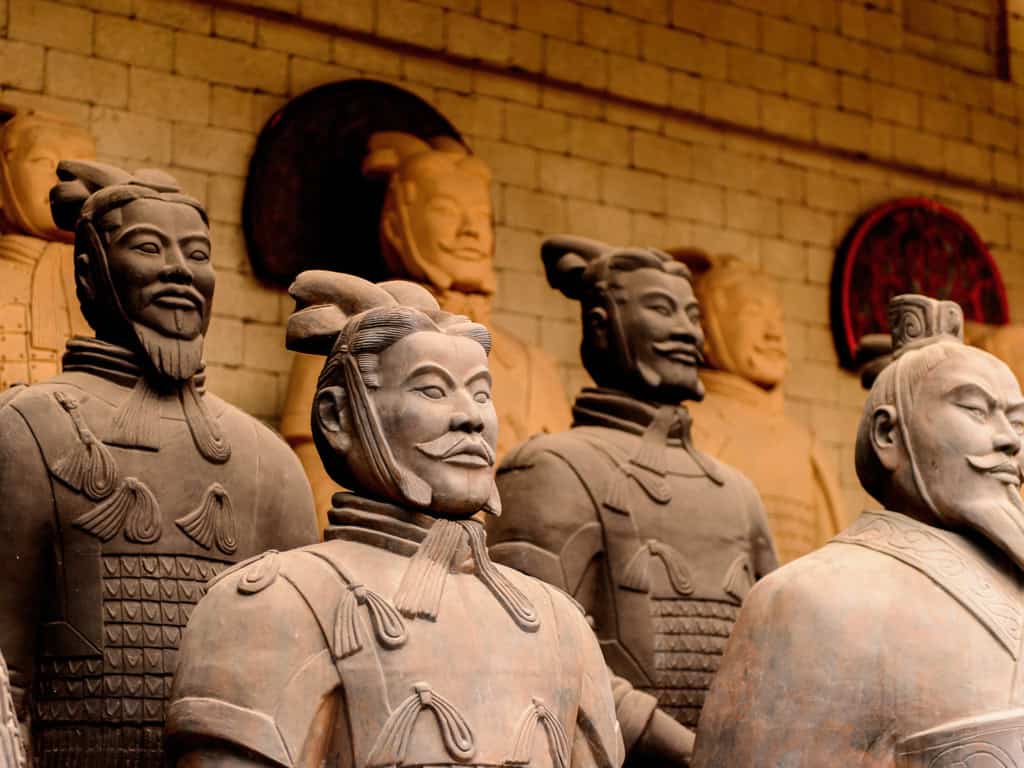
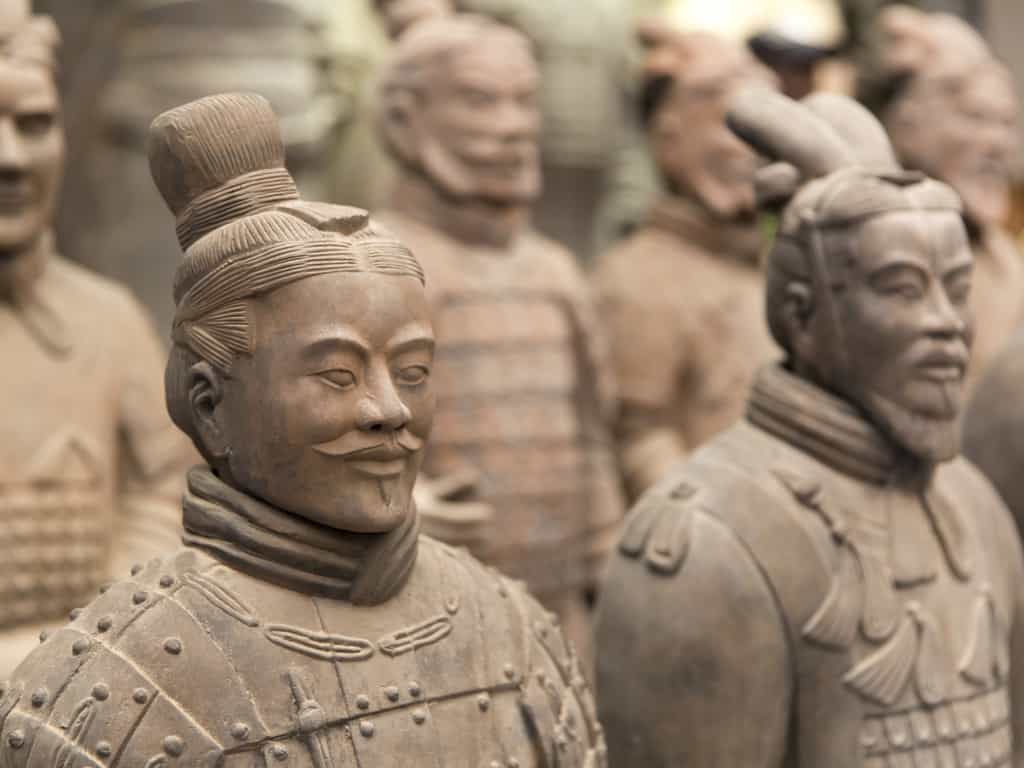
The ancient sculptors demonstrated extreme attention and meticulousness while moulding these figures.
Why was the Terracotta Army built?
Only one thing comes to mind when you think of a series of Chinese warrior statues, right? However, the inspiration behind the Terracotta Army was not to promote warmongering but to celebrate the immensely complex administrational structure in China during Qin Shi Huangdi’s illustrious reign. As a tribute to the innovations of a standardized writing script, measures, and weights discovered during the emperor’s rule, the mausoleum intended to incorporate the Chinese statues as well.
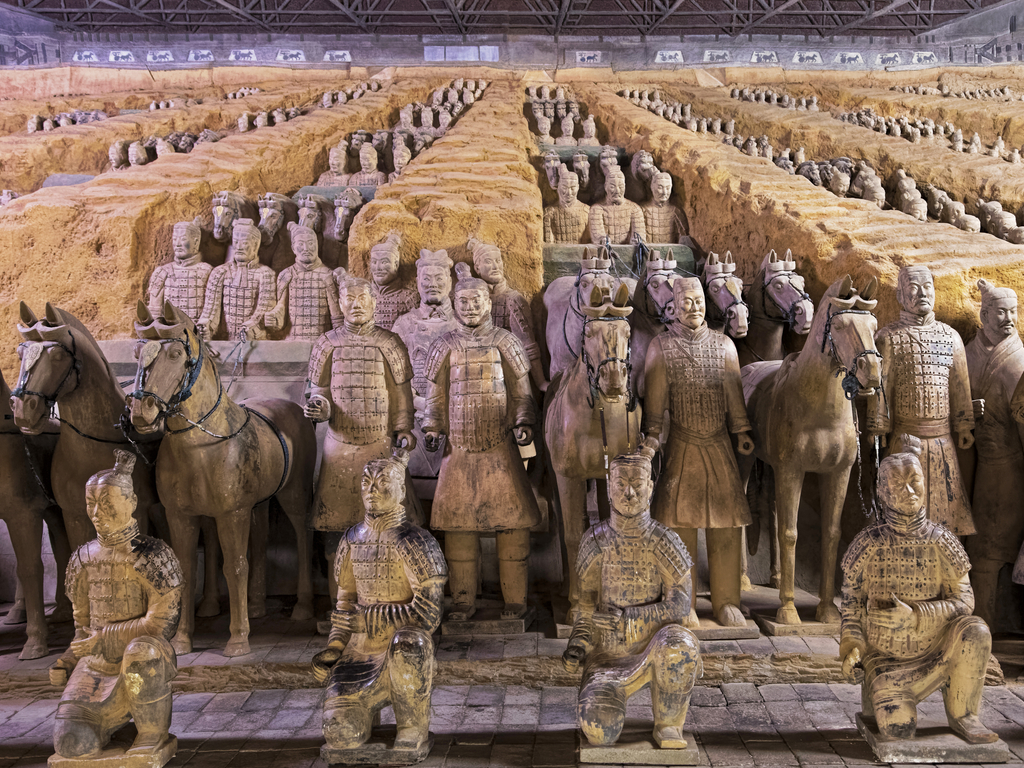
Not only do you find warriors here but also waterfowl, musicians, court officials, and acrobat troupes. The Terracotta Army symbolizes the microcosm of the court that existed at that time in history – his death marked the demise of one of the most Byzantine political systems that the world has ever witnessed.
Explore the awe-inspiring Terracotta Army in Xi’an, a magnificent testament to China’s ancient history.
Who built the Terracotta Army
Shih Chi – an ancient Chinese scripture – is the ultimate source for resources on the Terracotta Army. It points out that Qin Shi Huangdi, the ‘First Emperor’ of the Qin state, ordered his best artisans to construct a mausoleum in his honor.
Zhang Han, the Senior General, and Li Si, the Prime Minister of Qin, was assigned the task of overseeing the design and layout aspects of this modern marvel. The intricately designed Chinese statues formed an essential part of the mausoleum’s imperial structure.
Discover the intricate details of each Terracotta soldier, a masterpiece of ancient Chinese art and craftsmanship.
When was the Terracotta Army constructed?
The history of the Terracotta Army is one that dates back to 2200 years between the period 247 BC to 208 BC.
What is the best time to visit and see the Chinese statues?
The Chinese warriors are available to tourists throughout the year. But if you want to pick a time of the year, we would recommend visiting the museum between September and October or from March to May. This is because the weather is pleasant during these times and will afford a leisurely trip to this magnificent indoor museum.
Bonus: If you wish to avoid crowds, you might want to visit during the lunch hour.
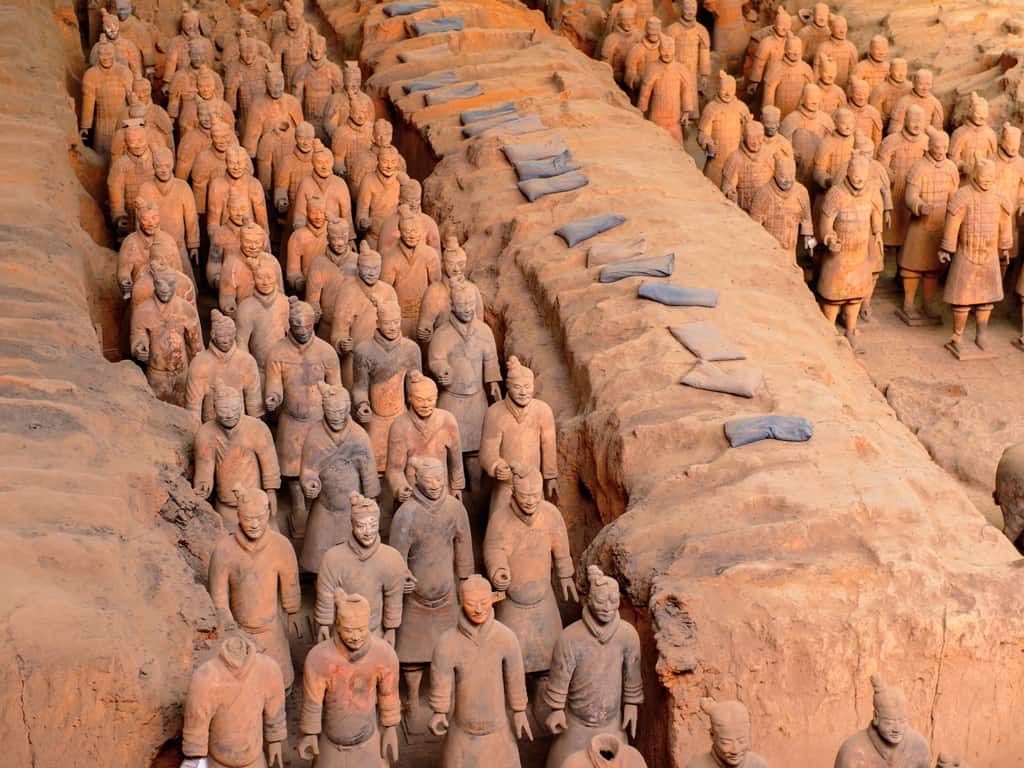
Witness the grand scale of the Terracotta Army burial site, where hundreds of statues stand guard in ancient China.
Top 3 interesting facts about Terracotta Army
The Chinese statues measure about 1.85 meters in height on an average basis. This is because of ancient war forms required strong, tall soldiers.
The Terracotta Army is grey now due to humidity. Originally, they were originally quite colorful with armor and faces painted with bright green, red, and even purple colors.
The Chinese warriors are only found in three of the four pits that are located at the mausoleum.
Admire the uniqueness of each Terracotta soldier, with distinct facial expressions reflecting the diversity of ancient China’s army.
Where to stay during the visit of the eternal Chinese heroes?
Trust us – you will definitely depart the Terracotta Army with a sense of awe and wonder for the magnificence of human history.