Atacama Desert – See The Most Flattest Place On Earth

A hand in the sand, inspired by the natural surroundings of the Atacama Desert

The Atacama Desert is an arid yet cool area, which covers 990-mile long land in northern Chile. It is arguably the driest place on earth and has been widely compared to Mars due to its diverse geological formations. NASA has been using the Atacama Desert as a research area for several years and major movies such as Space Odyssey. Voyage to the Planets have been filmed here.

Let’s explore this wondrous otherworldly region in a little more detail

Where is the Atacama Desert?

The Atacama Desert is present in the western direction of the Andes mountain range on the Pacific coast. More specifically, it is located between the mountains that demarcate the drainage basin of Salado-Copiapó and the southern end of Loa River. While Cordillera de la Costa is present on the desert’s western side, its eastern side has the Cordillera Domeyko or the Andes foothills. The topography of the Atacama Desert mainly comprises salt pans, alluvial fans, pebble accumulations, and dunes.
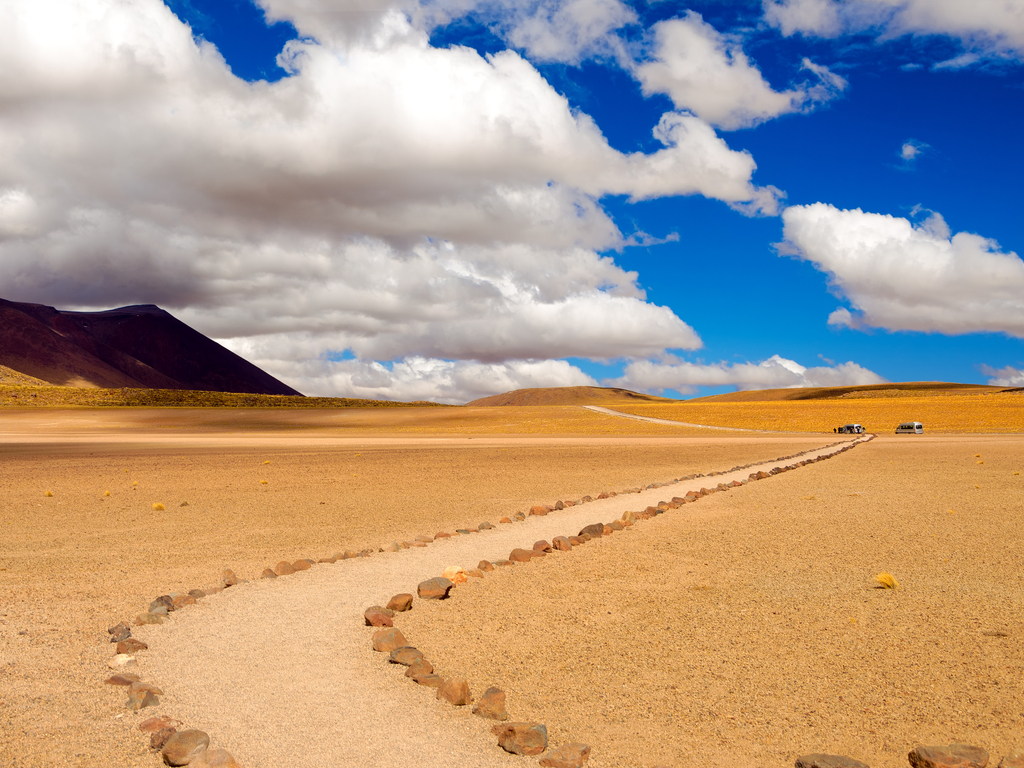
The vast, arid expanse of the Atacama Desert under a clear blue sky, embodying tranquility.
Experience the vastness and tranquility of the Atacama Desert, a serene escape into nature’s beauty.

Why is the Atacama Desert so dry?

The Atacama Desert Chile is the driest place on earth due to the high-pressure cell in the South Pacific region. The Humboldt or Peru Current also contributes to the hyper aridity by facilitating the upward movement of water from the oceanic depths. This cold water, in turn, results in thermal inversion wherein warmer air is present in elevated areas and colder air is located at sea level. Consequently, stratus clouds and fog are formed without any likelihood of rain.
Silhouette of a deer seen through the fingers of an outstretched hand at sunset in the Atacama Desert.
Capture the silhouette of a desert deer through an artistic perspective with your hand against the backdrop of an Atacama sunset.

Moreover, moisture advection is prevented due to Atacama Desert’s location between two mountain ranges, namely, the Chilean Coast Range and the Andes Mountains. Contrary to popular opinion, however, the Atacama Desert temperatures are quite low, soaring to 19 degrees Celsius in the summer months.

What is the best time to visit the Atacama Desert?

Although the weather at the Atacama Desert is largely determined by the Bolivian Andes, it is an all-year-round travel destination. The sun is bright during the day and the nights are resplendent with sparkling stars.

However, occasionally heavy rainfall is perceived between January and February while snow prevents crossings from the Atacama Desert to Argentina and Bolivia due to snowfall between June and September. So, you might want to avoid traveling to this region during this time period.
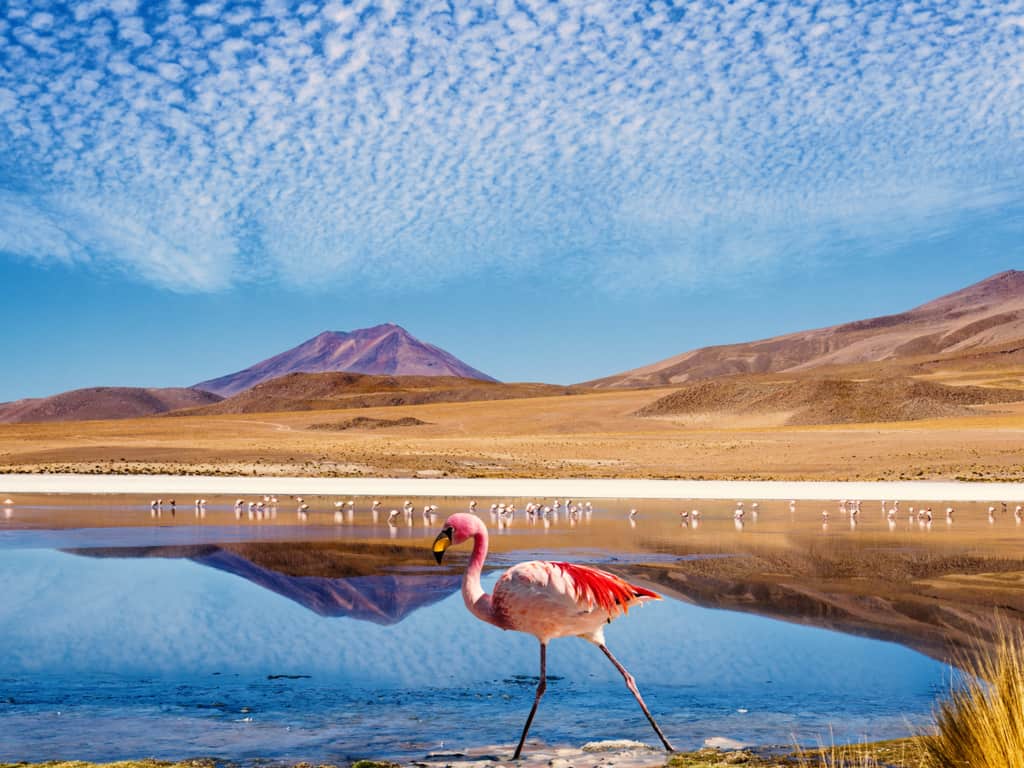
Flamingos wading in the Chaxa Lagoon in the Atacama Desert, showcasing the region's diverse wildlife.
“Discover the diverse wildlife of the Atacama Desert at the Chaxa Lagoon, home to beautiful flamingos.

Top 3 Facts about this unique place

Take a look at the top 3 mind-boggling facts about the Atacama Desert:

Archaeological Wonder: The earliest mummified human was first discovered in the Atacama Desert in 7020 BC, predating the Egyptian discovery by several thousand years.

Habitable or Not? The desert aridity does not stop the Atacama Desert from being inhabited by one million people who have established a home base in oasis towns, fishing villages as well as mining regions.

Astronomical Haven: The famous European Southern Observatory is located within the Atacama Desert. The dry weather conditions and high altitude make this desert a perfect place for stargazing.
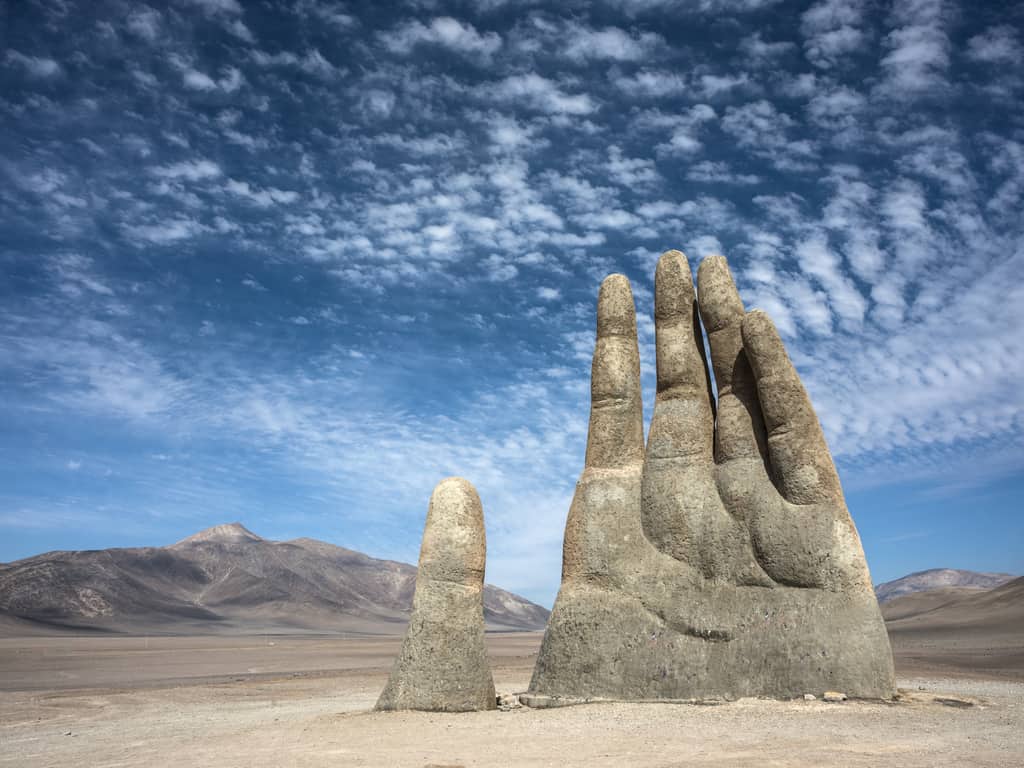
A hand in the sand, inspired by the natural surroundings of the Atacama Desert
Experience a respectful encounter in the Atacama Desert, a gentle touch bridging nature and humanity.

Now that you are equipped with all the information you need about this unique dessert, start creating your travel plans to Mars on earth already!
Salar de Uyuni – Find yourself in the World’s Largest Mirror

Expansive view of the Salar de Uyuni salt flats in Bolivia, showcasing the vast, white landscape under a clear blue sky

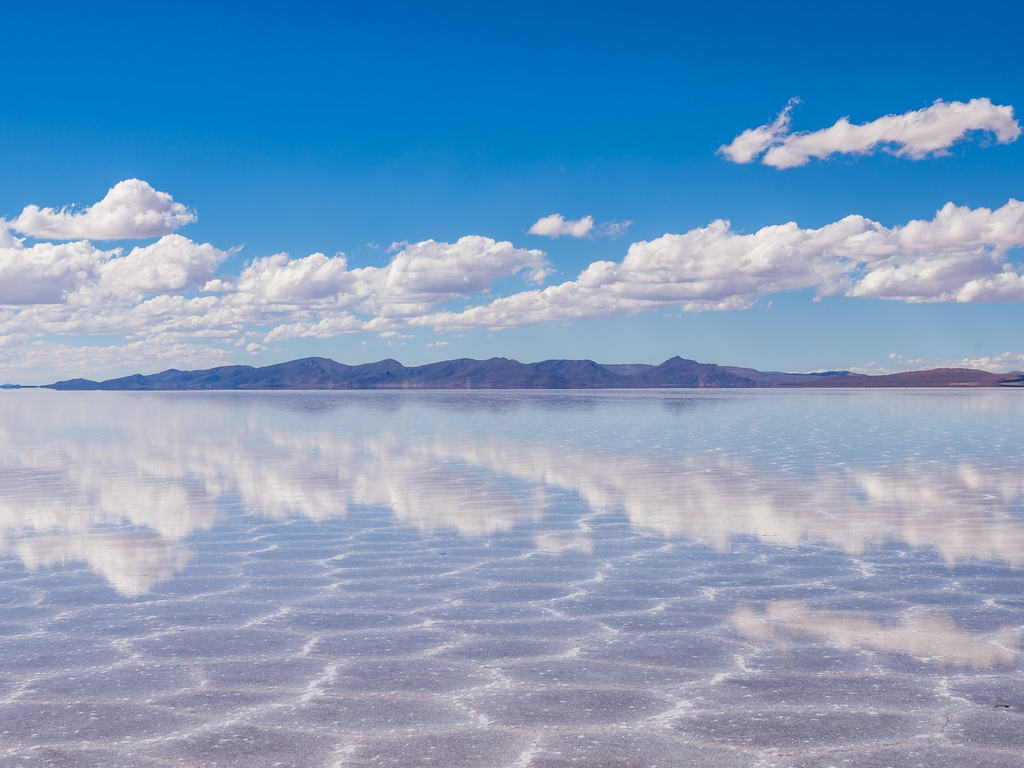
Nature can do things that sometimes Photoshop can’t – Salar de Uyuni in Bolivia is the perfect example. It is probably the world’s largest mirror, and the best part about this ‘mirror’ is that it is entirely natural.

Where is the flattest place on Earth?

Salar de Uyuni or Uyuni salt flat is the world’s largest salt flat. It extends to a massive 11,000 square kilometers, located in Bolivia, South America. It is a huge flat piece of land covered with layers and layers of salt, which manifests itself as polygonal patterns on the surface when there is no water. All this is a remnant of a prehistoric lake, which gradually dried up. It is located at a shocking 12,000 feet above the sea level.

Expansive view of the Salar de Uyuni salt flats in Bolivia, showcasing the vast, white landscape under a clear blue sky
Experience the breathtaking expanse of Salar de Uyuni, the world’s largest salt flat in Bolivia.

What is the best time to visit the flattest place on earth?

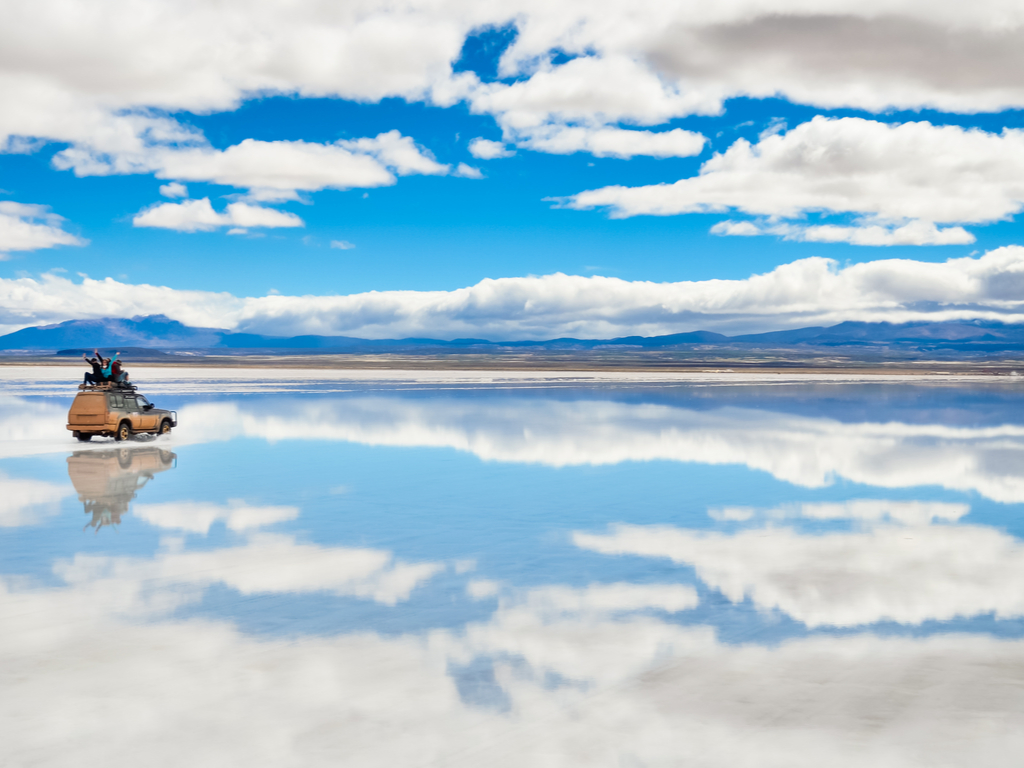
This incredible mirror phenomenon is only visible after rains. So you should be lucky enough to experience it if you come between January and March, that is, the wet season in Bolivia.

How to get to Salar de Uyuni in Bolivia?

There are many possible paths, as this salt flat in Bolivia shares borders with both Chile and Argentina. The most commonly followed route is from Uyuni, Bolivia. You just need to book a Salar de Uyuni tour, which is mostly a one-day trip.
But the best location to start off is from Tupiza, Bolivia. It is a four day trip by a tour operator, Salar de Uyuni, being the final destination.

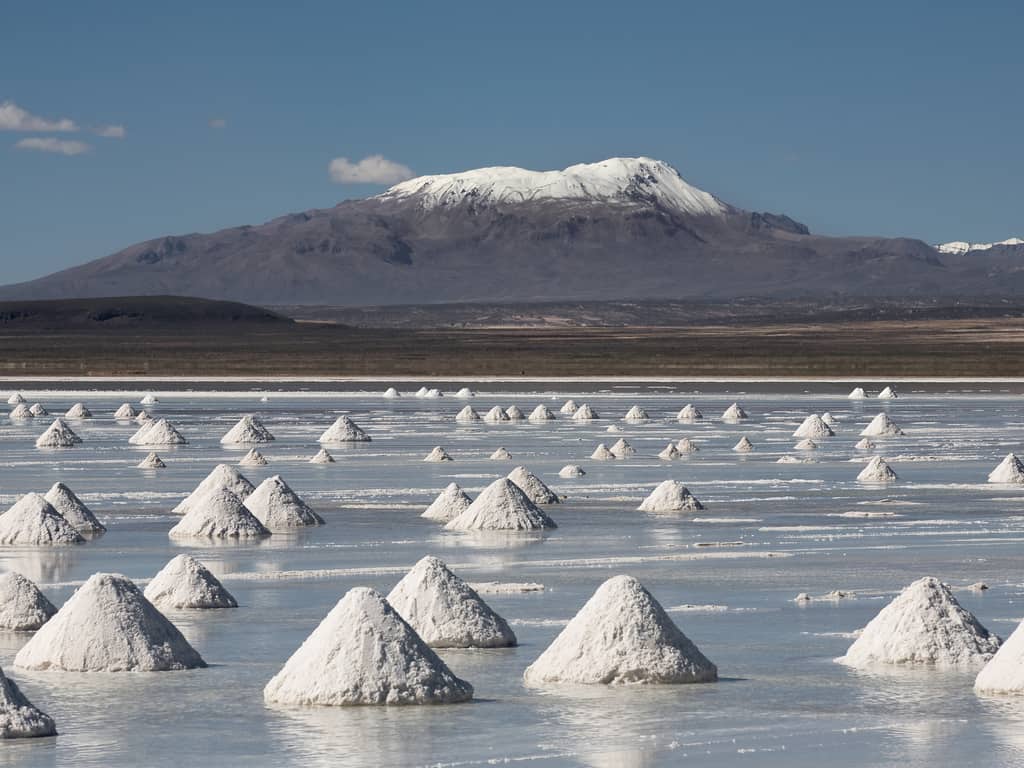
Traditional salt harvesting in progress at Salar de Uyuni, showcasing the local culture and industry
Discover the traditional art of salt harvesting at Salar de Uyuni, a unique aspect of Bolivian culture.

Important information about Salar de Uyuni tours

Salt flats are indeed the most popular of the Bolivia attractions. Instead of indulging in only the Uyuni salt flats, it is recommended to arrange the other incredible Bolivia attractions along with it. They include volcanoes, caves, geysers, hot springs, lakes, deserts etc. and need a minimum of three days to explore. Scheduled tours are always available to drive you through all these places.

Depending upon your budget, you may choose between a shared tour or a private tour. Private Uyuni salt flat tours are better and flexible as they come with a customizable itinerary and English speaking drivers. Also, you get what you pay for, so don’t indulge in any kind of cheap deals out there as it may lead to you getting a drunk driver and/or a damaged car.

At such challenging venues, these setbacks are not only inconvenient but also can endanger one’s life. So make sure you do your research before booking a particular Uyuni Salt Flat tour.

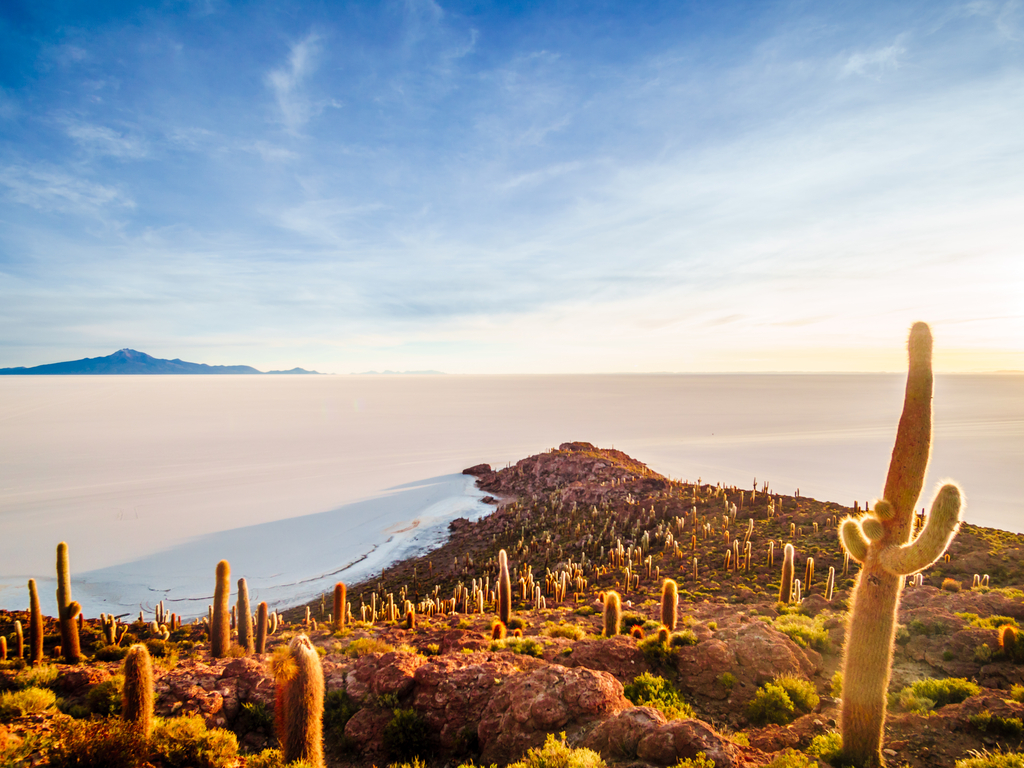
The mirror effect is totally unbelievable. You must as well visit the Incahuasi Island, which is located in the middle of the prehistoric lake. Make sure you carry all your essentials, as this trip is way more difficult than it seems. Illusions related to distance, altitude sickness, etc. are fairly common.

The picturesque Isla Incahuasi, an oasis of cacti and rock formations in the midst of Salar de Uyuni
Explore Isla Incahuasi, an island of cacti and ancient rocks amidst the salt flats of Salar de Uyuni.

Where to stay near Salar de Uyuni, Bolivia?

Several hotels in Uyuni are completely made of salt- The wall, floor, staircase, furniture, including beds! Staying in these is a once in a lifetime experience. Below are a few recommendations:

  • Hotel de Sal Cristal Samana
  • Casa de Sal – Salt Hotel
  • Hotel Boutique Atipax
  • Hotel Palacio de Sal
stunning mirror effect of Salar de Uyuni's wet season
Capture the stunning mirror effect of Salar de Uyuni’s wet season, a photographer’s dream in Bolivia