From the nomadic steppes of Kazakhstan to the frenetic streets of Hanoi, Asia is a continent so full of intrigue, adventure, solace, and spirituality that it has fixated and confounded travelers for centuries.
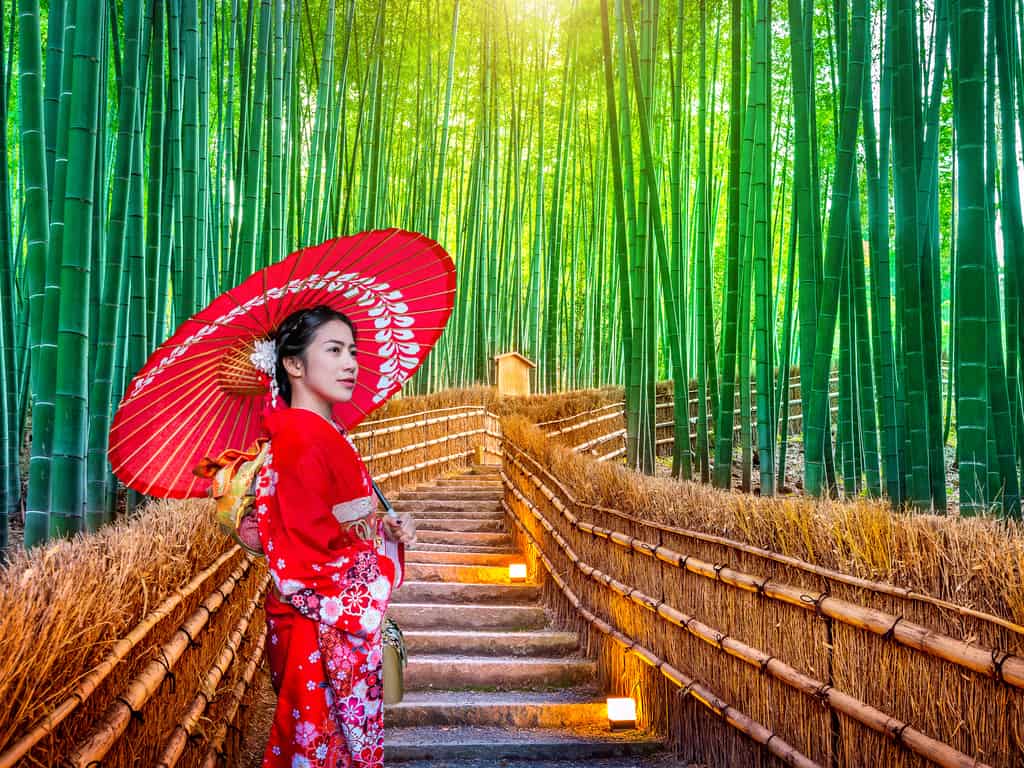
Arashiyama Bamboo Forest in Japan is a splendid and massive bamboo groove that reaches the sky and spread the greenery all around. The Sagano bamboo forest is a tranquil natural spot for tourists to explore and adore the exotic beauty of the Bamboos.
With the article going deep in the bamboo jungle and exploring the ravishing beauty of the Arashiyama Bamboo Grove, we will provide you complete details to plan your travel to this stunning land.
With the beauty of the bamboos, the ravishing air, the calmness of nature, and the clear sky, the moment spent here are sure to rejuvenate your soul and fill your heart with joy.
The beautiful scenery developed by them, with the sky high-hovering, and the cool breeze blowing through the jungle, will create the perfect awe-inspiring moment.
Don’t miss the spectacular night illumination at Arashiyama Bamboo Forest, a must-see on your Kyoto visit.
What is Arashiyama Bamboo Forest?
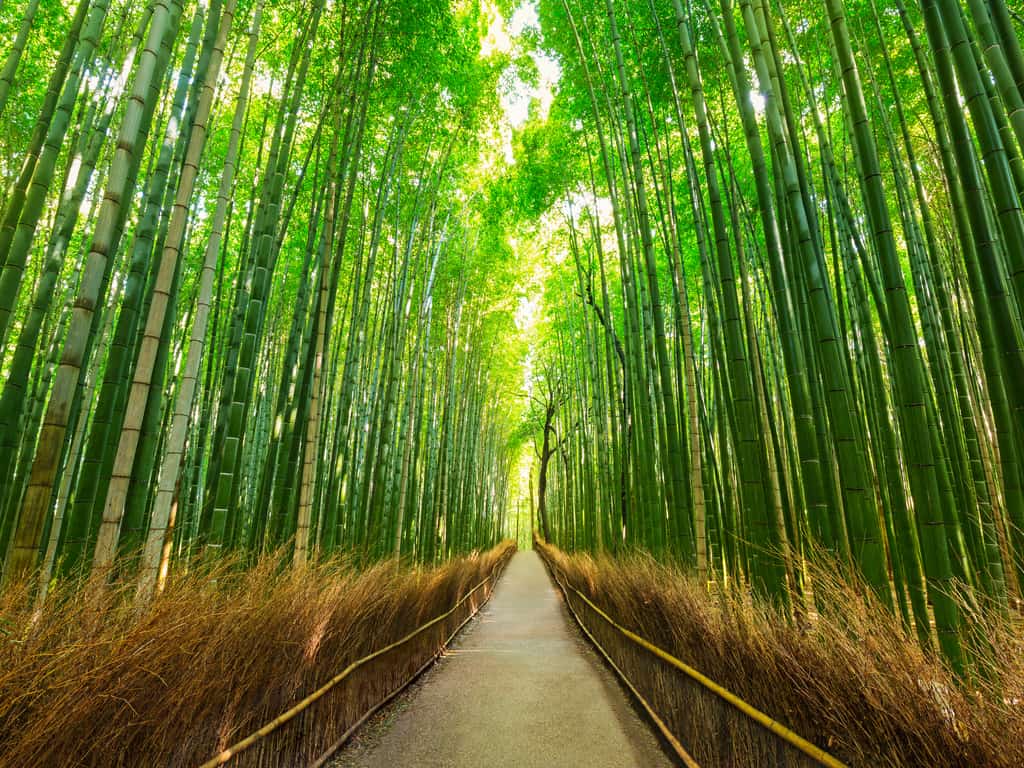
The stunning and beautiful Arashiyama Bamboo Forest or the Sagano Bamboo Forest is the miracle of nature located in the city of Kyoto, Japan. Growing tall on all the edges and the hue of green with the sun rays playing hide and seek to reach the ground, the forest grove is sparklingly beautiful.
With so many paths for the tourists to explore the charm of the bamboos, especially Moso Bamboo, the Arashiyama Bamboo Grove is wonderful.
How to get to Arashiyama Bamboo Forest?
The phenomenal Arashiyama Bamboo Grove is easily accessible and reachable. In contrast to the urban forest of Kyoto, this towering bamboo forest is glorious.
The fastest and the best way to reach the bamboo forest is by train. Take the JR train from Kyoto Station on the JR Sagano to Saga-Arashiyama Station. Get down at your destination and just walk for 10 minutes by following the signs to reach the remarkable Arashiyama bamboo grove.
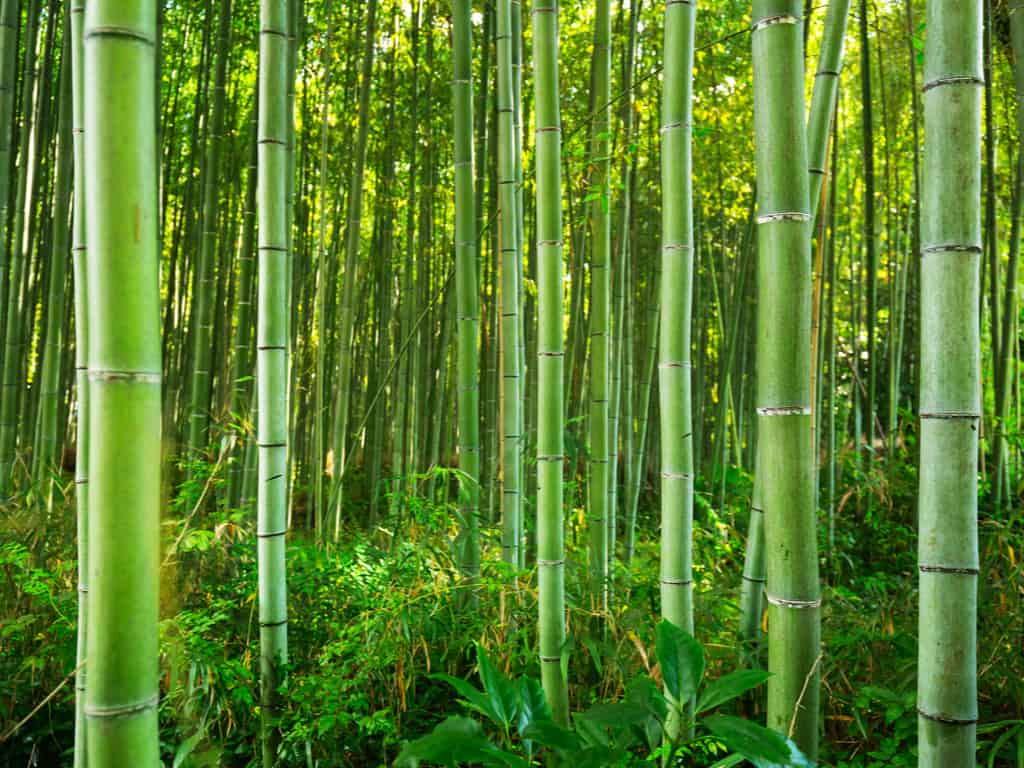
Discover the intricate details of bamboo stalks up close on your visit to Arashiyama Bamboo Forest.
What are Arashiyama Bamboo Forest’s visit hours?
The breathtaking beauty of the bamboos and the beautiful climate will rejuvenate your soul and lift you with happiness. The amazing hue of green spread by the sunlight and the pure breeze touching your cheeks and hair is just pleasant.
With beauty spread all around, the Arashiyama bamboo forest hours for the tourists for 24 hours. The best time to visit the bamboo paradise is around 12 noon when the sunlight is perfect, or even better is the time of sunrise.
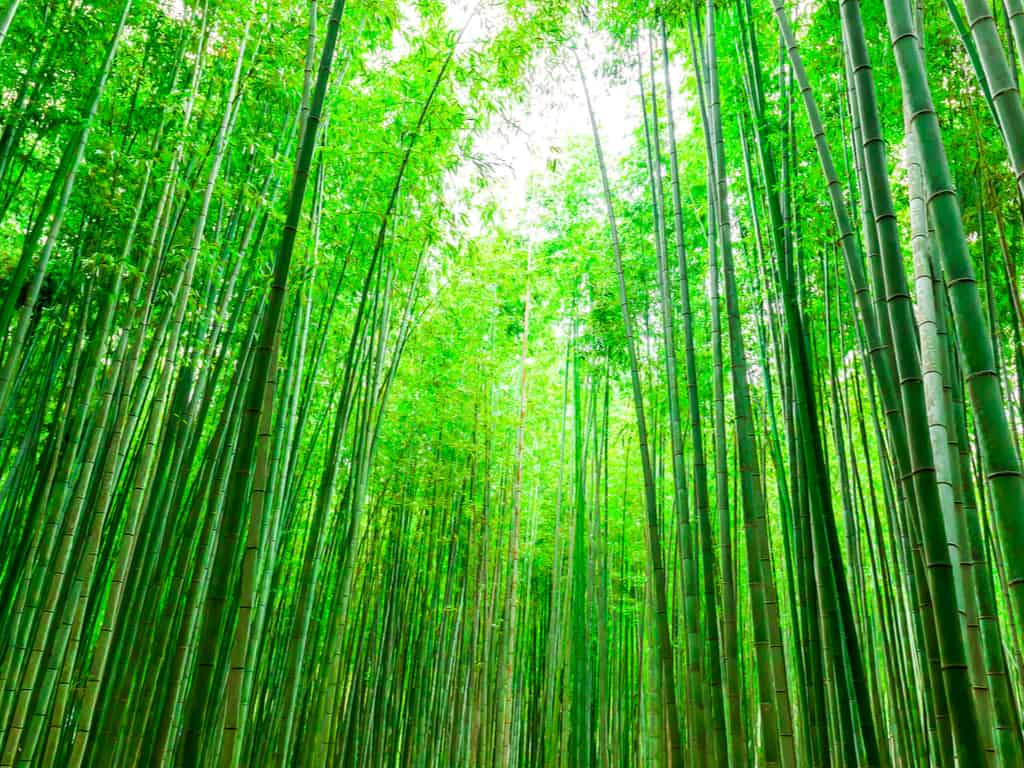
Experience the magical play of light and shadow during your visit to Arashiyama Bamboo Forest.
What to do at the Bamboo Forest?
The alluring beauty of bamboo creates a jaw-dropping scene at the Arashiyama Bamboo Forest. With so much to explore, the place is sheer beauty.
The best things to do here:
Go for a rickshaw ride through Arashiyama Bamboo Forest
Visit the wooden Togetsukyo Bridge
Join the amazing cormorant fishing (ukai) tour
Attend Arashiyama Hanatouro Illumination
Hike up Arashiyama Monkey Park
Visit Tenryuji Temple
Explore the Kuri – Temple Living Quarters
Visit the Hatto – Dharma Hall
Visit Hojo – Abbot’s Quarters
Stroll through the tranquil paths when you visit Arashiyama Bamboo Forest in Kyoto – a serene and mystical experience.
When to visit Arashiyama Bamboo Forest?
With so much to explore and the exotic beauty, this place is awe-interesting. The Arashiyama Bamboo Forest is open for visitors all round the year. With summer the best time and December the most favorable month, this place is sheer beauty to explore.
The bamboo jungle in Japan is stunningly amazing. The Arashiyama Bamboo Forest is the splendid beauty of nature that creates an alluring moment and paradise here. With the soothing atmosphere and beauty spread, the place is open all throughout the year. Exploring this place is stupendous and jaw-dropping. One should definitely visit this place to explore the wilderness of this place along with several other beauties of the site!
With the series of volcanic eruptions that took place years ago and trembled the land of the Central Anatolian, the beautiful Cappadocia came into existence.
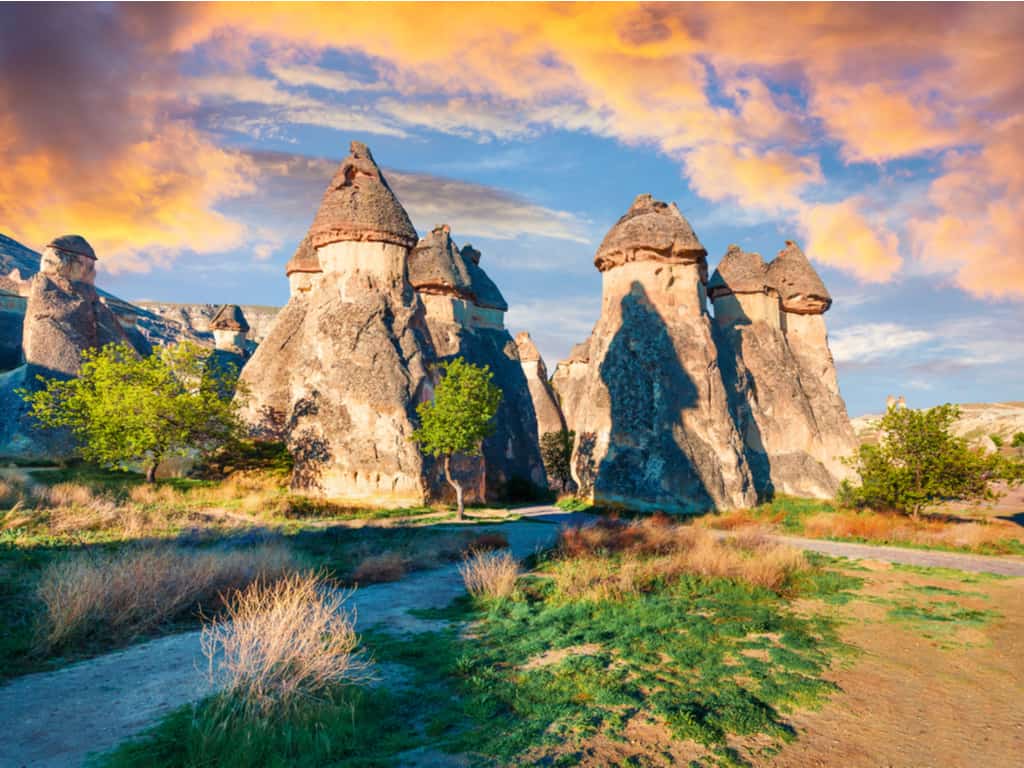
The thick ash of eruption solidified to tuff and eroded by natural forces created chimney-like structures.
These are commonly known as the Cappadocia fairies or Cotton Castles. The Cappadocia, Turkey is pristine beauty and a unique place that will let you go crazy as you explore more and dig in deep.
So let us float above this beautiful place of Cappadocia, Turkey to know more about it.
Where is Cappadocia?
The cotton castles of Cappadocia are located in Turkey. Going through three Anatolian provinces – Nevsehir, Keyseri and Nigde, the Cappadocia is spread for about 5,000 kilometers and has an altitude of over 1,000 meters.
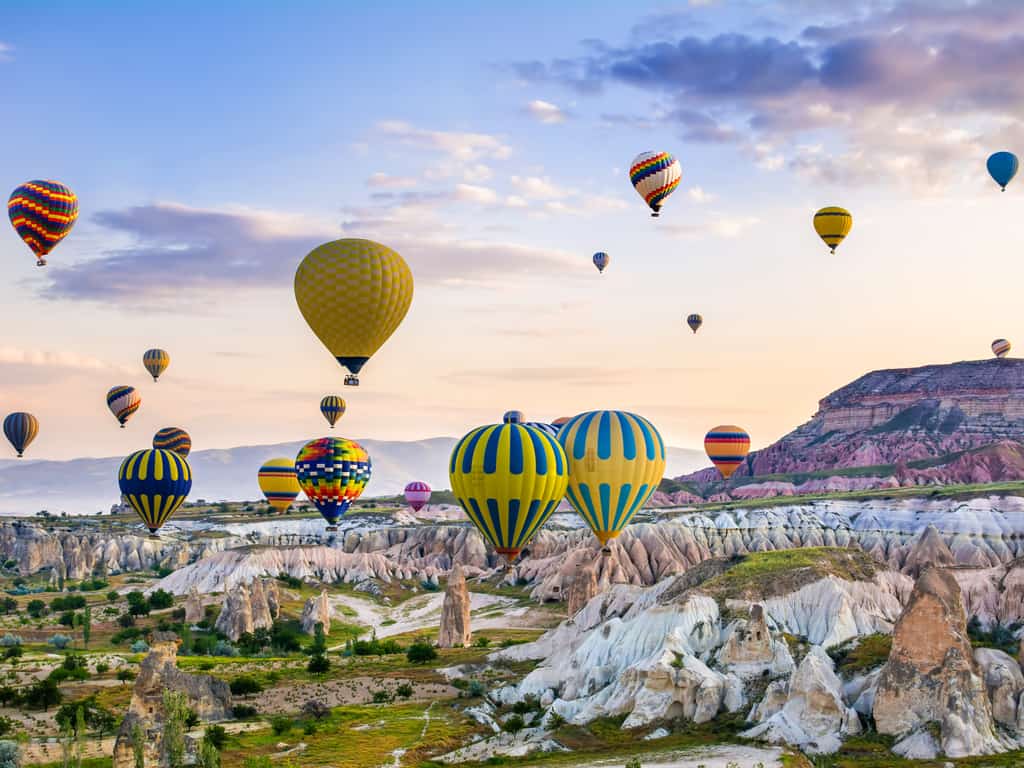
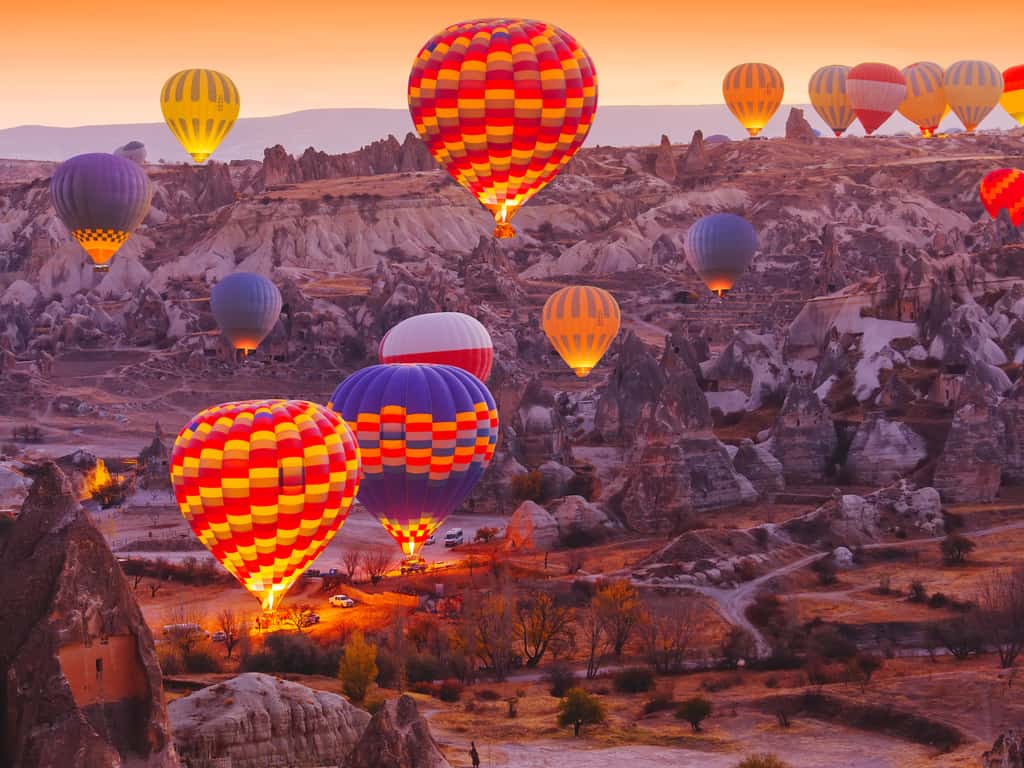
The eruptions that took place long back in the past created the marvelous chimneys of Cappadocia that we see today. While sitting in the Cappadocia hot air balloon and exploring the wild terrain, the feeling is just amazing and gives you butterflies in your stomach.
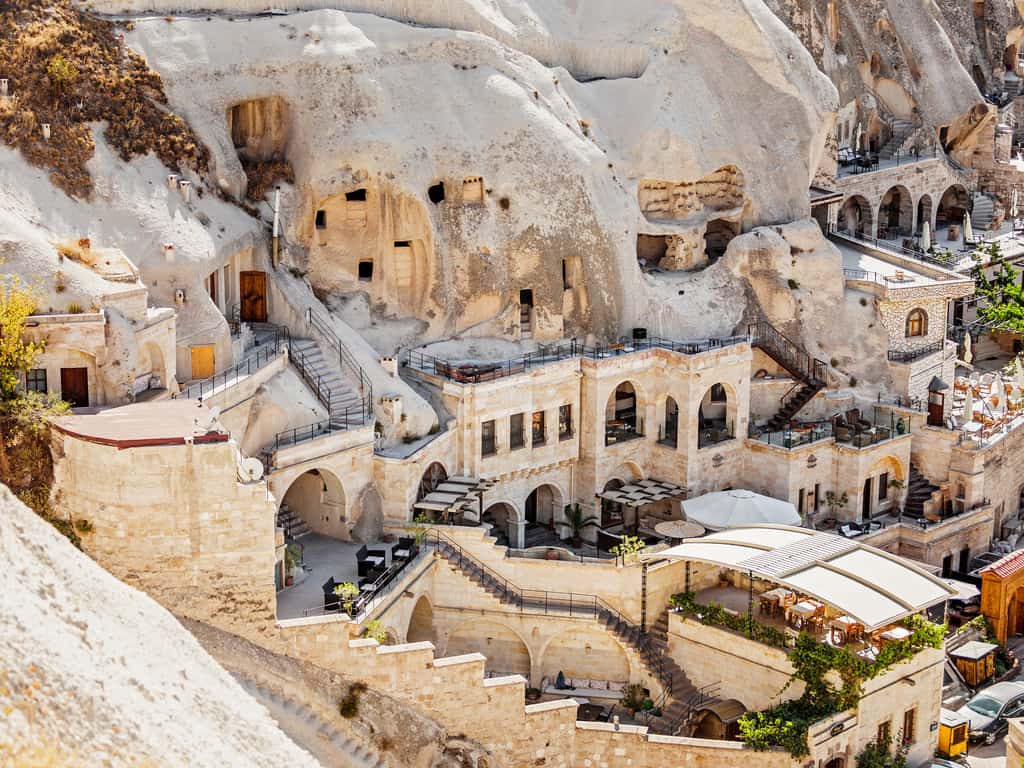
Discover the historical cave dwellings on your visit to Cappadocia, Turkey – a journey through time.
How far is Cappadocia from Istanbul?
The astonishing land of the Cotton Castles is going to leave to speechless and a true admirer of the beauty. Nature created a surprising story here that can be seen with naked eyes even from the sky. Istanbul to Cappadocia is just 730 Kilometers. One can choose a flight of 1.5 hours to reach Cappadocia from Istanbul.
Witness the breathtaking sunset over the valleys during your visit to Cappadocia, Turkey.
Why is Cappadocia famous?
With the amazing and unique rock formations scattered over the plain and the noteworthy landscape of turkey full of natural beauty, Cappadocia is the perfect destination for the tourists.
Exploring the Cappadocia map from the sky in the Cappadocia hot air balloon is dream and bliss. The amazing and robust rocks standing below you while you fly high in the sky will surely give you Goosebumps.
Visit Cappadocia, Turkey to explore the UNESCO World Heritage Site of Goreme Open Air Museum.
What to do in Cappadocia?
The rocky formations and the Cappadocia hot air balloon are the topmost priorities. But a 2-3 days trip to this stupefying place will grant you an opportunity to explore more and take part in many activities as your heart desires.
The best place to explore on the Cappadocia map and activities to do here is:
Explore the underground cities
Admire the Goreme Open Air Museum
Visit Pasabag the Monk Valley
Hike the Devrent Valley
Stay in a Cave Hotel
Try on some pottery and hand ceramic painting
Give a shot to horse riding
Go for a ride in a hot air balloon
Experience a magical hot air balloon ride when you visit Cappadocia, Turkey – a surreal landscape adventure.
The rock formations made of volcanic eruptions and the hot air balloon trip make the Cappadocia a perfect place for a romantic evening in the sky. So book your ticket to this lovely destination today!
Where to stay in Cappadocia?
With such an amazing view of the Cappadocia fairies, this place of Turkey is the best to spend holidays. With beauty spread all over the place and the evening such marvelous, staying here is fun.
The best places near Cappadocia that one can choose to have a perfectly warm and cozy stay are:
Goreme – The amazing hotels to explore at this place are: Sultan Cave suites, Doors Of Cappacodia, Mithra Cave Hotel, Artemis cave Suites, Cappadocia Cave Land Hotel
Uchisar – Try booking one of these here: Rox Cappadocia, Museum Hotel, Taskonaklar, Cappadocia Cave Resort & Spa
Urgup – Go for one of the below places: Kayakapi Premium Caves Cappadocia, Oread Cave Suites, Dere Suites Cappadocia
The Tianzi Mountains in China’s Zhangjiajie National Forest Park and the surrounding Wulingyuan Scenic Area offer visitors a chance to experience some of the most stunning natural landscapes and cultural heritage in China. Whether you’re exploring the Avatar Mountains, hiking through the park’s lush forests, or taking in the breathtaking views from the glass bridge or cable cars, there is something for everyone in this incredible destination. With a little planning and preparation, you can make the most of your visit to Zhangjiajie National Forest Park and create memories that will last a lifetime.
If you’re fascinated by the natural scenery of the Avatar movie and also want to physically experience it, then you need to visit the Zhangjiajie mountains in China.
In this article, we will take you on a journey through the top things to see and do at Tianzi Mountains in China’s Zhangjiajie National Forest Park.
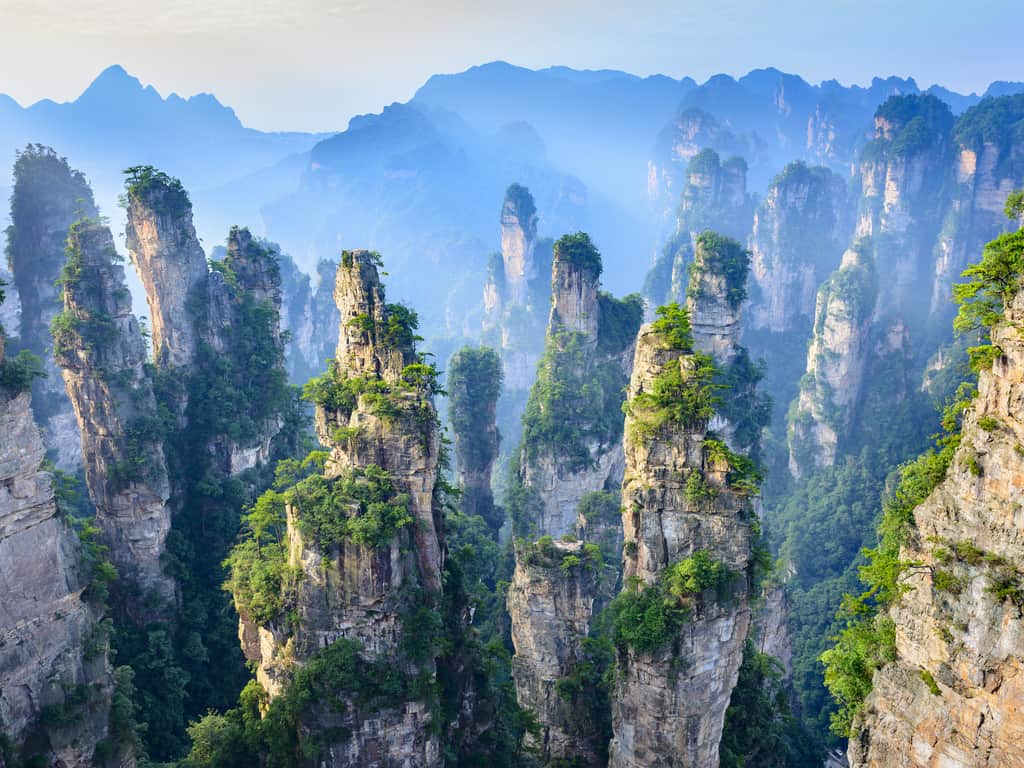
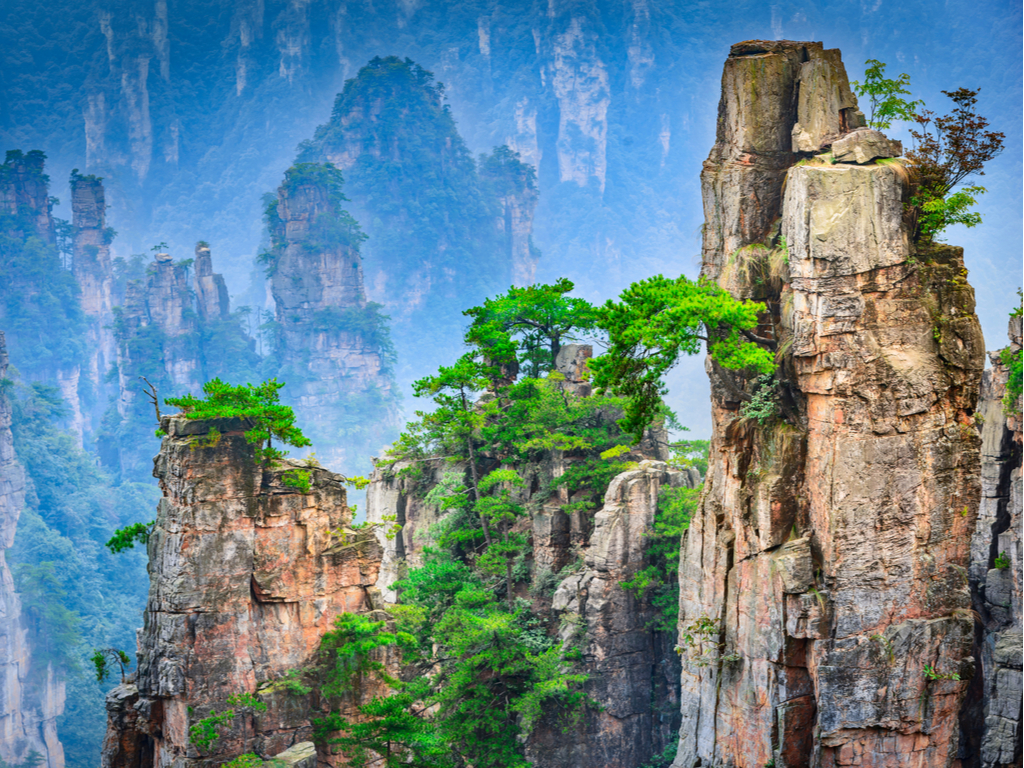
Explore the stunning Tianzi Mountains in Zhangjiajie’s Wulingyuan Scenic Area, known for their towering sandstone pillars and lush forests.
Exploring the Avatar Mountains: A Guide to Tianzi Mountains’ Iconic Peaks
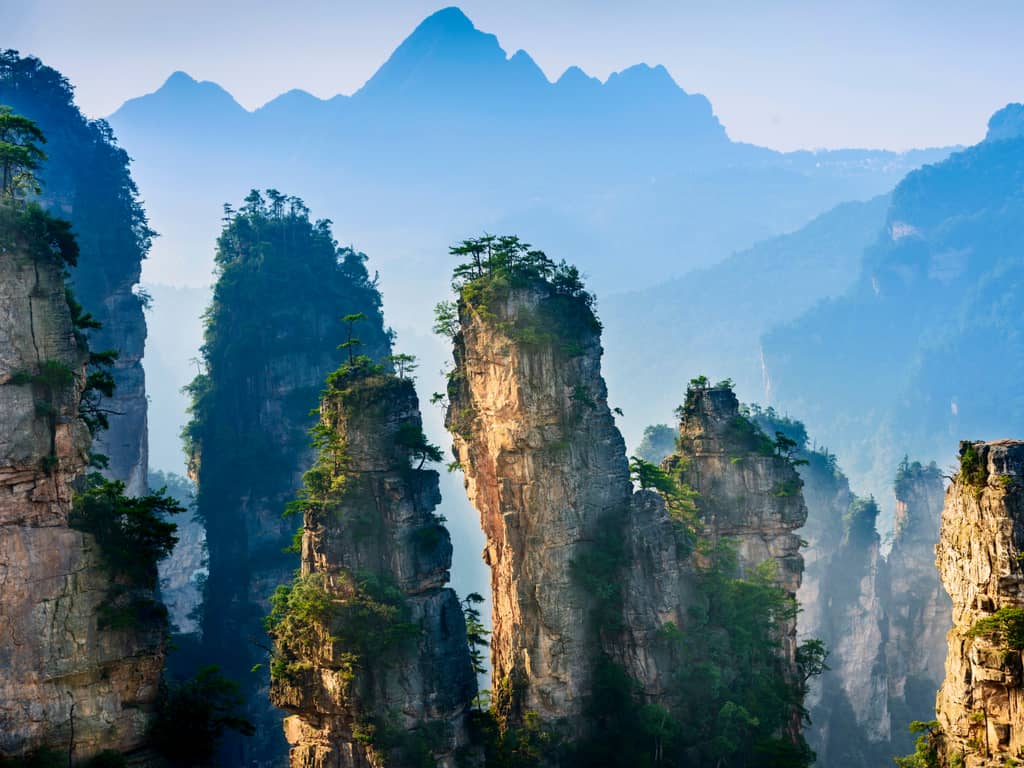
The Tianzi Mountains are famous for their iconic peaks, which inspired the floating Hallelujah Mountains in the blockbuster movie Avatar. The most famous of these peaks is the pillar-like formation called the Southern Sky Column, which stands 1,080 meters tall. To get a bird’s-eye view of the Avatar Mountains, take a cable car up to the summit of Tianzi Mountain. From there, you can see panoramic views of the park’s peaks and valleys.
Another must-see peak is the Yuanjiajie Scenic Area, which is home to the Bailong Elevator, the world’s tallest outdoor elevator. The elevator takes visitors up 326 meters to a viewing platform at the top of a sheer cliff face. From there, you can take in stunning views of the surrounding peaks and forests.
Tips for Hiking in Zhangjiajie: What to Know Before You Go
Zhangjiajie National Forest Park is a hiker’s paradise, with trails that wind through some of the most stunning landscapes in the world. However, hiking in the park can be challenging, especially for those who are not used to steep inclines and rugged terrain. Here are some tips for hiking in Zhangjiajie:
Wear comfortable, sturdy shoes with good traction.
Dress in layers, as the weather can change quickly in the mountains.
Bring plenty of water and snacks, as there are limited places to buy food and drinks in the park.
Carry a map and a compass, as some of the trails can be confusing and poorly marked.
Be prepared for steep inclines and narrow paths, especially in the more remote areas of the park.
A Guide to Tianzi Mountains Glass Bridge: The World’s Longest and Highest Glass-Bottomed Bridge
The Zhangjiajie Glass Bridge is a marvel of modern engineering, stretching 430 meters across a deep canyon and standing 300 meters above the ground. It is the world’s longest and highest glass-bottomed bridge, and offers visitors a heart-pumping experience unlike any other. Walking across the bridge can be terrifying, as the glass panels beneath your feet allow you to see all the way down to the canyon floor.
To avoid long lines and crowds, it is recommended that you book your visit in advance. Visitors are only allowed to cross the bridge in groups of 10, and tickets are limited. It is also important to note that the bridge can be closed in inclement weather, so be sure to check the forecast before you go.
Witness the mystical beauty of a misty morning in the Tianzi Mountains, part of the enchanting Wulingyuan Scenic Area in Zhangjiajie.
Discovering the Beauty of Tianmen Mountain: A Day Trip from Zhangjiajie
Just a short distance from Zhangjiajie National Forest Park is Tianmen Mountain, another natural wonder that is not to be missed. The mountain is home to the Tianmen Cave, a natural arch that is 131 meters tall and 57 meters wide. To reach the cave, visitors must take a cable car up the mountain and climb 999 steps.
The mountain is also home to a glass walkway that extends out over the edge of a cliff, as well as a stunning waterfall and a temple that is built into the side of a cliff. There are plenty of hiking trails and scenic spots to explore, making Tianmen Mountain a great day trip from Zhangjiajie.
How to Avoid the Crowds in Zhangjiajie
Zhangjiajie National Forest Park is one of China’s top tourist destinations, so it can get quite crowded, especially during peak travel seasons. However, there are some off-the-beaten-path destinations within the park that are worth exploring, and can help you avoid the crowds. Here are a few options:
Golden Whip Stream: This scenic area is located in the center of the park, and features crystal-clear waters, towering cliffs, and lush vegetation. The trail along the stream is a pleasant, leisurely walk that is suitable for all fitness levels. While it can still get busy, it is generally less crowded than some of the park’s more famous attractions.
Huangshi Village: This area is located in the western part of the park, and offers stunning views of the surrounding peaks and valleys. The trail can be quite steep and strenuous in places, but the payoff is worth it. The area can get crowded during peak season, but it is generally less busy than the Avatar Mountains or the Glass Bridge.
Baofeng Lake: This scenic lake is located in the southern part of the park, and can be reached by a short boat ride. The lake is surrounded by towering cliffs and dense forests, and is a peaceful, relaxing oasis in the midst of the park’s hustle and bustle.
Exploring Zhangjiajie’s Unique Flora and Fauna
Zhangjiajie National Forest Park is home to a rich array of flora and fauna, much of which is unique to the area. Some of the park’s most interesting plants include the Chinese yew, which is a slow-growing, long-lived tree that is used in traditional Chinese medicine, and the Chinese dove tree, which is known for its distinctive, fragrant flowers.
The park is also home to a wide range of animals, including macaques, civets, and many species of birds. The park’s most famous resident, however, is the rare and endangered South China tiger. While it is highly unlikely that you will see one of these elusive creatures during your visit, the park is working hard to protect and preserve the species.
Admiring the Stunning Landscapes of the Wulingyuan Scenic Area
Zhangjiajie National Forest Park is just one part of the larger Wulingyuan Scenic Area, which covers more than 26,000 hectares of stunning natural landscapes. In addition to the Avatar Mountains and other famous peaks, the area is home to dense forests, deep canyons, and rushing rivers.
One of the most popular ways to explore the Wulingyuan Scenic Area is by taking a leisurely boat ride down the Baofeng Lake. The lake is surrounded by towering cliffs and dense forests, and the boat ride is a peaceful, scenic way to take in the area’s beauty.
Sunset illuminating the peaks of Tianzi Mountains, casting a golden glow over Zhangjiajie’s Wulingyuan Scenic Area.
Zhangjiajie’s Cable Cars: Which One to Take and What to Expect
Zhangjiajie National Forest Park is home to a number of cable cars that can take visitors up to some of the park’s most stunning peaks and viewpoints. The cable cars are a convenient and efficient way to get around the park, but they can also be quite crowded during peak season. Here’s a rundown of some of the park’s cable cars:
Bailong Elevator: This is the world’s tallest outdoor elevator, and takes visitors up to the top of the Yuanjiajie Scenic Area. It can be quite crowded, but the views from the top are worth it.
Tianzi Mountain Cable Car: This cable car takes visitors up to the top of Tianzi Mountain, where you can see panoramic views of the Avatar Mountains and surrounding areas.
Huangshizhai Cable Car: This cable car takes visitors up to the Huangshizhai ScenicArea, which is located in the western part of the park. From the top, you can see sweeping views of the surrounding valleys and peaks.
Jinbian Cable Car: This cable car takes visitors up to the Jinbian Stream, which is a popular area for hiking and exploring. The cable car ride offers stunning views of the park’s rugged landscapes.
While the cable cars can be a bit pricey, they are generally a worthwhile investment, as they can save you time and energy in getting to some of the park’s more remote areas.
What is Zhangjiajie famous for?
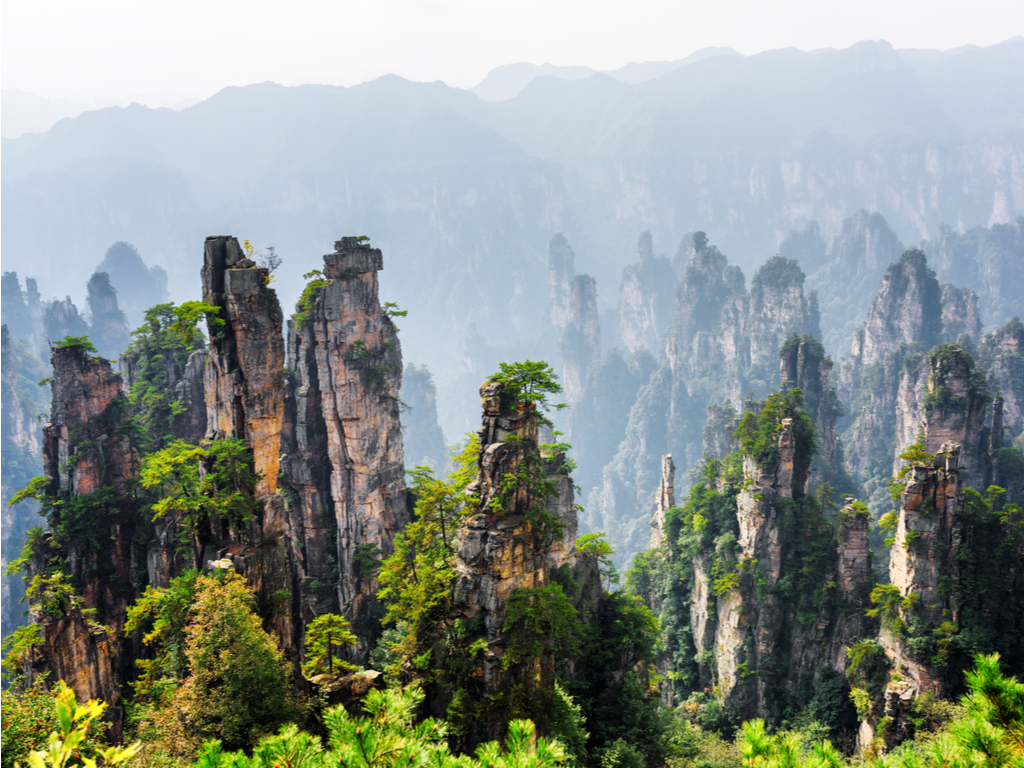
Zhangjiajie is popular for its 3,000 rock pillars. These pillars are over 1,000 feet tall and densely covered with green foliage. They were formed naturally by erosion and now they bring in at least 30 million tourists each year.
Among these pillars, one was known as the “Southern Sky Column” and its height crossed 3,544 feet in the air, which is equal to 78 school buses in length.
In 2010 it was renamed “Avatar Hallelujah Mountain” – after the movie “Avatar”. The movie used pictures of the pinnacles and took inspiration for the floating mountain of Pandora.
The Cultural Significance of Zhangjiajie and Its Place in Chinese History
The Tianzi Mountains in China’s Zhangjiajie National Forest Park and the surrounding Wulingyuan Scenic Area have played an important role in Chinese history and culture for centuries. The area is home to several minority groups, including the Tujia, Miao, and Bai people, who have their own unique languages, traditions, and customs.
One of the most important cultural sites in the area is the Huangshi Village, which was once a strategic military outpost during the Ming Dynasty. The village is now a popular tourist destination, and offers stunning views of the surrounding peaks and valleys.
Another cultural highlight is the Zhangjiajie Grand Canyon Glass Bridge, which is designed to look like a traditional Chinese ink painting. The bridge is not only an engineering marvel, but also a nod to China’s rich artistic and cultural heritage.
In addition to its cultural significance, Zhangjiajie National Forest Park is also an important site for scientific research and preservation. The park is home to more than 3,000 plant species, as well as a wide range of animals, many of which are rare and endangered.
Discover the Tianzi Mountains from above, with an aerial view showcasing the lush valleys and sandstone formations in Wulingyuan.
How to get to Zhangjiajie in China
Zhangjiajie can be accessed by either air or railroad. Other major tourist cities in China nearby are Guilin, Chengdu, Shanghai, and Beijing. However, the most convenient way to get to Zhangjiajie is by air.
Once you get to Zhangjiajie, there are several local means of transportation. Recommended are the buses from the city to the Wulingyuan Scenic Area and Zhangjiajie National Forest Park China.
Accessing Zhangjiajie by air
Zhangjiajie Hehua International Airport is located in Yongding District in Zhangjiajie. From there you will get direct flights to and Shenzhen, Guangzhou, Shanghai, Beijing, Changsha, and other important Chinese cities.
In case you are in any other Chinese city that doesn’t offer a direct flight to Zhangjiajie, you can take a connecting flight at Changsha, Guangzhou, or Shanghai.
Note that most flights to Zhangjiajie land in the evening. You can easily get city buses, airport shuttle buses, and taxis from the airport to various areas in Zhangjiajie city.
Accessing Zhangjiajie by railroad
Zhangjiajie Railway Station offers a well-structured rail network that directly links Zhangjiajie to most cities in China like Changsha, Guiyang, Shenzhen, Guangzhou, Shanghai, and Beijing.
The rail station is located 2km south of the center of the city and 1km away from the Tianmen Mountain cableway station.
One reason why getting to Zhangjiajie by railroad is not advisable is because the journey usually takes long hours. Nevertheless, if you’re traveling to Zhangjiajie from Guilin or Yichang, going by train can be the better option.
No chapter in the annals of history is as intriguing as the story of how a few peasants stumbled upon this historical monument in Shaanxi, China. The archeological value of the Terracotta Army is only compounded by the extremely individualized figurines. Do you still have to wonder why this UNESCO World Heritage site is on our radar?
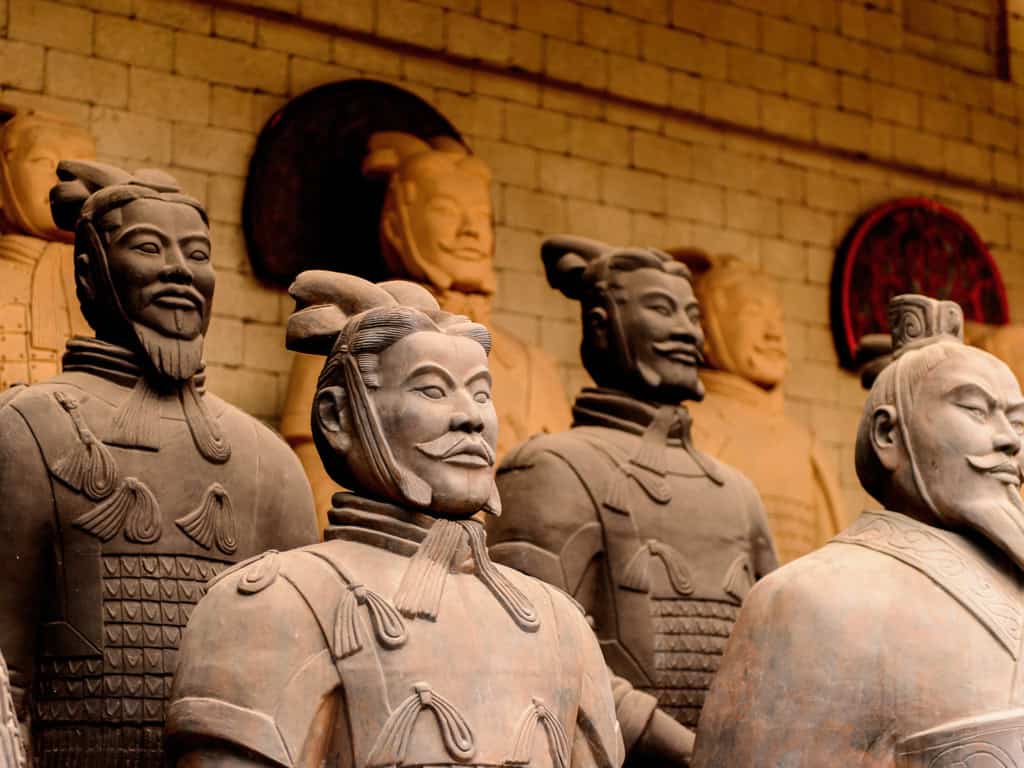
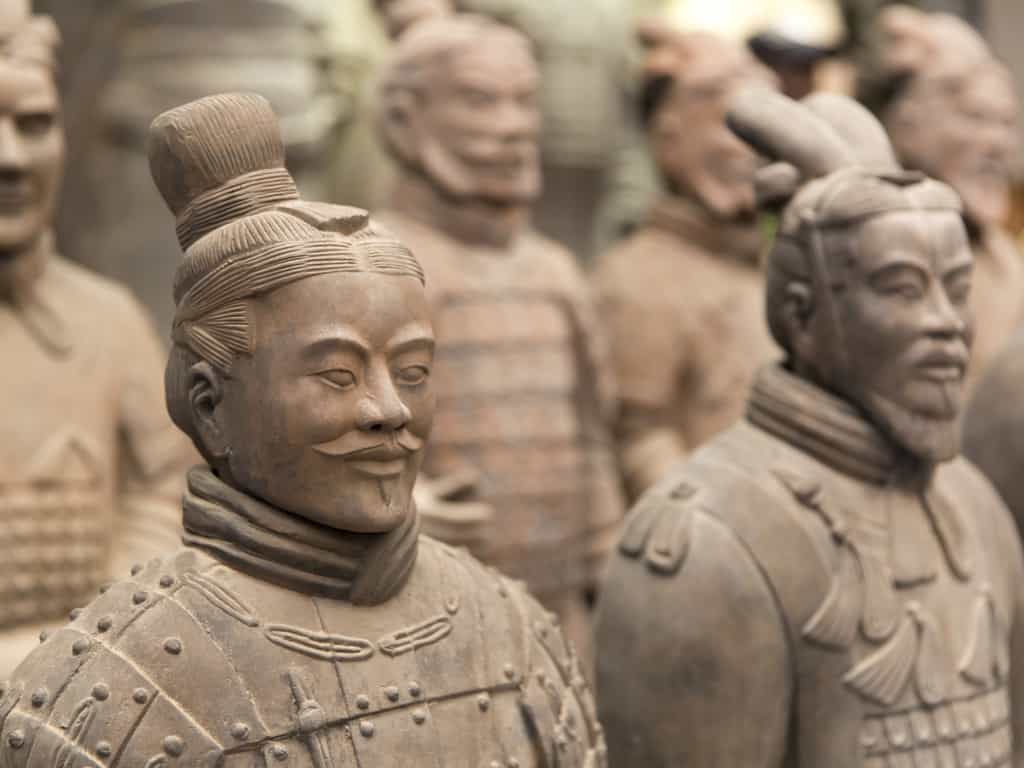
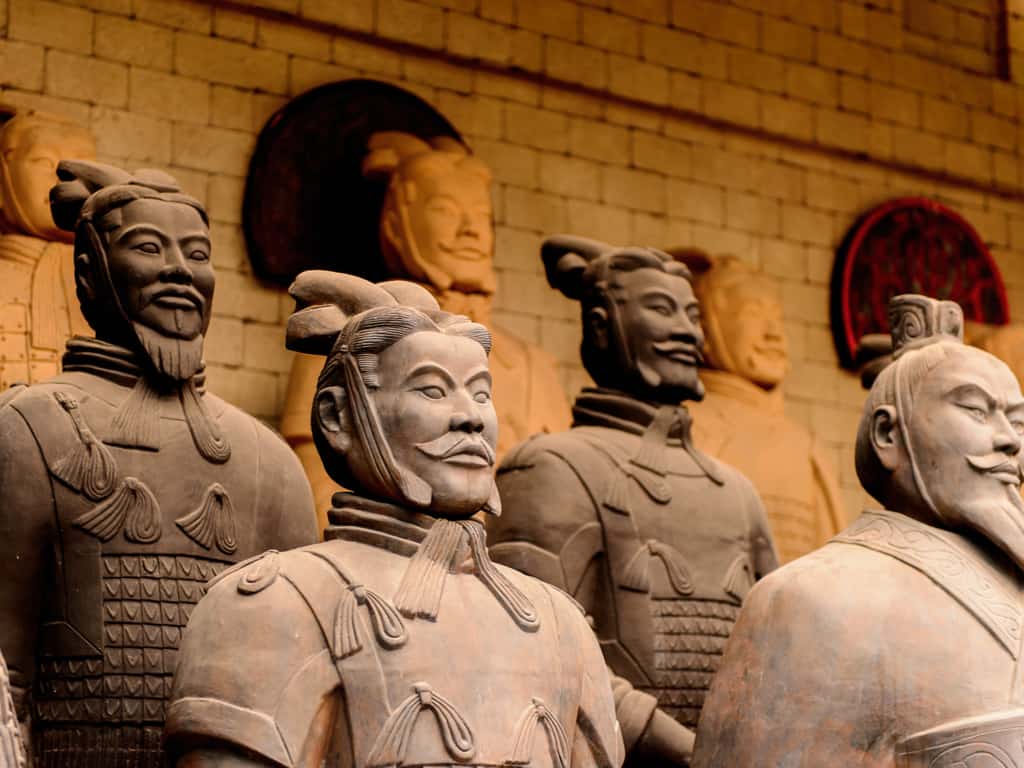
The ancient sculptors demonstrated extreme attention and meticulousness while moulding these figures.
Why was the Terracotta Army built?
Only one thing comes to mind when you think of a series of Chinese warrior statues, right? However, the inspiration behind the Terracotta Army was not to promote warmongering but to celebrate the immensely complex administrational structure in China during Qin Shi Huangdi’s illustrious reign. As a tribute to the innovations of a standardized writing script, measures, and weights discovered during the emperor’s rule, the mausoleum intended to incorporate the Chinese statues as well.
Not only do you find warriors here but also waterfowl, musicians, court officials, and acrobat troupes. The Terracotta Army symbolizes the microcosm of the court that existed at that time in history – his death marked the demise of one of the most Byzantine political systems that the world has ever witnessed.
Explore the awe-inspiring Terracotta Army in Xi’an, a magnificent testament to China’s ancient history.
Who built the Terracotta Army
Shih Chi – an ancient Chinese scripture – is the ultimate source for resources on the Terracotta Army. It points out that Qin Shi Huangdi, the ‘First Emperor’ of the Qin state, ordered his best artisans to construct a mausoleum in his honor.
Zhang Han, the Senior General, and Li Si, the Prime Minister of Qin, was assigned the task of overseeing the design and layout aspects of this modern marvel. The intricately designed Chinese statues formed an essential part of the mausoleum’s imperial structure.
Discover the intricate details of each Terracotta soldier, a masterpiece of ancient Chinese art and craftsmanship.
When was the Terracotta Army constructed?
The history of the Terracotta Army is one that dates back to 2200 years between the period 247 BC to 208 BC.
What is the best time to visit and see the Chinese statues?
The Chinese warriors are available to tourists throughout the year. But if you want to pick a time of the year, we would recommend visiting the museum between September and October or from March to May. This is because the weather is pleasant during these times and will afford a leisurely trip to this magnificent indoor museum.
Bonus: If you wish to avoid crowds, you might want to visit during the lunch hour.
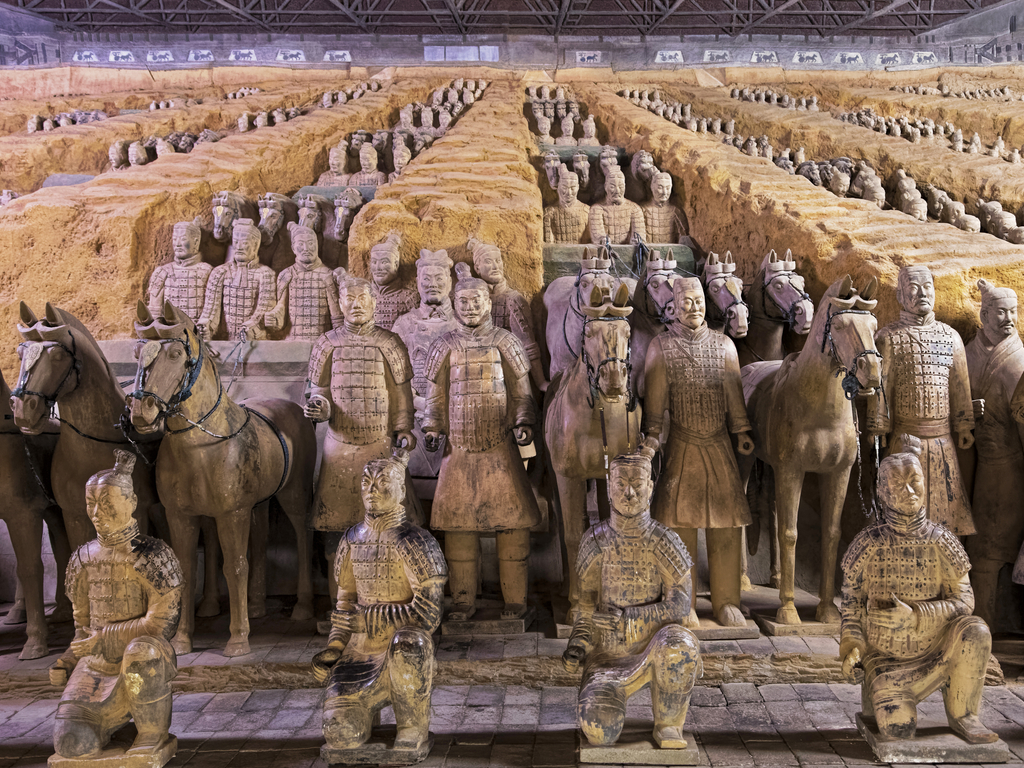
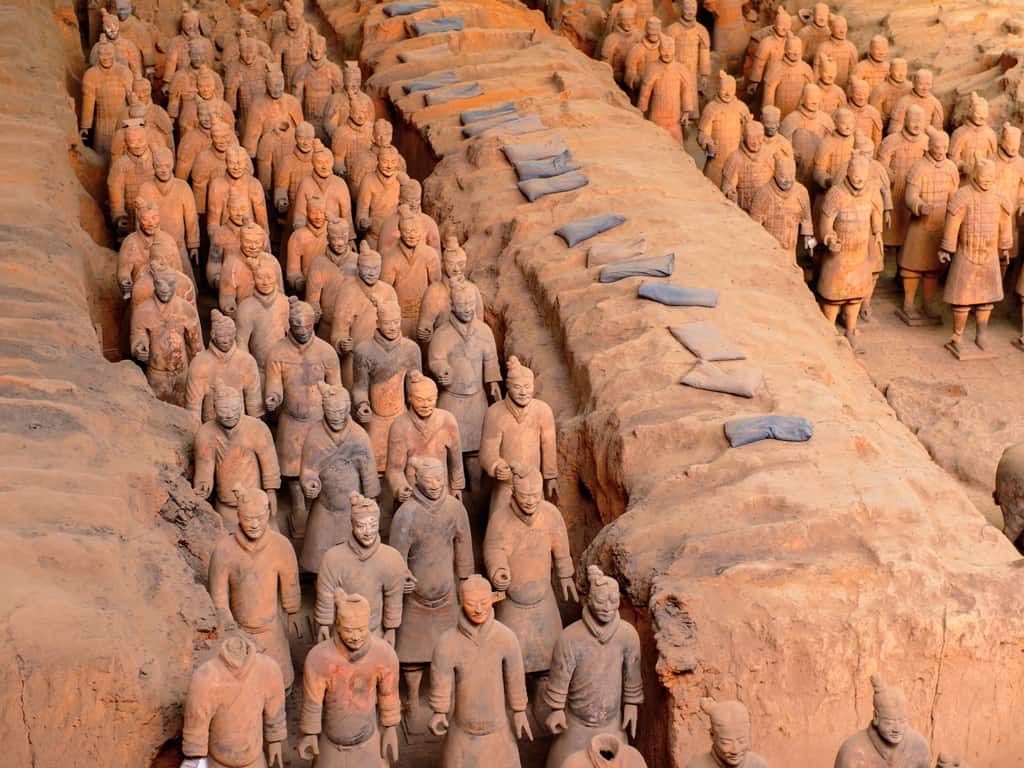
Witness the grand scale of the Terracotta Army burial site, where hundreds of statues stand guard in ancient China.
Top 3 interesting facts about Terracotta Army
The Chinese statues measure about 1.85 meters in height on an average basis. This is because of ancient war forms required strong, tall soldiers.
The Terracotta Army is grey now due to humidity. Originally, they were originally quite colorful with armor and faces painted with bright green, red, and even purple colors.
The Chinese warriors are only found in three of the four pits that are located at the mausoleum.
Admire the uniqueness of each Terracotta soldier, with distinct facial expressions reflecting the diversity of ancient China’s army.
Where to stay during the visit of the eternal Chinese heroes?
Trust us – you will definitely depart the Terracotta Army with a sense of awe and wonder for the magnificence of human history.
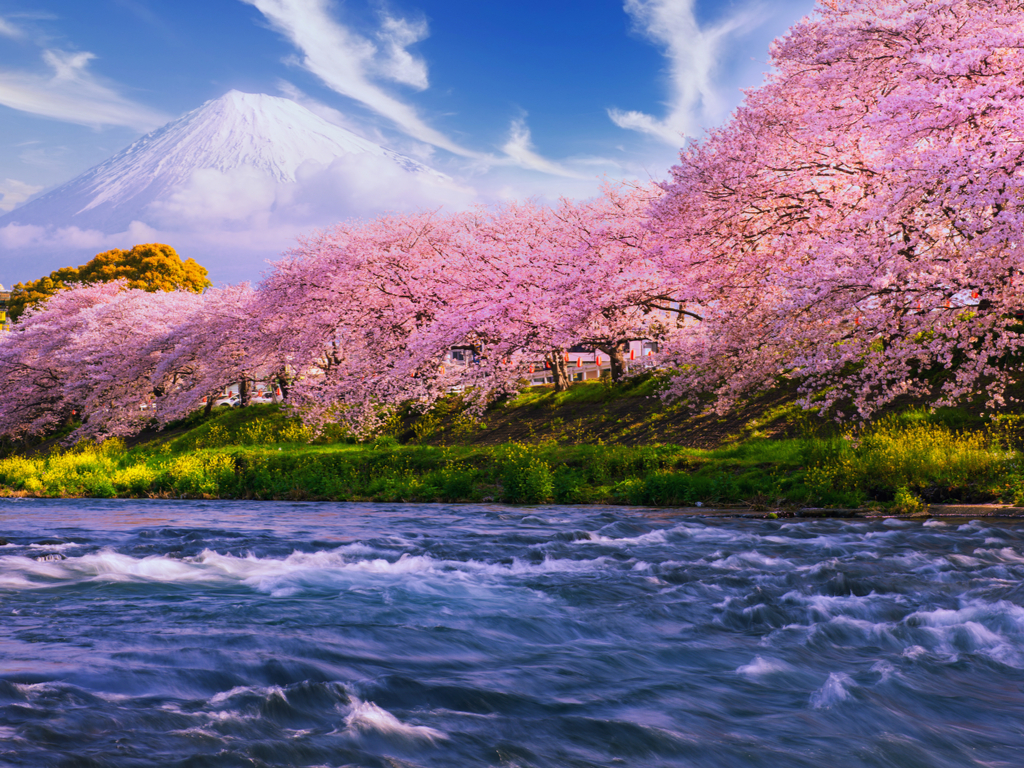
Japan in Cherry Blossom Season is bliss to eyes and soul. The shades of pink scattered on the trees welcome the warm season. Sakura, the welcoming of the spring is celebrated by going out for a picnic and spending time with family. The time is cherished for viewing beautiful flowers or Hanami.
Springtime in Japan is undoubtedly the prettiest period. The icy winds of the winter turn to the cool breeze of summer, the clouds are full of flowers pink hue, and all these are celebrated by Japan Cherry Blossom Festival.
Here is a detailed trip guide along with some amazing facts of Japan during the Cherry Blossom Festival. Keep reading to find out more!
Why do Japanese celebrate Cherry Blossom Season?
Japan in the Cherry Blossom Season is sheer beauty. The shades of pink fill the skies of Japan, and the beauty of flowers are scattered everywhere. The delicate and fragile flowers, the romantic weather, and the perfect background to click pictures, make the period just mesmerizing and breathtaking, perhaps a perfect environment for a romantic date.
The Japanese celebrate the beauty and fragility of life during cherry blossom. The land of Japan during the Cherry Blossom Season is rejuvenated, and the Japanese celebrate this new life by celebrating Japan Cherry Blossom Festival.
Join in the joyful celebration of Hanami, Japan’s cherished cherry blossom viewing tradition.
When is the Cherry Blossom season in Japan?
March to May is a blooming period of cherry blossoms. When the climate is soothing, the breeze is cool, and the temperate is warm, the beautiful pink, red and orange flowers start blooming and spreading love. Japan in Cherry Blossom Season is perfect for everything. The Cherry Blossom makes the paths look like a dreamland with the flowers above head and flowers scattered everywhere.
Enjoying the mouth-watering home-cooked food while watching the Cherry Blossom with family is no less than a joy. So, try to visit Japan between March to May to attend the mesmerizing and perfectly beautiful Japan Cherry Blossom Festival.
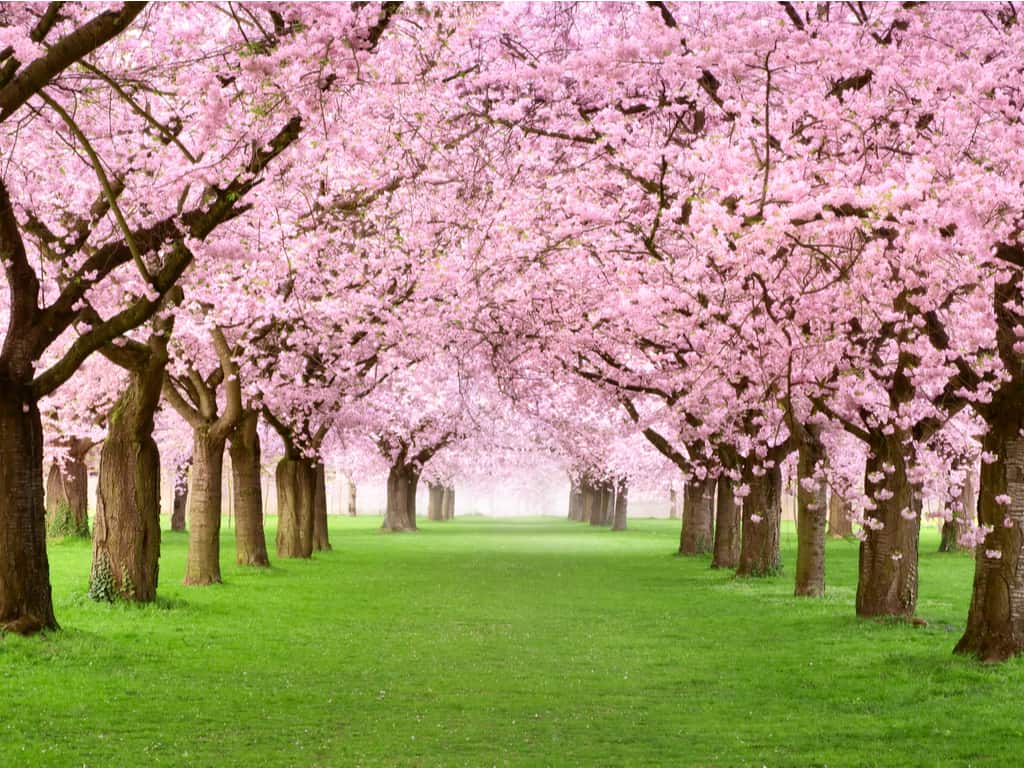
Embrace the stunning beauty of cherry blossoms in full bloom, a hallmark of spring in Japan.
How long is the Cherry Blossom season in Japan?
Japan during Cherry Blossom Festival turns to the land painted with shades of pink. Imagine going to cities like Tokyo, Osaka, Hiroshima, Sapporo, and finding the beautiful, delicate, and sweet pink flowers on the trees and in the skies welcoming you. This would be just bliss and fairytale-like.
Japan in Cherry Blossom Season in soothing to the soul, and to capture all the beauty at once is hard, but the period is short-lived for 10-14 days. The period is not spread all-over the spring, but a small part of it. So, plan your calendar according to Sakura dates and enjoy the beauty of nature.
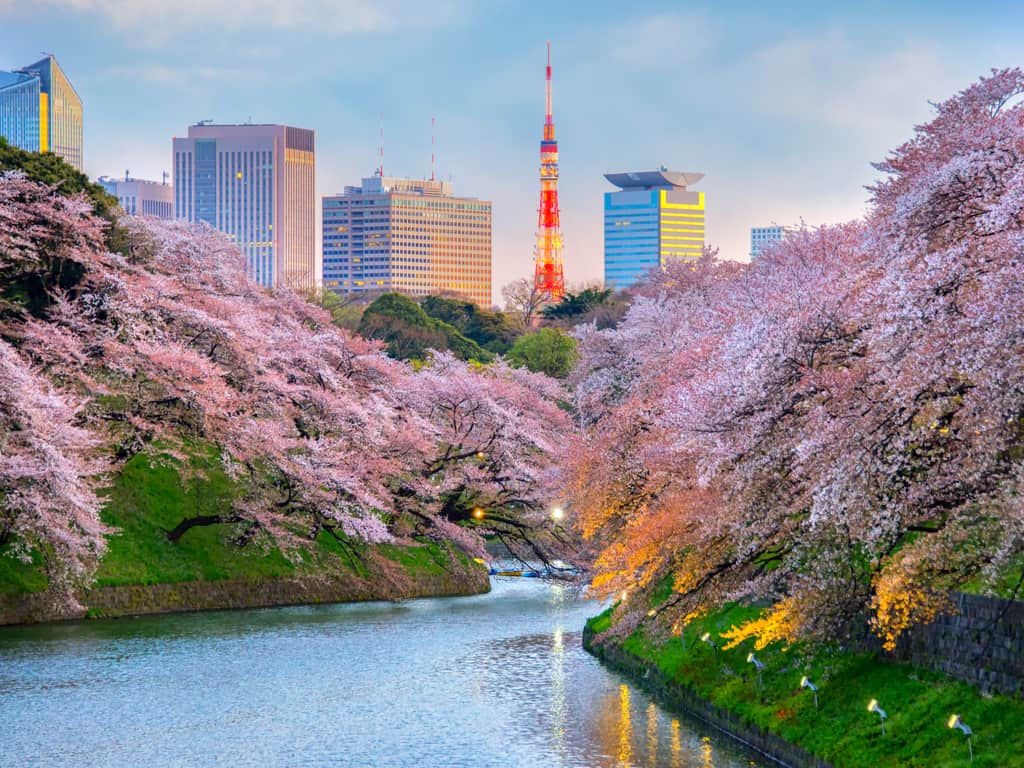
Experience the stunning cherry blossom season along Tokyo’s Meguro River, a quintessential Japanese spring sight.
The dates to visit some of the prominent cities of Japan during cherry blossom season are:
Tokyo – March 16 to 24
Sapporo – May 1 to 7
Osaka – March 23 to 31
Hiroshima – March 20 to 30
Nagano – April 5 to 11
What is the symbolization of the Cherry Blossom Festival?
The Japan Cherry Blossom festival is all about celebrating beauty. The beautiful and fleeting cherry blossom fill the trees and skies, the weather turns romantic and warm, the scenic beauty is at its peak, and the life is blooming everywhere. The festival celebrates life.
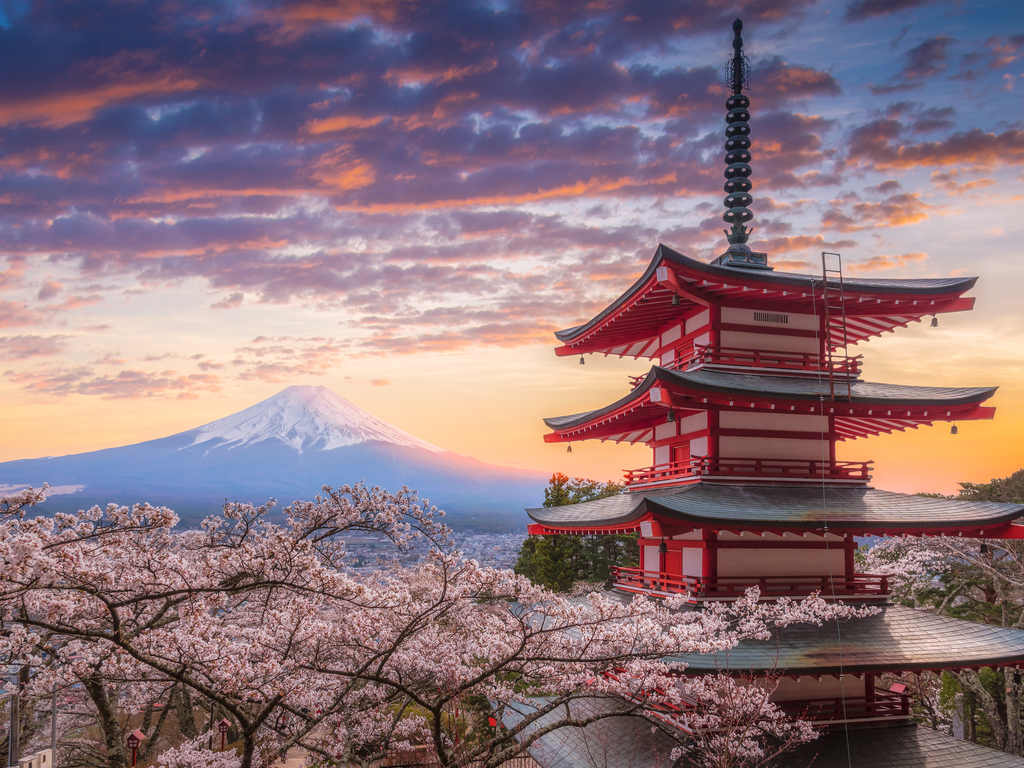
Marvel at Mount Fuji surrounded by delicate cherry blossoms, an iconic image of Japan in spring.
What you can do at the Cherry Blossom Festival?
Japan in Cherry Blossom season is welcoming, and people go around to click pictures. The official stalls of local street food are set to tickle your tastebuds. Though the festival is short, the delight of viewing flowers is unlimited.
Under the shade of Sakura and the smell of blossoms, the Japan Cherry Blossom festival is perfect. Embrace the flawless beauty of pink flowers under the pink sky and enjoy some hot snacks in the cool spring breeze, and just relax.
Once you know about the Japan Cherry Blossom Festival, it is time to mark your calendar and book a trip to celebrate life and beauty!
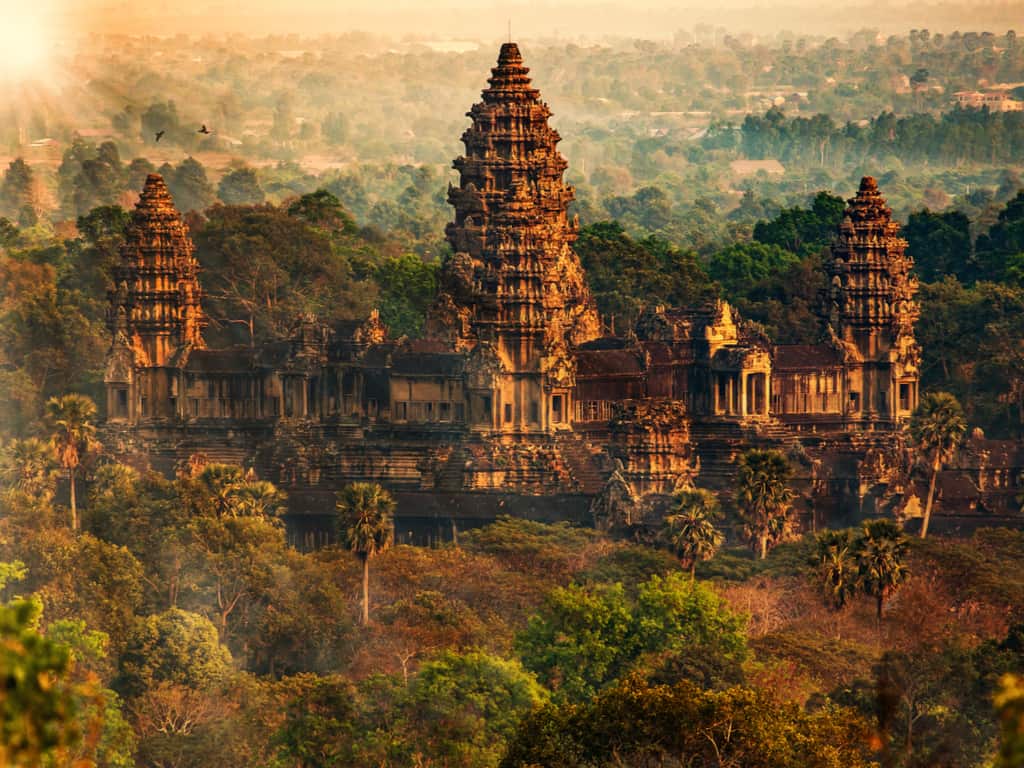
The first rays of dawn crept over the treeline, painting the sky in shades of amber and rose. Before me, reflected perfectly in the still lotus pond, stood Angkor Wat—a silhouette so magnificent it seemed to belong more to myth than reality. In that moment, surrounded by hundreds of other travelers yet feeling completely alone with history, I understood why this place draws over two million visitors each year.
Angkor Wat isn’t just a temple. It’s a testament to human ambition, spiritual devotion, and artistic mastery that has endured for nearly a millennium.