Jokulsarlon – The glacial edifice of iceland

Close-up of the intricate patterns and textures on icebergs at Jokulsarlon.

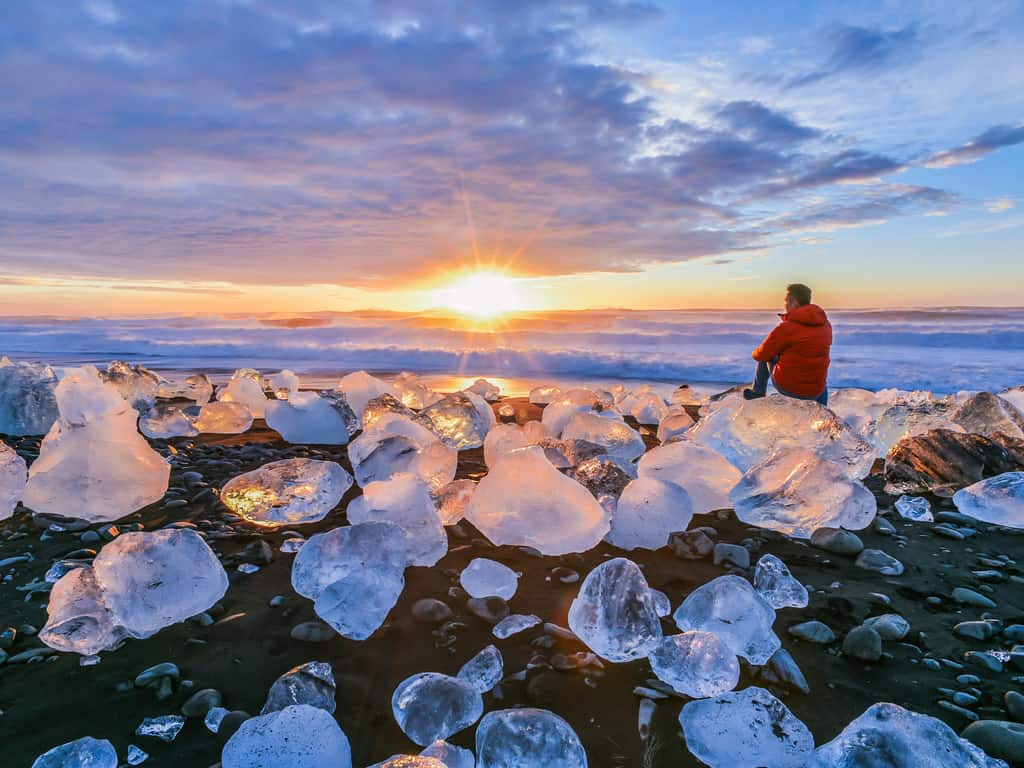
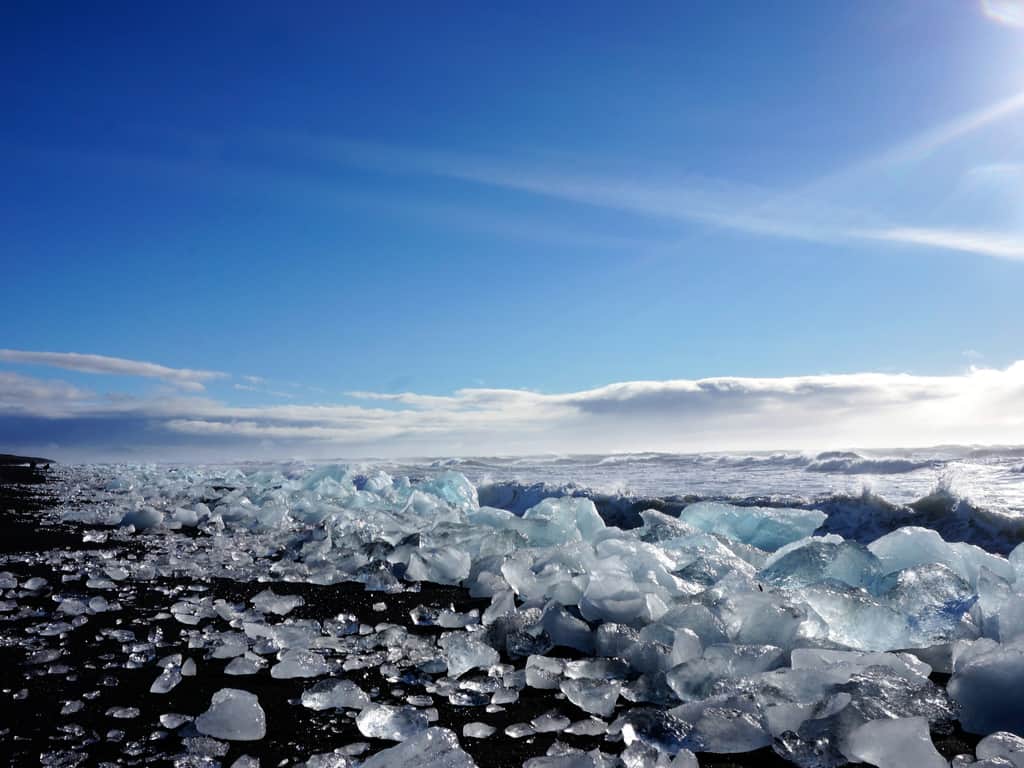
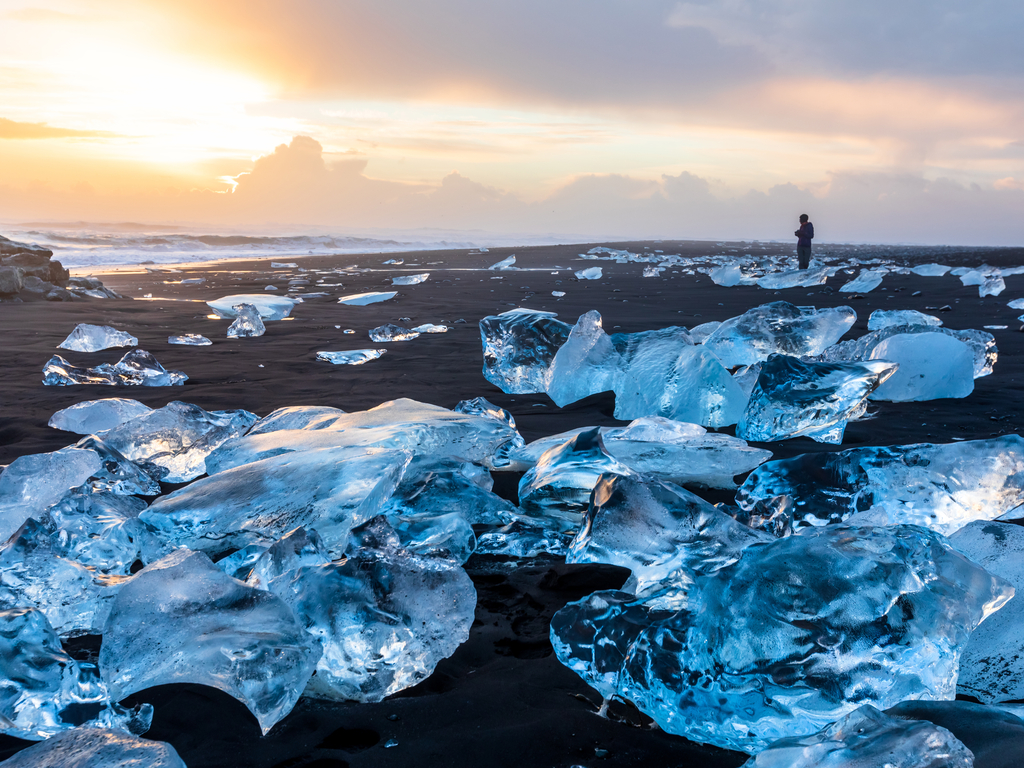
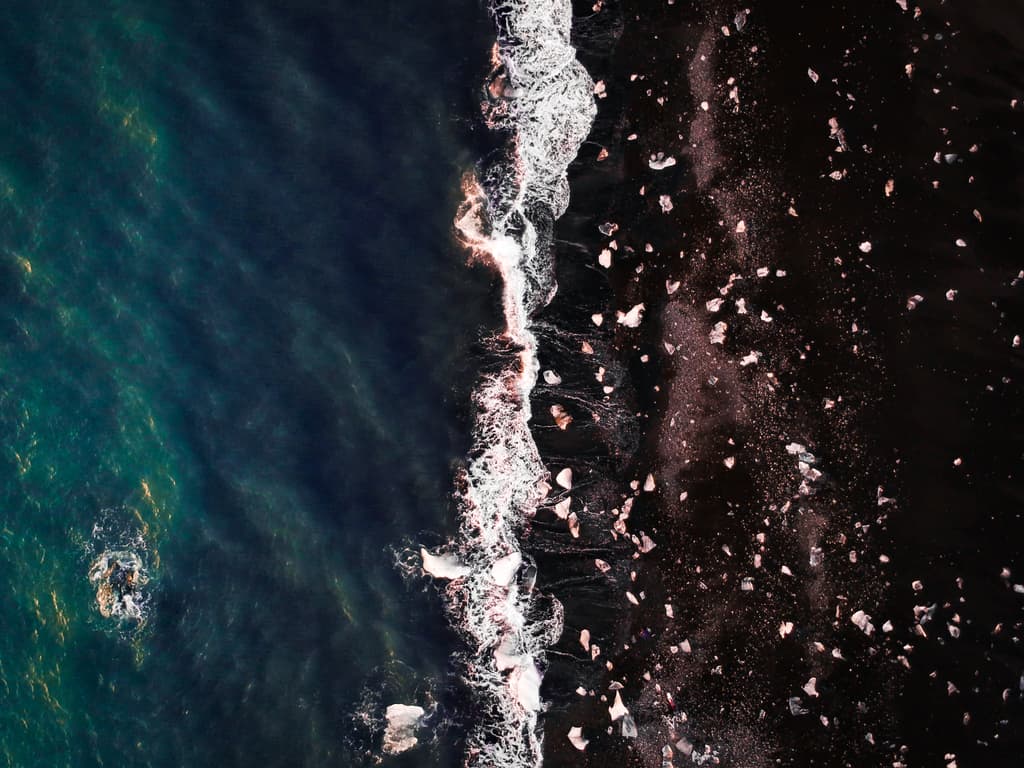
The glacial system of Jokulsarlon at Vatnajökull National Park is the spot where the largest icecap of Europe can be found. It is a series of impeccably beautiful icebergs that slowly float on the crystal blue lake water. The shores comprise the black sand Icelandic beaches that brilliantly offer a contrast to the iceberg crystals.

Jokulsarlon is the destination where contrasting natural forces come together to present a radiant spectacle to all who come here to revel in the beauty untarnished by man-made forces.

How to get to Jokulsarlon?

It will take you about five hours to cover this journey if you opt for a car ride or rental from Reykjavik to Jokulsarlon. However, the journey from Akureyri to Jokulsarlon lagoon takes significantly longer, that is, seven hours. Alternatively, you can also book a tour to Diamond Beach, Iceland, or choose public transport. The Jokulsarlon Glacier Lagoon is on Route 1.

Icebergs floating in the crystal-clear waters of Jokulsarlon Glacier Lagoon in Iceland.
Experience the surreal beauty of floating icebergs when you visit Jokulsarlon, a natural wonder of Iceland.

How far is Diamond Beach from Reykjavik?

The distance from Reykjavik to Jokulsarlon lagoon, and consequently Diamond Beach that is present right opposite Jokulsarlon Glacier Lagoon is 370 kilometers.

Why is it called Diamond Beach?

Diamond Beach, Iceland is inspired by the shimmering icebergs that float to the beach from the Jokulsarlon Glacier Lagoon. They are ginormous ice blocks that drift off from the Breiðamerkurjökull glacier at first. Subsequently, these ice blocks move to the Jokulsarlon Glacier Lagoon.

When tourists began visiting this beach to witness the stunning natural occurrence, the Diamond Beach name was coined to be cherished for posterity.

Photographer capturing the stunning scenery of Jokulsarlon, a paradise for photography enthusiasts.
Bring your camera to capture the unparalleled beauty of Jokulsarlon, a dream for photographers.

What is the best time to visit Jokulsarlon?

Diamond Beach is one of the perennial tourist destinations that attract tourists all around the year regardless of the seasonal changes. The only difference is that the daylight lasts longer during summer.

We recommend a visit while it is still daytime to appreciate the majesty of the icebergs. Moreover, the shore tends to get crowded as the day progresses.

So, the sooner you can get in, the better. But if you wish to see the Northern Lights, the best time to see this natural phenomenon is during winter nights.

Aerial view of Jokulsarlon, showcasing its vast size and the surrounding glacial landscapes.
From above, the vastness of Jokulsarlon and its glacial landscapes are a sight to behold.

What can you do at Jokulsarlon?

Go Hiking: One of the best hiking trails at Jokulsarlon is at Vatnajökull. Book a tour guide to show you the route and provide the hiking equipment, as the glaciers can be a tricky area to navigate.

Book a Boat Journey: There are numerous boating tours available at Jokulsarlon, especially during the months of July and August. Tourists can choose between the Amphibian boat tour on the lake that offers opportunities for seal-watching, and the Zodiac boat tour gives you a closer look at the icebergs.

Undertake Ice Carving Tours: The Ice Carving tours take tourists on an immersive experience traversing the ice caverns and tunnels. Don’t miss the Crystal Caves – it is nothing short of a modern art exhibition.

Close-up of the intricate patterns and textures on icebergs at Jokulsarlon.
Discover the intricate beauty of icebergs up close on your visit to Jokulsarlon.

Where to stay when visiting Jokulsarlon in Iceland?

Some of the great hotels to stay include Hotel Vik, Hali Country Hotel, Reynivellir, Fosshotel Glacier Lagoon, Icelandair Hotel Herad, and Vagnsstadir HI Hostel.

Colmar – The great city of the museums

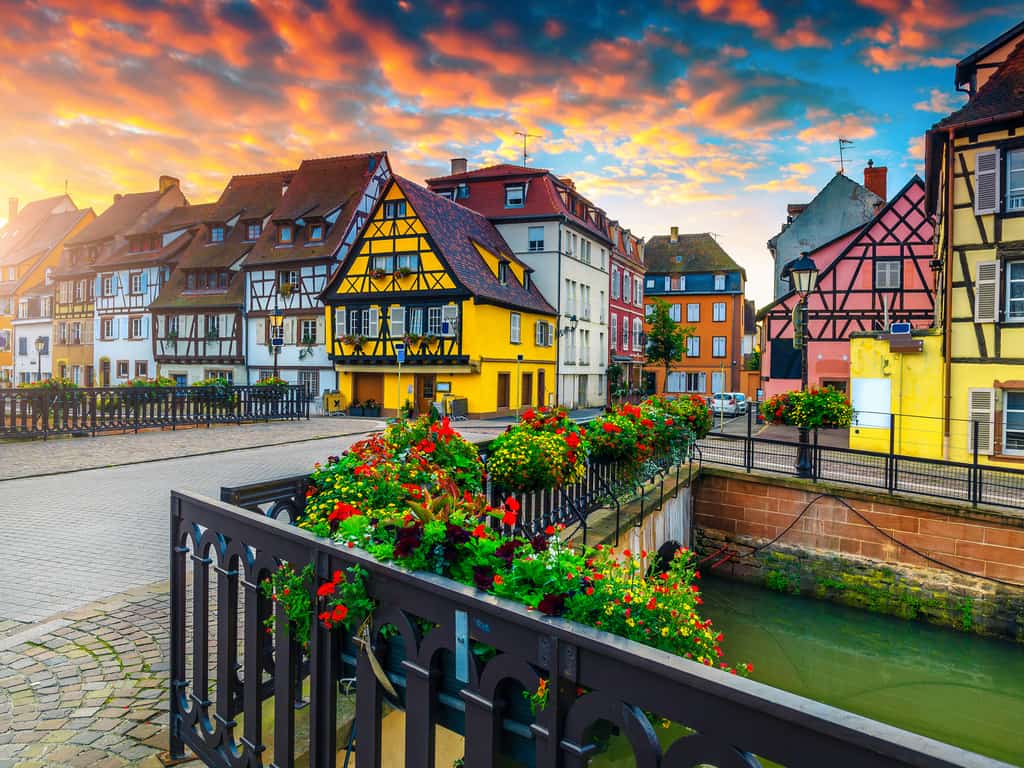
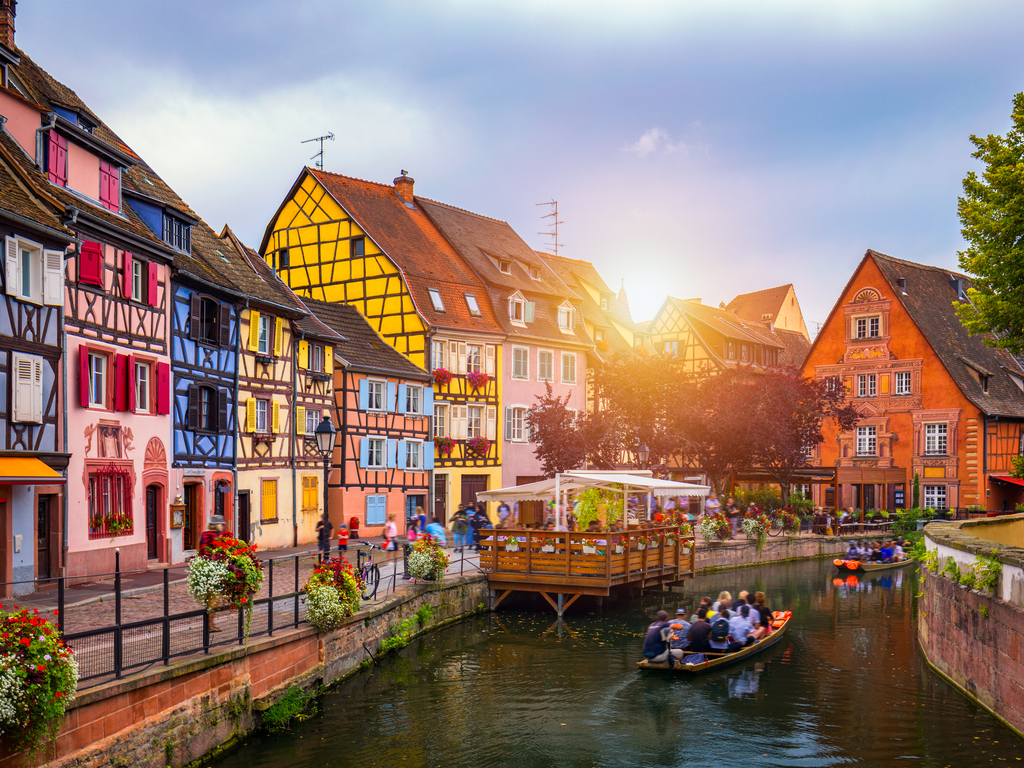
Colorful half-timbered houses lining the canals of Colmar, reflecting in the water.

Colmar is located at the Grand Est region of Northeastern France and close to the German border. The city is usually referred to as the “capital of Alsatian wine” because it is situated along the Alsatian Wine Route.

The city is famous for its numerous architectural landmarks, well-preserved old town, and museums, which include the Unterlinden Museum – the prestigious museum.

Colmar is very quiet and has a reputation of being a firmly-secured pretty town, where it’s very safe and extremely pleasant for visitors to walk around. More so, the town has an amazing collection of high-quality restaurants and shops that sell quality local products.

What language is spoken in Colmar, France?

Being an old Alsatian town, natives of Colmar speak their language called Alsatian (Alsatian German). However, you will still hear some people speak French and standard German – due to tourists from neighboring countries.

Stroll along the canals and admire the vibrant, half-timbered houses on your visit to Colmar.
Don’t miss the enchanting ‘Little Venice’ in Colmar, a picturesque canal district.

What are the top attractions to visit in Colmar?

The city has so many activities that it will be impossible to enjoy them all in one day. Here are some of the top attractions in Colmar:

Walk around the old town

Have a boat ride through the lovely canals, while enjoying little bridges and romantic, charming streets. While walking through the streets you will enjoy the half-timbered, century-old building with elegant French finishes that you will remind you of a movie set.

Visit the Little Venice

Like the other places of Colmar, Little Venice is from the year 1400 and has seen wars and invasions without being damaged. According to legends, old merchants resided here including tanners, fishmongers, and butchers.

Outdoor café in Colmar's old town, offering a perfect spot for people watching and relaxation.
Enjoy a leisurely coffee at an outdoor café in Colmar’s picturesque old town.

Saint Martin’s Church

Also popular as the Eglise St Martin, this wonderful Catholic Church is an awesome attraction in the city. The building has hundreds of years of history.

Pfister House

This great building is about 500 years old and has many of the Colmar’s history both in and outside of its walls. There are drawings of biblical scriptures and German emperors portraits.

Tourist Trains

You will find two tourist trains in Colmar, the white and the Green train. They both provide a scenic ride and live commentary in various international languages. This is surely an informational and fun way to explore Colmar.

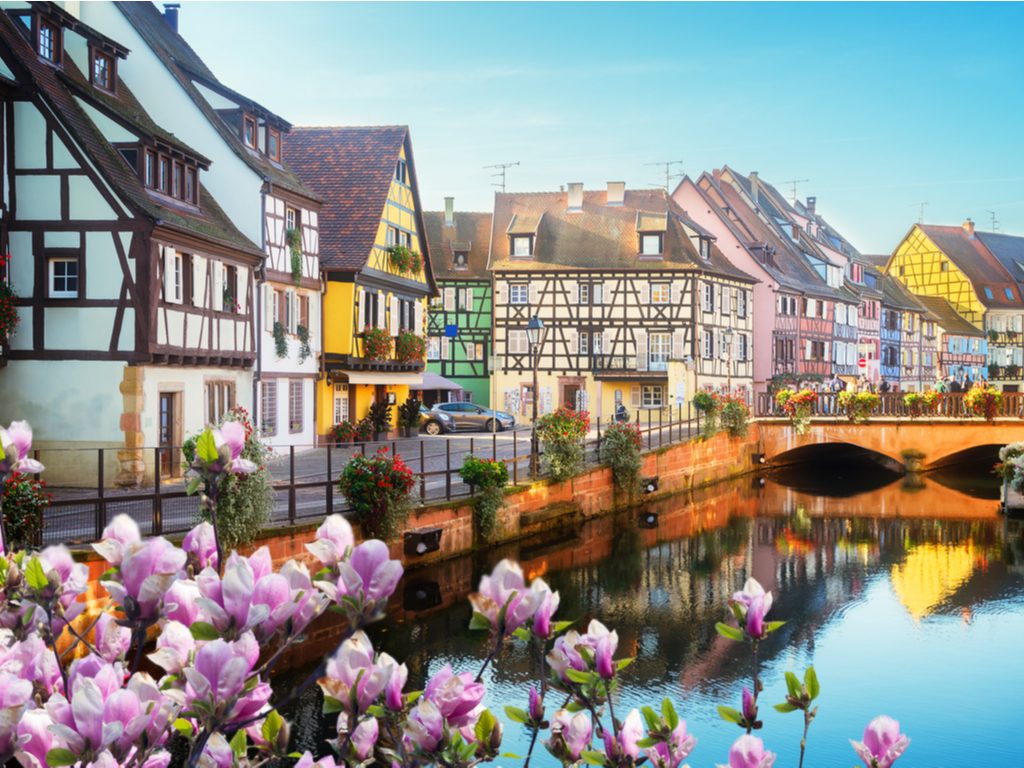
Floral displays adorning the bridges over Colmar's canals, adding to the town's charm
Witness the stunning floral displays on Colmar’s bridges, adding color to every view.

How to get to Colmar?

Colmar is currently in central Alsace in France and not in Germany. However, it shares its border with Germany and Switzerland.

Colmar is located in-between Basel and Strasbourg and both cities have a direct train connection between them. So you can get a train from either side to Colmar.

Note: There is no storage space for baggage in the train station or at Colmar.

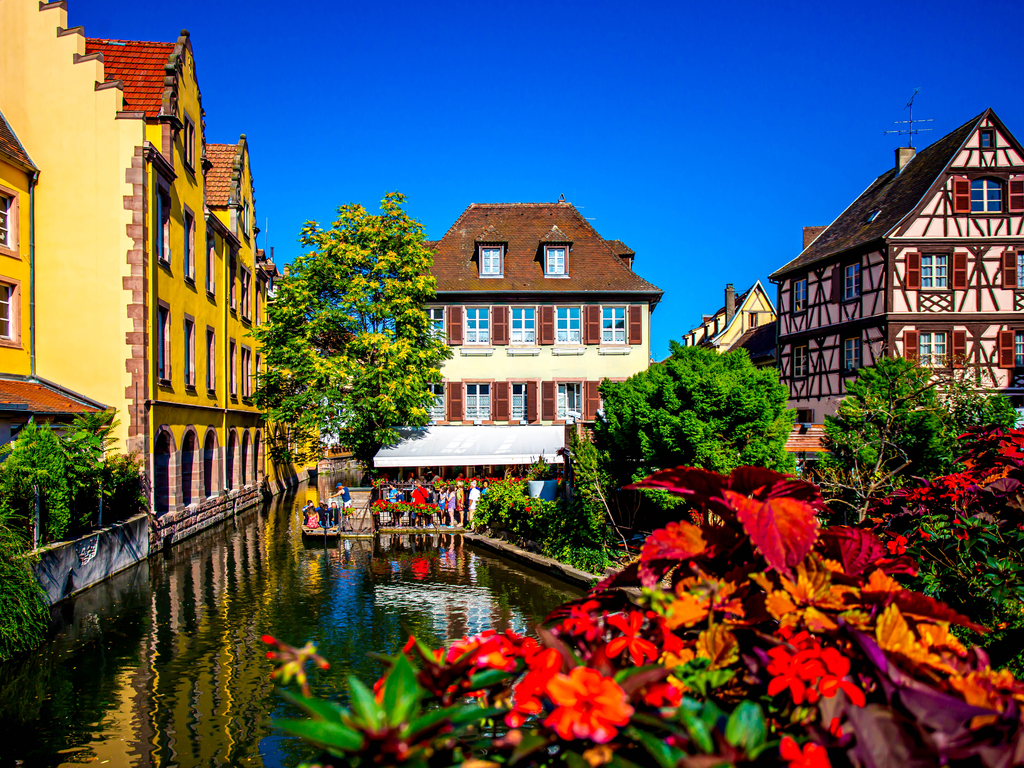
Colorful half-timbered houses lining the canals of Colmar, reflecting in the water.
Stroll along the canals and admire the vibrant, half-timbered houses on your visit to Colmar.

Where to stay in Colmar?

There are a few hotels you can stay in when you visit Colmar. Some of the spectacular hotels to book are:

  • B&B Colmar Expo
  • B&B Colmar Vignobles
  • Hotel – Restaurant Le Grand Hôtel
  • Hôtel & Spa Husseren Collections
  • Hôtel Restaurant Spa Au Soleil

Everything about Colmar is beautiful, from the cobblestone streets, colorful buildings to the delicious meals in the many restaurants, and many more! Book your trip today.

Blue Lagoon – The rejuvenating and healing man-made pool

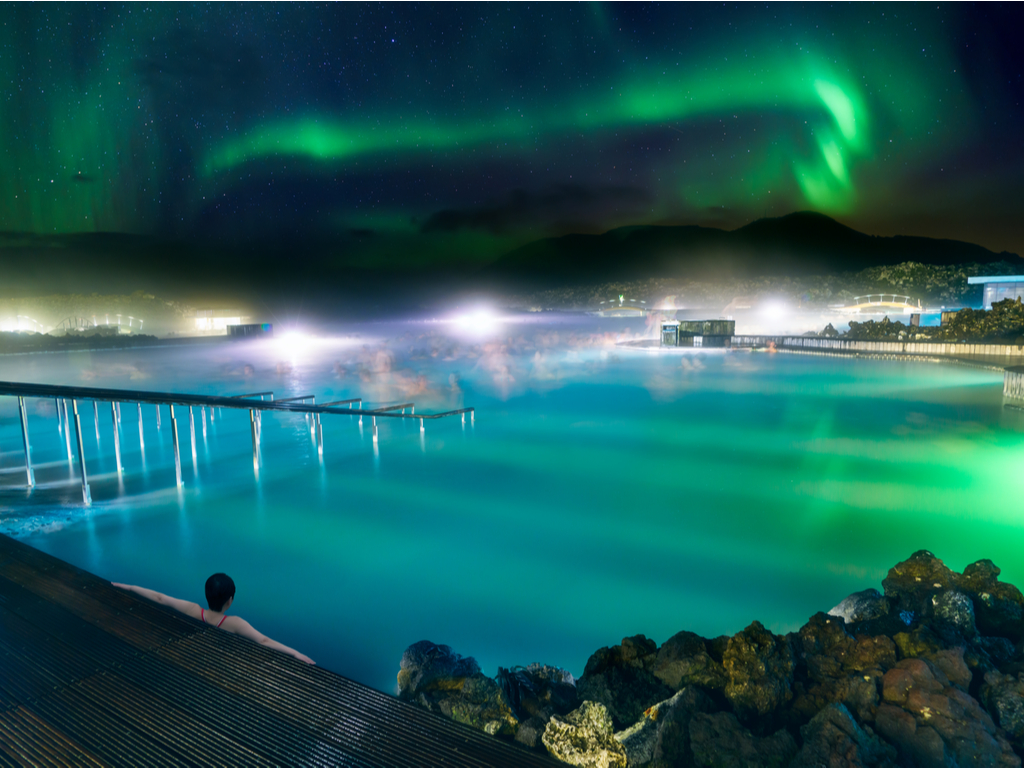
Nighttime view of the Blue Lagoon, illuminated for a tranquil and mystical experience.

The story goes that Blue Lagoon was catapulted to its reputation when the Svartsengi geothermal power plant was established. This hot spring comprises mineral-rich water from the plant. The pool was formally opened to the public in 1987, and the rest is history.

How to get to the Blue Lagoon?

The distance to Blue Lagoon from Reykjavik and Keflavik Airport can be traversed within 50 and 20 minutes, respectively. You will have to venture out to the Reykjanesbraut highway and travel to the Grindavikur Vegur highway. Follow the road signs until you reach Blue Lagoon.

Taxis, car rentals, and buses are available from Reykjavik and Keflavik. The travel time is more or less the same. The transportation rates range somewhere between 20 and 30 dollars per person.

The modern architecture of the Blue Lagoon spa facilities blending with the natural landscape
Marvel at the Blue Lagoon’s seamless blend of modern architecture and natural beauty.

How much does it cost to go to the Blue Lagoon?

There are different packages that you can avail to visit Blue Lagoon, Reykjavik.

We have listed a few here:

Standard Package – This allows entrance and cream use and costs 50 dollars.

Premium Package – This includes entrance, cream use, towels, bathrobes, slippers and a drink. It is priced at 85 dollars.

Luxury Package – This includes entrance, cream use, a skincare set, face masks, bathrobes, slippers, towels, a drink, and access to the lounge. It costs 450 dollars.

You can choose any of the aforementioned packages. Subsequently, you can request the staff to add on the price for any other treatment not included in the package.

How warm is Blue Lagoon?

The water temperature at the lagoon averages from 39 to 42 degrees Celsius throughout the year.

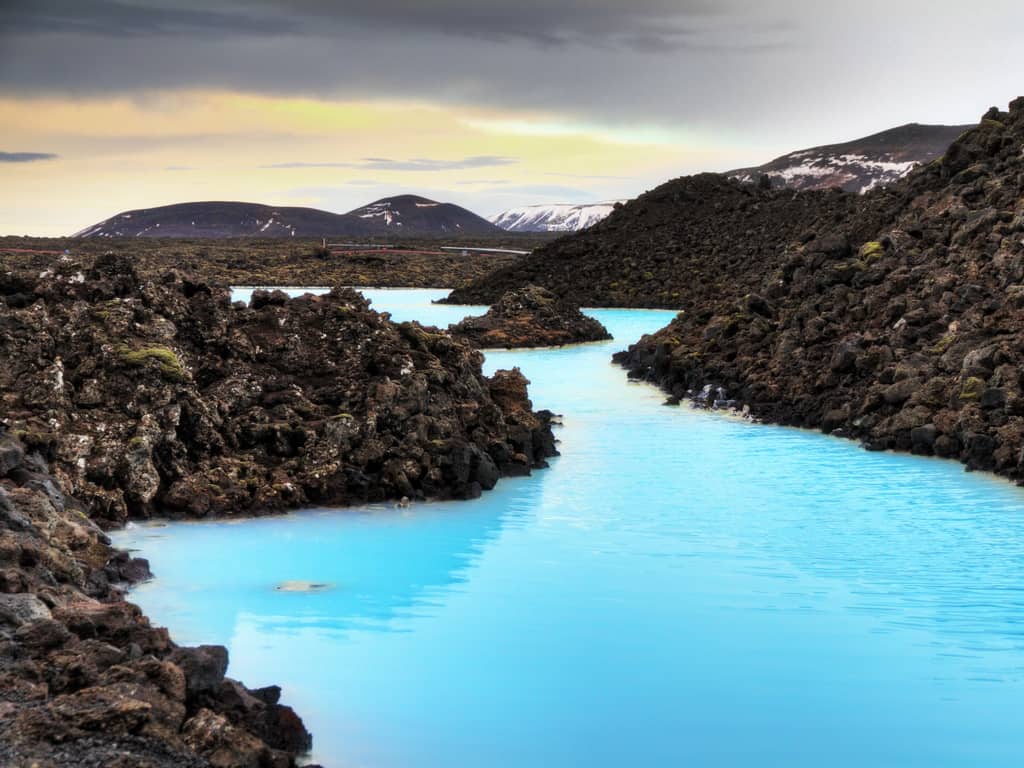
Aerial view of the Blue Lagoon, showcasing its vast size and unique color in the Icelandic landscape
From above, the Blue Lagoon is a breathtaking sight to behold. Don’t miss it on your Iceland visit.

What is the best time to visit Blue Lagoon?

In terms of the time of the day, we would recommend avoiding a slot that is later in the day or too early in the mornings. The best slots are arguably the ones in the evening – this slot allows you to enjoy several relaxing hours. Some people also book their slots depending on whether they want to watch the sunset or the Northern Lights.

Although Blue Lagoon is a great place to visit all around the year, you might want to book your tickets based on the opening hours. The opening hours are till 23:00 and 21:00 in summer and winter, respectively.

Another pro-tip: Stay in one of the hotels in Reykjavik such as Hotel Blue Lagoon Iceland or Silica Hotel to easily access Blue Lagoon, Iceland.

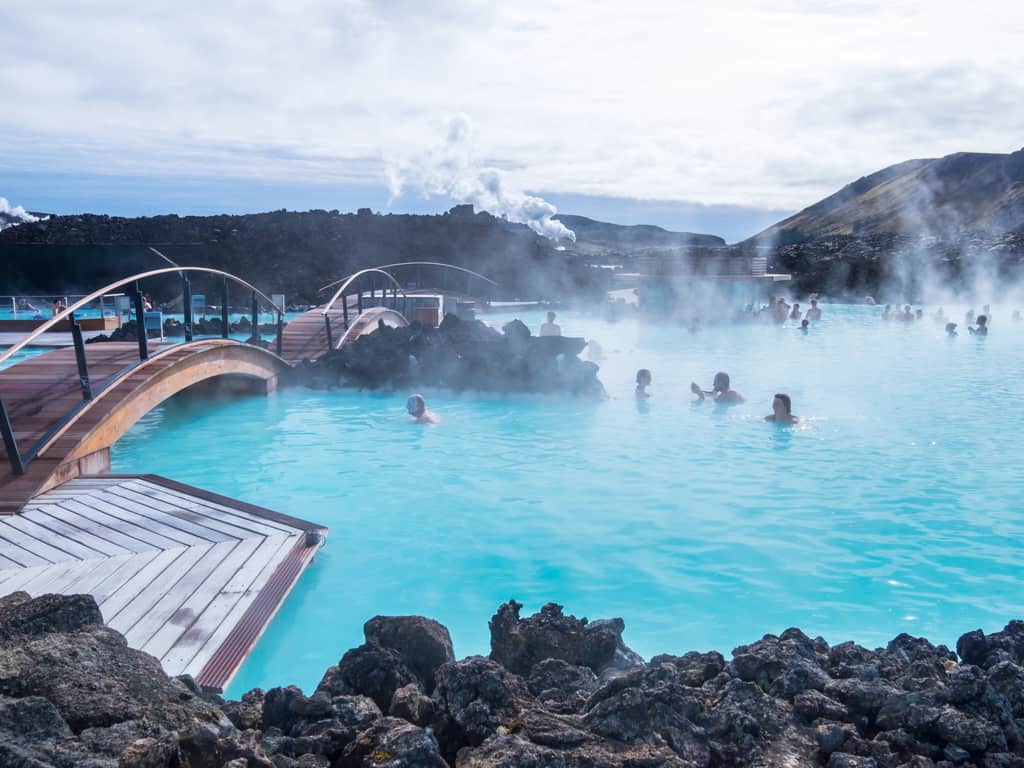
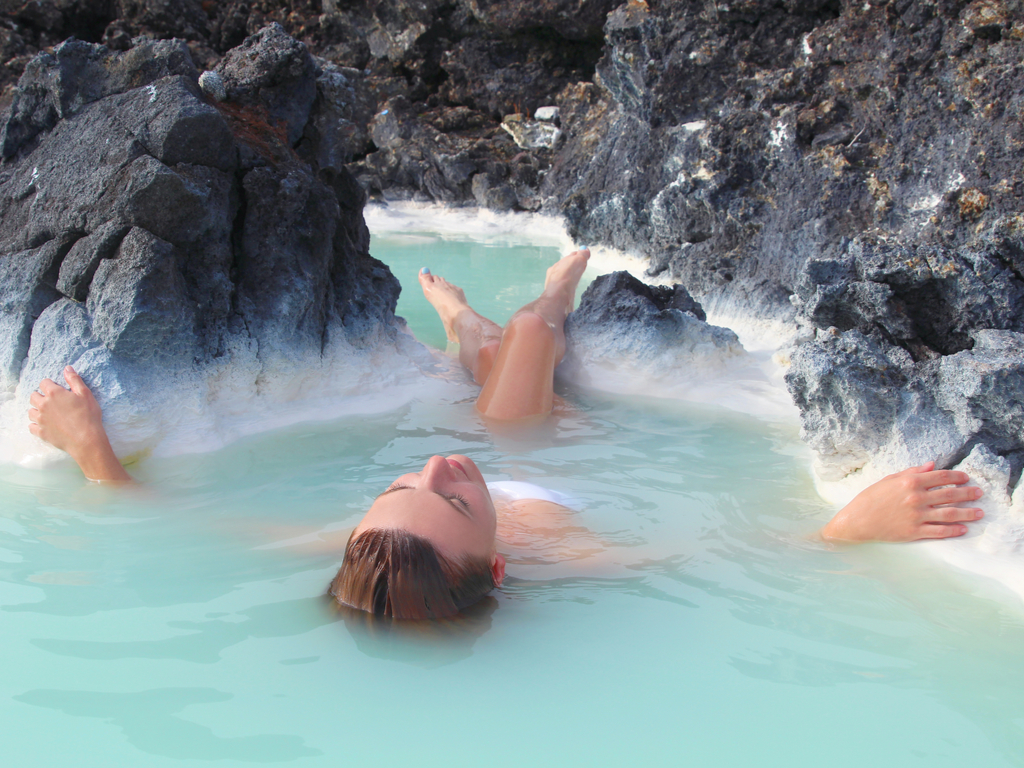
People relaxing in the steamy, milky-blue waters of the Blue Lagoon in Iceland.
Unwind in the surreal blue waters of the Blue Lagoon on your visit to Iceland.

Do I need flip flops for Blue Lagoon?

It is not mandatory to carry flip flops while visiting Blue Lagoon, Reykjavik as the lagoon itself has naturally smooth silica at the bottom. Therefore, there are no risks of getting hurt through sharps objects. However, you can either carry them with you or buy a pair at the well-equipped reception desk if you personally prefer to wear flip flops.

The lagoon has single-handedly established the Icelandic bathing culture. No wonder that it has been uplifted to the status of a world-class spa that attracts tourists from all over the world.

Nighttime view of the Blue Lagoon, illuminated for a tranquil and mystical experience.
Experience the mystique of the Blue Lagoon at night, an unforgettable Icelandic experience.

Benagil Cave – The unlikely cathedral of the Algarve

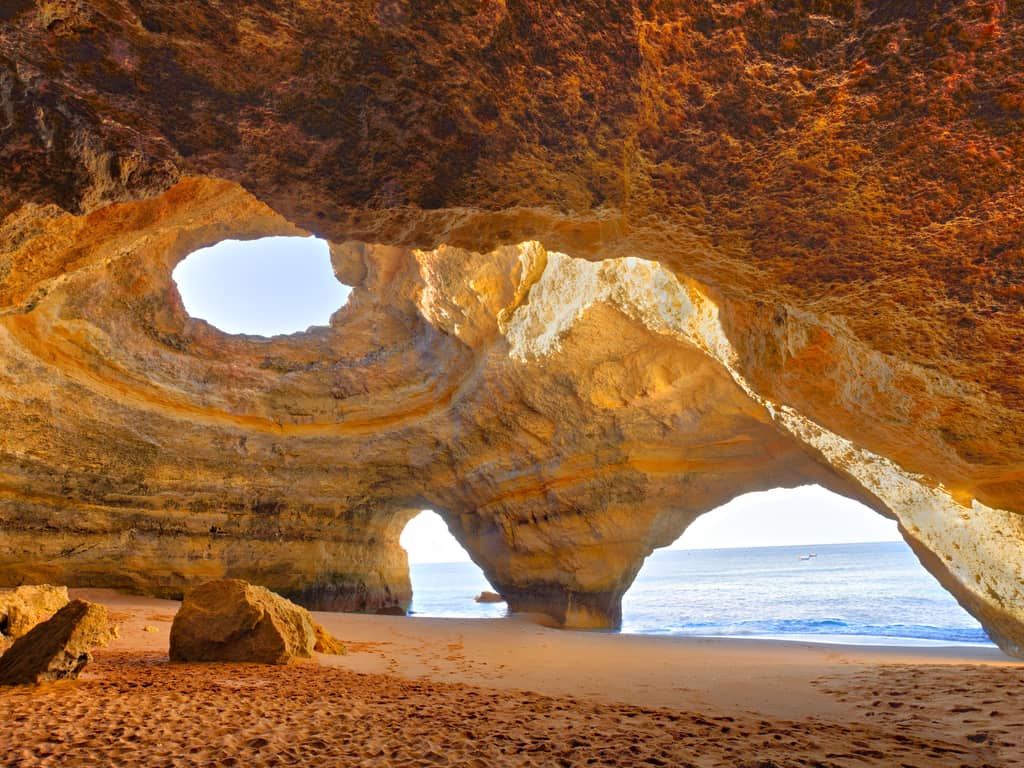
anoramic view of the beach and entrance to Benagil Cave, accessible by sea.

Have you ever wondered where the cave-like structures you see on your desktop screen are from? Well, now you have your answer. The Benagil cave at Algarve, Portugal has steadily risen to fame due to its picturesque location and attributes.

It attracts tourists and travelers who want to explore the statuesque rock formations as well as casual visitors who want to have a relaxing beach day.

What are the Benagil Caves?

Located between Armação de Pêra and Carvoeiro, we find the perennially beautiful structure of Benagil caves (locally known as ‘Gruta de Benagil’). It is a series of rock formations, which, over time, have assumed the façade of a ginormous cave.

The majestic entrance of Benagil Cave, as seen from the sea, with clear blue waters
Discover the breathtaking entrance of Benagil Cave on your visit, where the sea meets natural beauty.

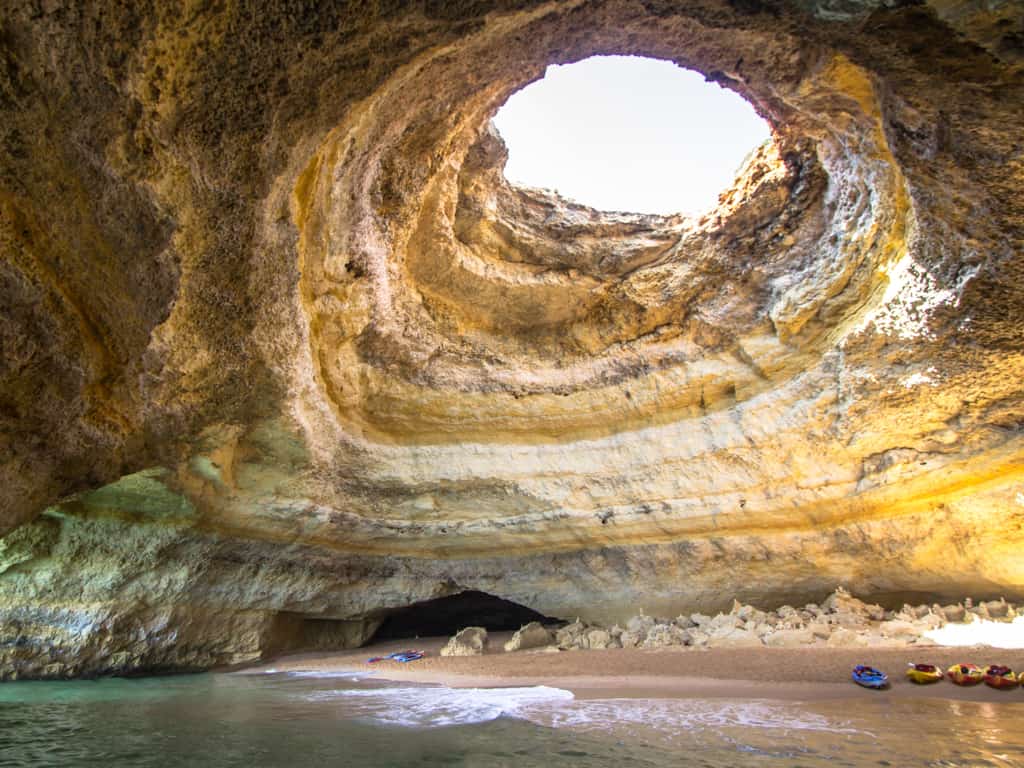
This occurred due to the different arches in the Algarve caves that give onlookers the impression of a majestic cathedral. Yellowish range of hues adds to this aesthetic effect. The Benagil cave stands testimony to nature’s power, which dug a cave over thousands of years, to capture the awe and admiration of tourists.

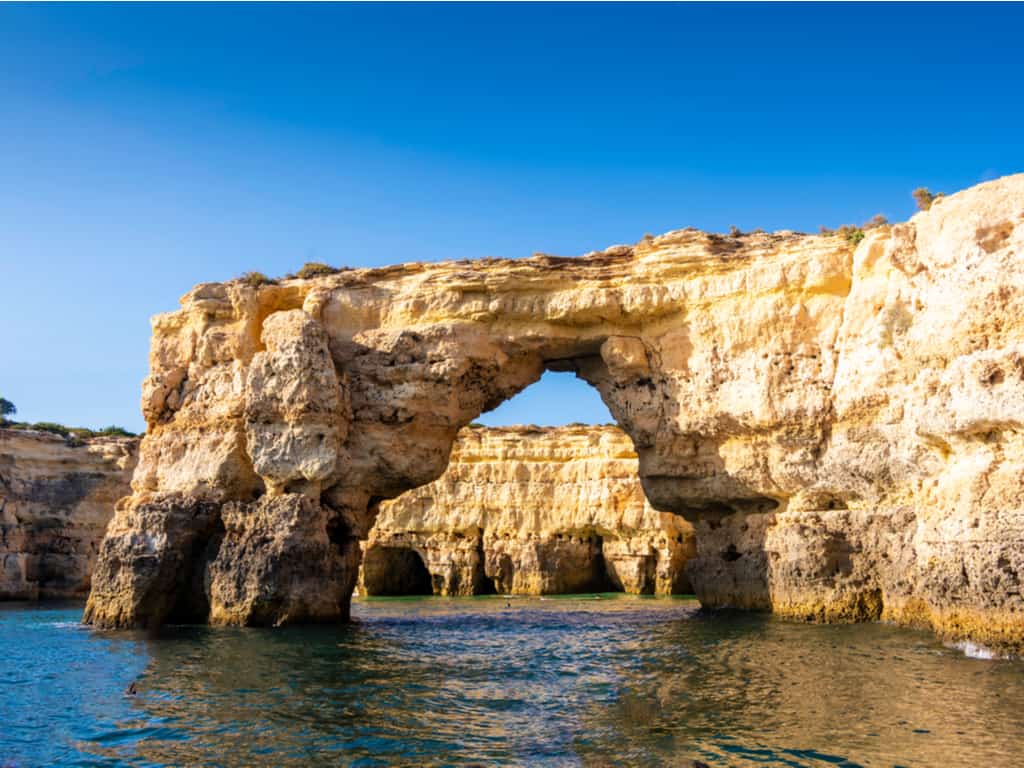
he rugged coastline near Benagil Cave, showcasing the beauty of the Algarve.
Explore the rugged and scenic coastline around Benagil Cave on your visit to this picturesque region.

How do you get to Benagil Cave?

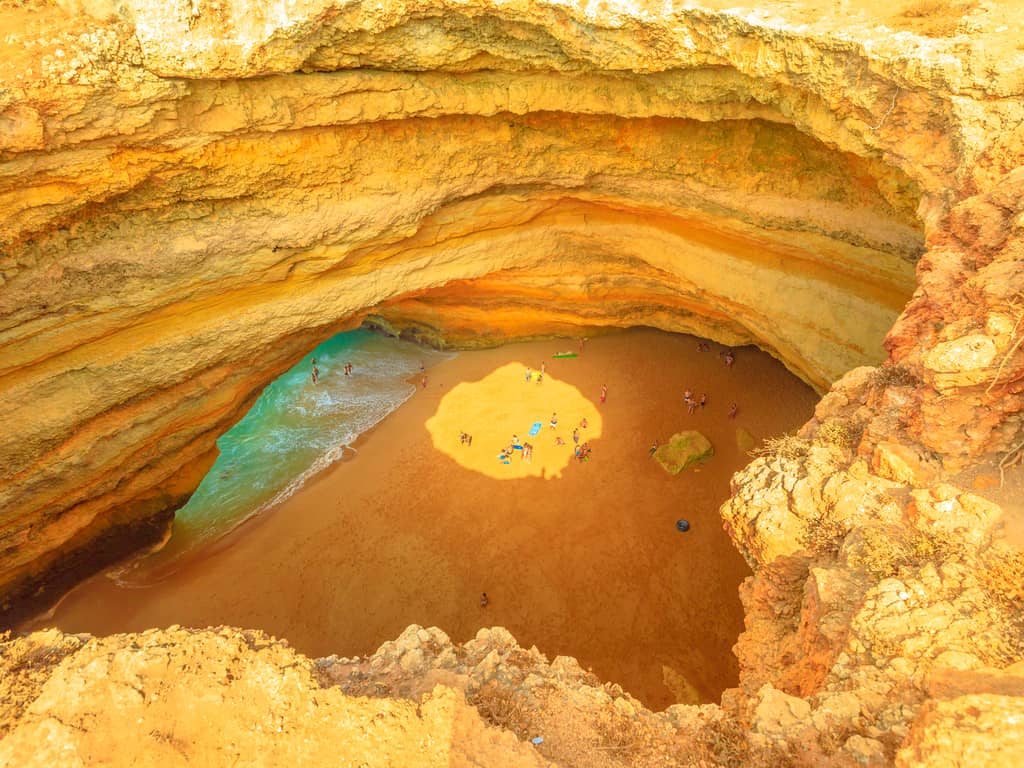
There are multiple ways in which you can reach Benagil caves. If you opt to drive there, you will be able to have a bird’s eye view of the beach.

You can also hike to the famous hole in the cave ceiling but this might prove to be tricky if you are not experienced.

Tourists also rent paddleboards and kayaks to reach the Algarve caves. Benagil cave boat tours are also another popular as well as a safe option.

How far is Benagil Cave from Albufeira?

It takes about half an hour to traverse a distance of about 28 kilometers and reach Bengali caves from Albufeira.

Your best bet would be going for a boat tour from Albufeira, the nearby town. You can book a bus ride or go for a bus rental as well.

Sunlight streaming through the open roof of Benagil Cave, creating a magical atmosphere
Experience the enchanting play of light inside Benagil Cave during your visit to this natural wonder.

Can you swim in Benagil Cave?

A passing glance might trick you into thinking that the cave is in close proximity to the Benagil beach. However, do not be misguided – it is quite dangerous to swim to Benagil caves.

The sea currents are strong and the tidal flow is not dependable. Therefore, it is always recommended to opt for a Benagil cave tour instead of swimming, even if you are an experienced swimmer.

What is the best time to visit Benagil Cave, Algarve?

The best time to visit the Benagil caves will be during the months of July and August. If you want to book the best hotels and flights, you might need to plan a little ahead to be cost-effective.

Alternatively, you can also visit during the months of June and September. The crowds are not overwhelming and you will be actually able to explore the cave without a rush.

Avoid visiting the caves during the offseason that is between November and March, as transportation is not readily available due to the rough weather conditions.

anoramic view of the beach and entrance to Benagil Cave, accessible by sea.
Experience the panoramic beauty of the beach leading to Benagil Cave, a natural gem accessible by sea.

Benagil caves are not just a travel destination – it allows you keenly to explore the forces of nature at play and learn something about the way the world functions. When will you be visiting it next?

Bastei Bridge – See These Famous Rock Formations

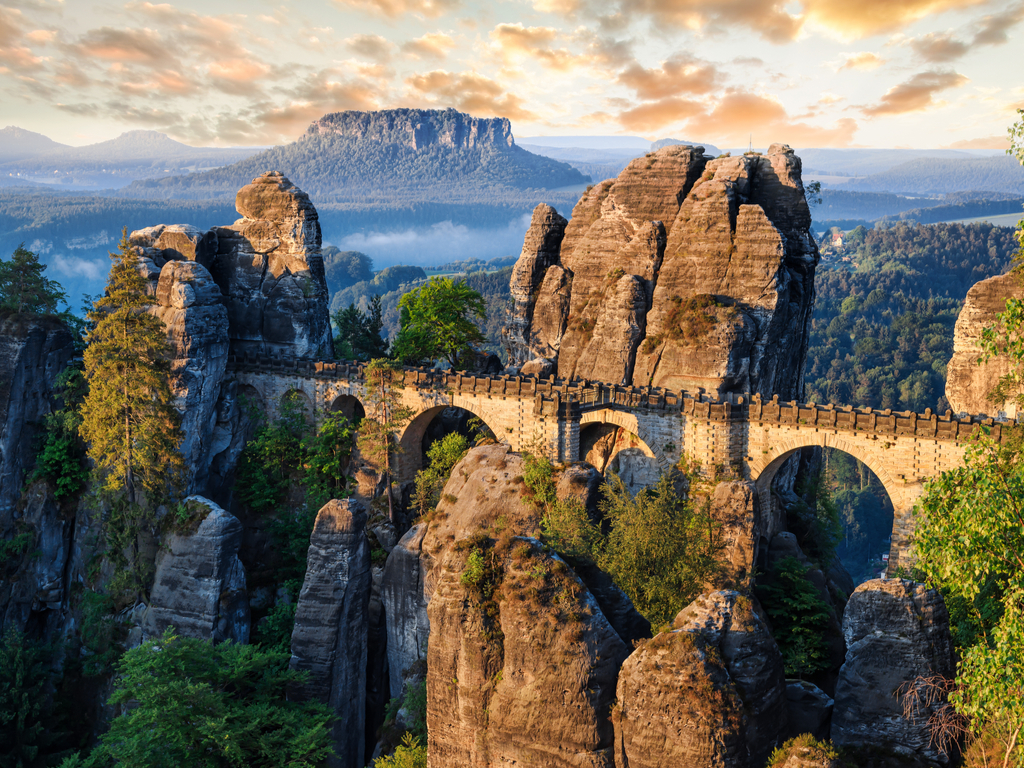
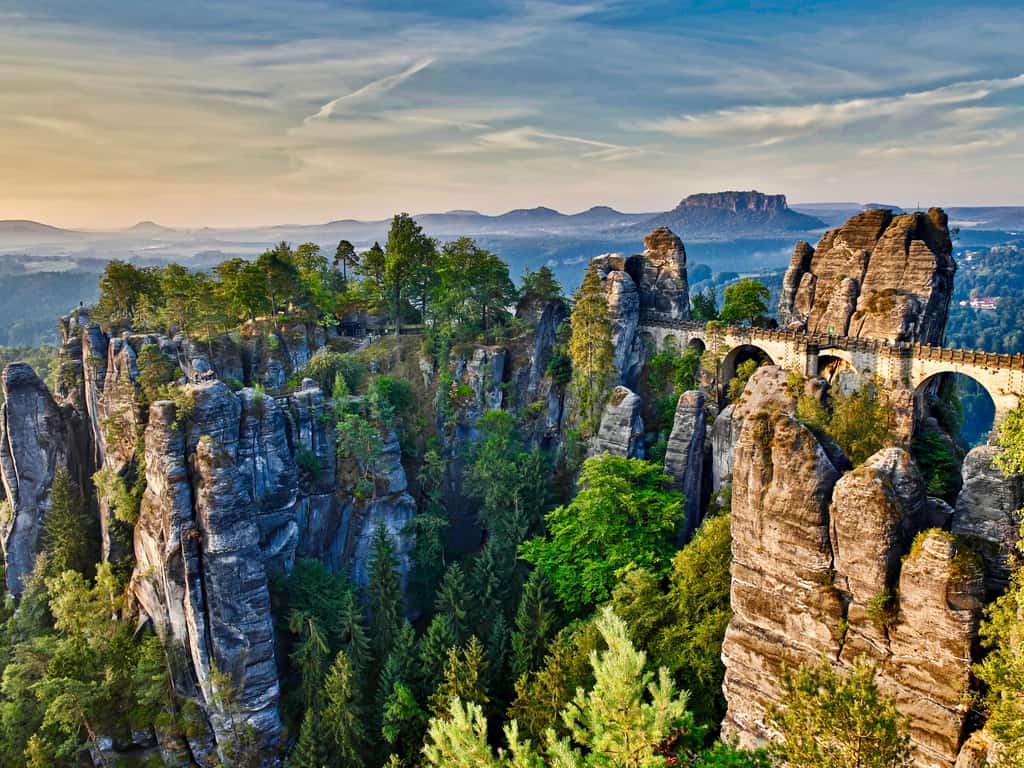
Aerial view of Bastei Bridge amidst the rugged terrain, inviting visitors to explore its majestic beauty

Bastei Bridge – or Bastei, is the term given to the tall and sturdy rock formations that you find in the Saxon Switzerland National Park area.

The place is called Saxon Switzerland though it is not actually Switzerland. It is the far south-eastern part of Germany at the border of the Czech Republic.

Right there is a magnificent bridge built amidst these famous rock formations, known as the Bastei Bridge of Germany.

How old is the Bastei Bridge?

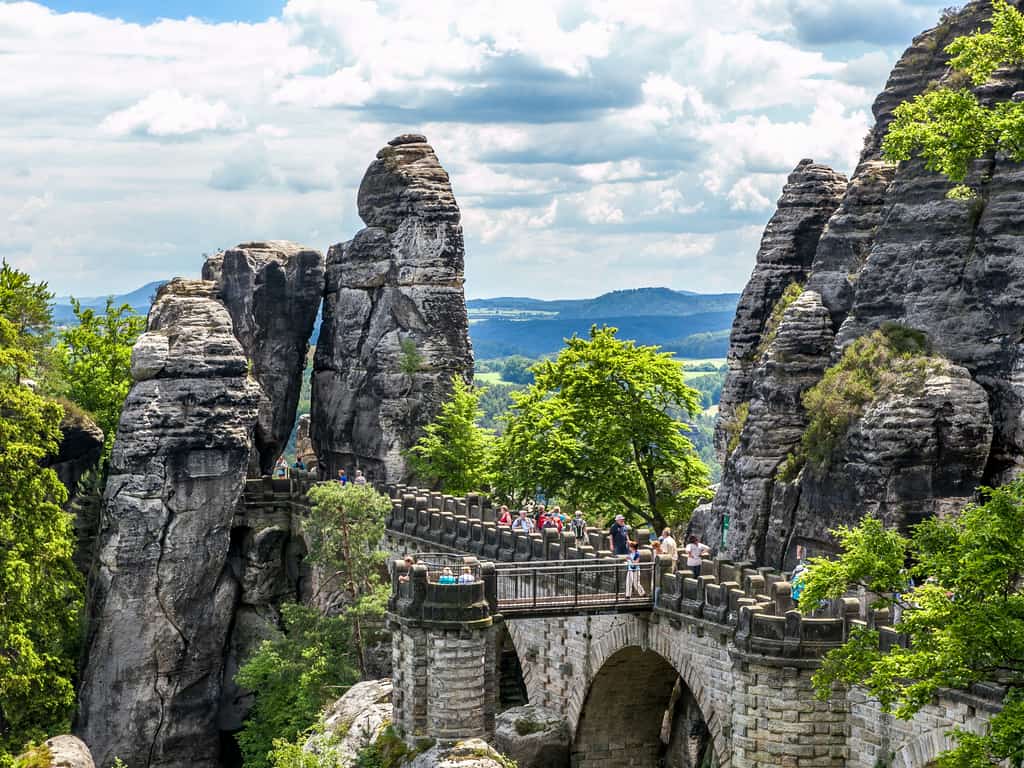
It was built in the 1800s! The bridge was actually a wooden one which was re-constructed in 1851 using sandstone, keeping in mind the increasing number of visitors. So you see, it is a pretty 170 years old! But hey, you can still walk through above it.

Sunset over Bastei Bridge, showcasing its silhouette against a vibrant sky
Witness a spectacular sunset at Bastei Bridge – an unforgettable sight for every visitor.

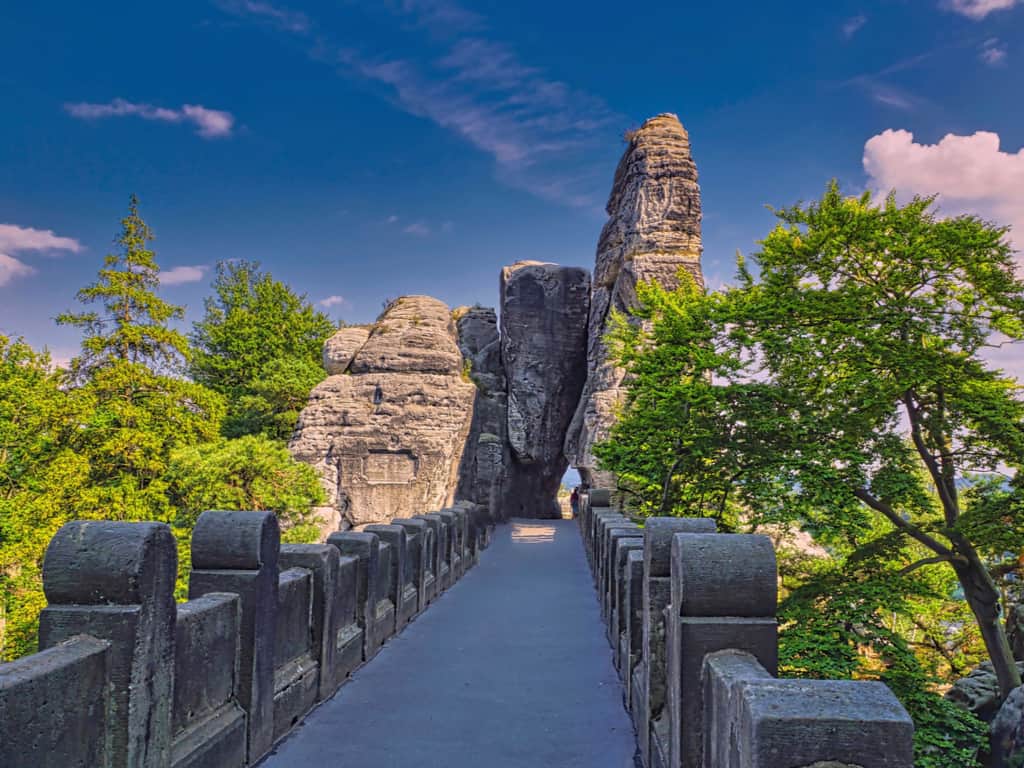
It is very sturdy even now and completely merges with the rocks as if it was a carving of the rocks itself. The most unbelievable part about this attraction is that it is not as commercialized as other tourist spots. So no charges, no fences, no entry or exit time!

How to get to Bastei from Dresden?

Are you a traveler looking for the best route from Saxony, Germany to Bastei? Regional interconnecting trains to the rescue! After you have explored the castles and palaces of Saxony Germany, take a train from Dresden to Kurort Rathen Station. After that, get into a ferry and ride across the Elbe, and there you are.

Springtime at Bastei Bridge with blooming wildflowers enhancing its natural beauty
Experience the vibrant colors of spring on your visit to Bastei Bridge, surrounded by blooming wildflowers.

How to get to Bastei Bridge?

After you have crossed the Elbe, all you got to do is to hike up to the Bastei Bridge. As you go up to the bridge, you get to see some breath-taking views.

What you got to see?

You will see those famous rock formations all around. They were carved out over millions of years due to erosion by water and are around 200 meters high. As you go even higher, you will be able to see below several miles away in all directions.

In this panoramic view, you find castles here and there like the Koenigstein Fortress, the Elbe River, valleys, and some more rock formations.

After you cross the bridge, you enter the rock castle. It won’t definitely look like one, but there used to be a properly constructed castle built out of those same rock formations, where people actually lived. It was built around the same time as the bridge.

"Bird's-eye view of Bastei Bridge surrounded by the lush Saxon Switzerland National Park
From above, visit Bastei Bridge and witness its harmony with the lush landscapes of Saxon Switzerland National Park.

Where to stay at Bastei?

In case you were looking for places to lodge in at Saxon Switzerland, we have you sorted. There are plenty of options to choose from. Below are a couple of hotels near the Bastei bridge:

  • Amselgrundschloesschen – Nearest one to the bridge.
  • Parkhotel Bad Schandau
  • Aparthotel Steiger Bad Schandau – The most visited 4 star hotel
  • Hotel Elbresidenz an der Therme
  • Hotel Elbparadies
Aerial view of Bastei Bridge amidst the rugged terrain, inviting visitors to explore its majestic beauty
Explore the heights of nature – Visit Bastei Bridge and experience its breathtaking aerial views.

Lastly, a piece of advice!

Make sure you come to this spot very early in the morning, maybe around 7 a.m. to 8:30 a.m. so that you are able to see these picturesque spots without having to push through the crowd.

Burano – Explore the city of colorful houses

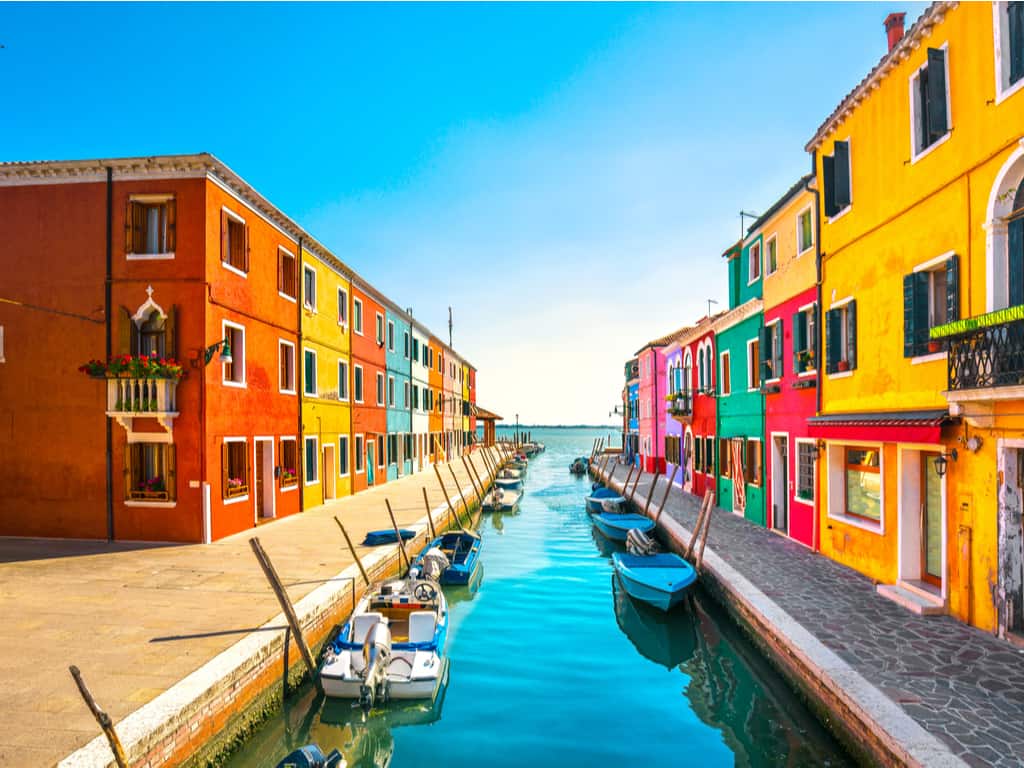
Boats moored along the brightly painted houses on Burano's canals, illustrating the island's fishing heritag

Burano is an astounding city of colorful houses and handmade laces in the northern Venetian Lagoon of Italy. With so much to explore and capture, let us take to the city of colors and its details through this article. Keep reading ahead to know more about Burano and it’s beauty. We have included a proper information guide in this article for your convenience.

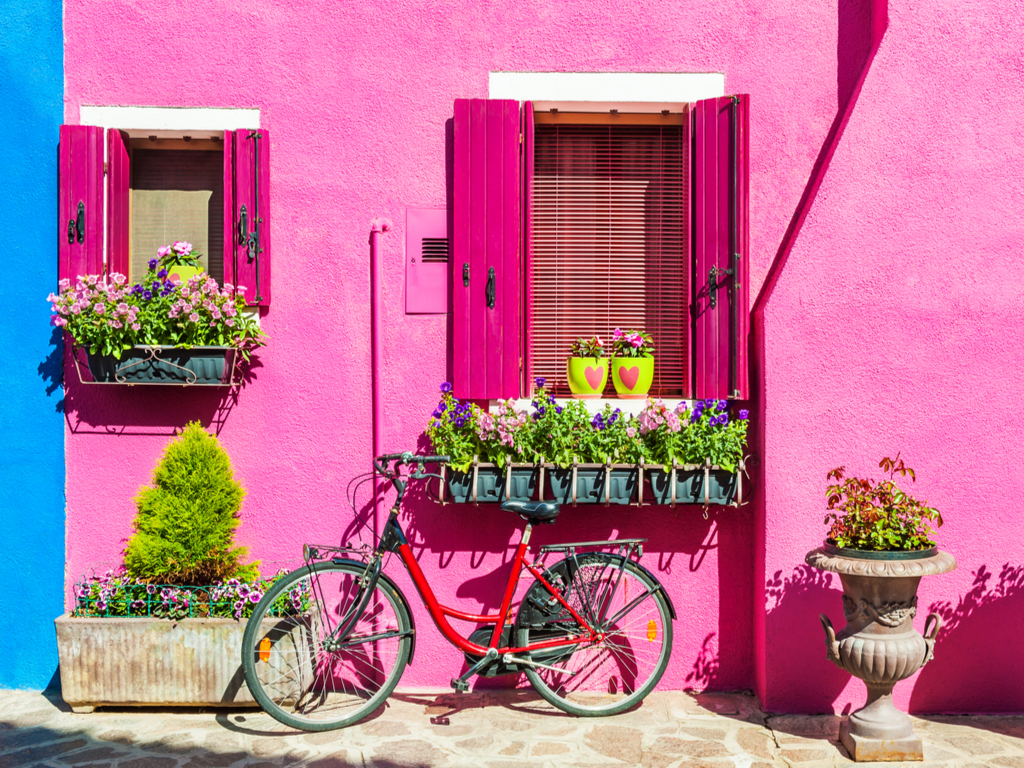
The bright colored houses, the amazingly soothing lagoon, and the beautiful lace around the city make this place the paradise of colors in Italy. With happiness spread everywhere and some mouth-watering casual eateries, the city is awe-interesting.

The picturesque island of Burano in the northern Venetian Lagoon is famous for its brightly colored houses and handmade lace. The beautiful lagoon flowing through the city, the vividly colorful houses along the bay, and the crystal clear sky above the head, makes Burano Italy just color-perfect.

How do I get from Venice to Burano Island?

With the road distance of approximately 63 Kilometers, Venice to Burano is a stunning trip. The beauty of Italy and the romantic climate makes it interesting. The Vaporetto line that runs between Venice to Burano on the number 12 is the best option.

Boats moored along the brightly painted houses on Burano's canals, illustrating the island's fishing heritag
Experience the picturesque setting of Burano’s canals, lined with boats and colorful houses, echoing the island’s fishing history.

The mesmerizing ferry trip from Venice’s San Zaccaria to Burano and Murano is just classy. With just travel of 45 minutes, the stunning Burano island is ready to welcome you.

What is the island of Burano famous for?

Burano Island in the Venetian Lagoon of Italy is a perfect holiday destination. With the beautiful colorful houses and the unique handmade laces, this island is astonishingly superb.

The city is at its best from the early in the morning during the sunrise, to late in the evening during the sunset or midnight. With the calmness of the city, cooling and soothing lakes, and vivid colors spread, Burano is the most colorful and famous city of Italy.

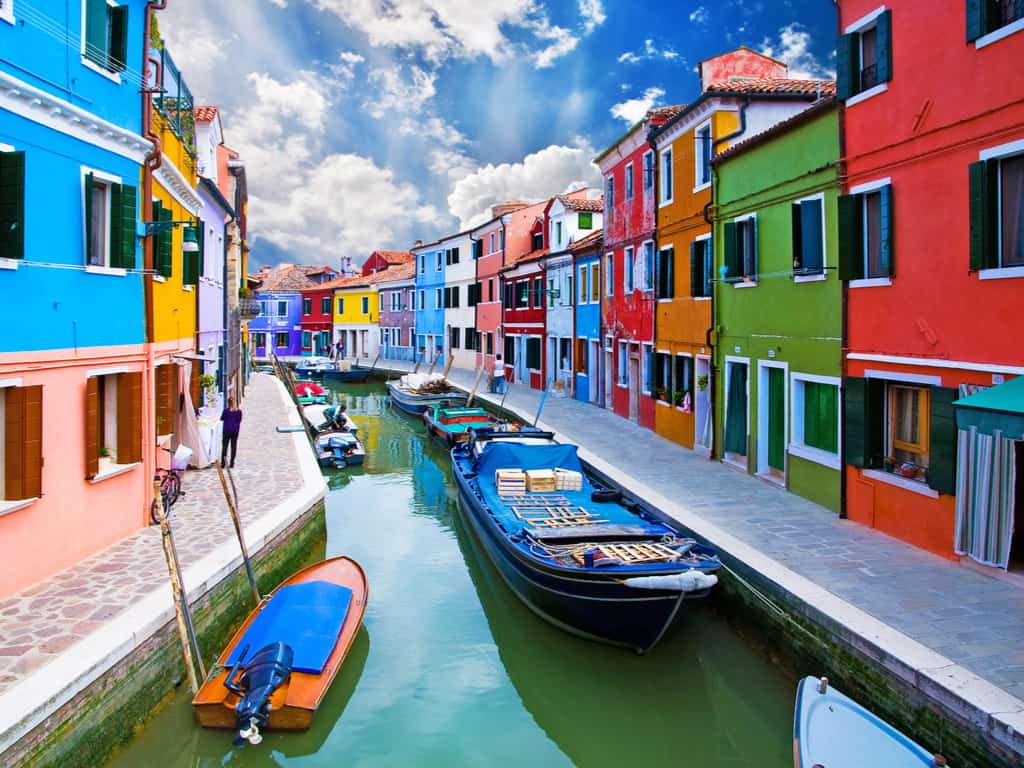
Colorful houses lining the canals in Burano, Italy, reflecting in the water and creating a vibrant scene
Discover the vibrant colors of Burano, Italy, where each house along the canal paints a picture of this island’s unique charm.

Why is this Italian city so colorful?

With the legend and stories spread about Burano Italy, the tale of the stunning colorful houses is also linked. The city of fishermen is painted with vivid and bright hue shades to help the fishermen reach their homes in the dark and thick fog of lagoon.

The bright walls reflecting the light and their un-shattered image reflected in the clear water of the lagoon, create a paradise at this beautiful city of Burano.

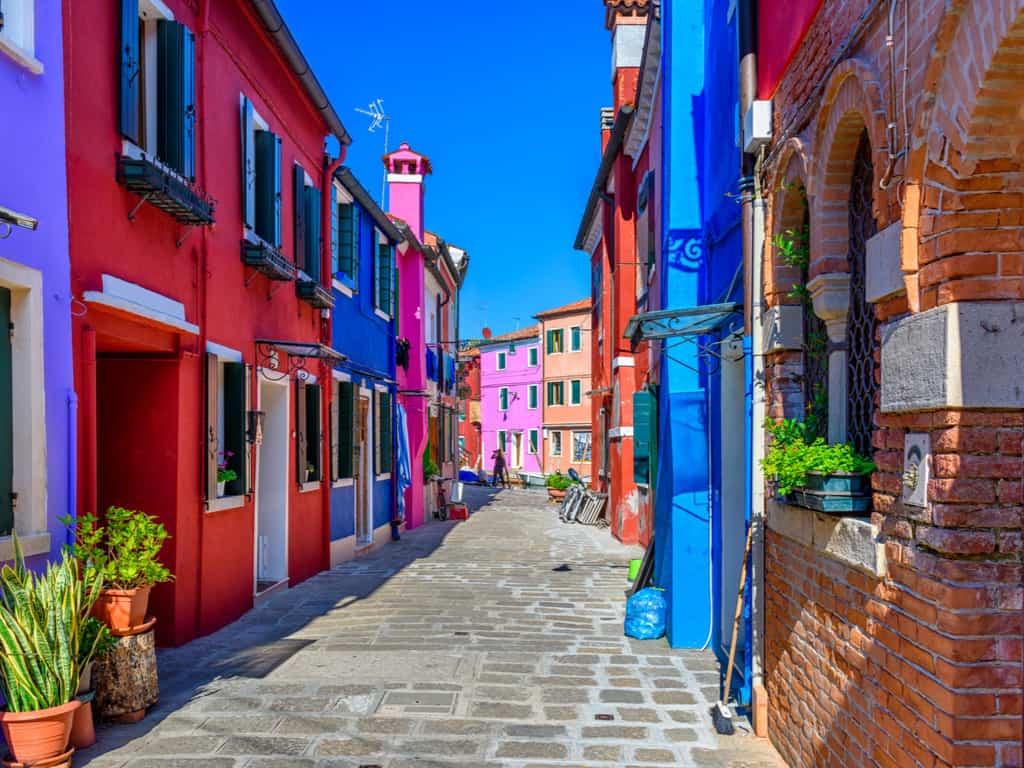
Narrow, charming streets of Burano, inviting visitors to explore the island's hidden corners and vibrant architecture
Stroll through the narrow streets of Burano, a journey filled with vibrant colors and enchanting architectural surprises.

What to do at Burano?

The alluring beauty of the colorful houses, the calm breeze, turquoise blue water, clear sky, and the beauty spread everywhere, Burano Island offers a lot to explore and expedite.

The best things to do here are:

  • Visit the colorful homes
  • Offer your prayer at St. Martin’s Church
  • Adore the handmade laces
  • Stroll the streets and have a look at the spectacular fisherman boats
  • Stroll around the Piazza Galuppi, the unique square of Burano
  • Spend some time at lace museum
  • Get drowned in the beauty of the city and the Murano Glass
Local artisans creating traditional Burano lace, a craft passed down through generations on the island
Meet the local artisans of Burano as they create traditional lace, a craft deeply woven into the island’s cultural fabric.

When should one visit Burano?

With the hues of color and the crystal clear blue water, and soothing climate, the city of Burano Italy is perfect to visit all round the year. With the average temperature and humidity, the ideal time to visit the city of colorful houses is from April to October.

The astounding and sparkling colorful houses, the calm lagoon, the soothing climate, and a calm breeze flowing throughout the city, Burano Italy is breathtaking. With the phenomenal site-seeing, beautiful sunrise, and sunset, every moment is mystical and magical.

Traveling to Burano, dreamy land of colorful houses is sure to take place in your bucket-list!

Devetashka Cave – See the stunning underworld of Bulgaria

Entrance to the magnificent Devetashka Cave in Bulgaria, showcasing its vast opening and lush surroundings

Devetashka Cave in Bulgaria comprises relics from Hollywood movies and the Cold War era. The story goes that it once was the residential spot for many tribes in the Neolithic and late Paleolithic period.

Located approximately 18 kilometers to the northeast section of Lovech, Devetashka Cave boasts of a ceiling that is 2442 meters high with a breadth of 60 meters.

This cave is regarded with high esteem by locals, who consider it a landmark of immense international potential, and by travelers who rightly believe it to be a cultural monument.

The Unique Beauty of Devetashka Cave in Bulgaria

This cave is one of those places that make you feel as if you have entered a magical world. The surreal combination of greenery, large gaps in the cave’s ceiling, and a wide variety of bats and insects make it a unique tourist destination. Unlike other caves where you only find stillness, Devetashka is always brimming with the sound of swallows chirping and bats flapping their wings.

Stunning view from inside Devetashka Cave looking out to the bright outside world, a contrast of light and shadow
Marvel at the stunning views from inside Devetashka Cave, a dramatic play of light and shadow in Bulgaria.

There is an assortment of rock specimens available here, which include stalactites, stalagmites, and speleothems. The numerous naturally formed domes and rivulets only add to the charm of this ancient cave structure.

The entire cave is bathed in natural light that allows you to behold the natural beauty that surrounds you. You will want to keep visiting it again and again.

The Devetashka Cave's unique skylight openings, allowing sunlight to illuminate the cave's interior
Witness the breathtaking natural skylights of Devetashka Cave, where sunlight dances through the caverns.

How to get to Devetashka Cave?

Reaching Devetashka is quite easy if you are approaching it from Devetaki village, which is just two kilometers away. You can hike to the cave by following the path beside the village river.

Those who wish to opt for a more relaxing journey might ride a car on Road 301. You will have to cover a short distance on a concrete bridge and a dirt road and you will soon reach Devetashka Cave.

What is the entrance fee for Devetashka Cave?

The entrance fee for the cave is quite reasonable considering its astounding beauty.  to gain access to this beatific cave Students and adults are charged 2 and 3 leva – something between 1 and 2 USD.

Interior of Devetashka Cave with its large caverns and distinctive skylights, creating a mystical atmosphere
Discover the mystical interior of Devetashka Cave, famed for its expansive caverns and natural skylights in Bulgaria

What can you do on Devetashka Cave?

Devetashka Cave offers diverse attractions to tourists, including waterfall sightseeing, information gathering about the bats that inhabit the cave, photography, and exploring the historical points of interest.

Nowhere you do see as much multi-faceted beauty as you do in Bulgaria. While the scenic landscapes, pristine coastlines, and mountains are astoundingly beautiful, Devetashka Cave stands a class apart.

What is the best time to visit Devetashka Cave?

The best time to visit this magic Cave is during autumn, as the weather is neither too cold nor too hot during this time. Moreover, seasonal changes can be witnessed quite clearly.

Entrance to the magnificent Devetashka Cave in Bulgaria, showcasing its vast opening and lush surroundings
Explore the grand entrance of Devetashka Cave, a natural wonder and a gateway to Bulgaria’s subterranean beauty

Where to stay nearby of Devetashka Cave?

Some of the amazing accommodations that you can try out while visiting are:

  • Guest House Ongal
  • Guest House Bigora
  • The White House
  • Krai Potoka
  • Hotel & Relax Zone Cattleya

Kjeragbolten – For those daredevil hikers out there

Aerial view of Kjeragbolten, illustrating its precarious position and the sheer scale of the surrounding cliffs

Kjeragbolten is a boulder that is wedged into a deep crevice in the Kjerag hill. It is suspended in the crevice and below it, is a 984-meter deep abyss. It was a result of recurrent reformations of the valleys in between the several ice ages.

The Kjeragbolten in Norway was formed in around 50,000 B.C. during the last glacial period.

Where is Kjeragbolten in Norway?

The Kjeragbolten sits on the Kjerag hill, which is located on the shore of Lysefjord. Lysefjord, in turn, is a fjord that you find towards the southwest of Lysebotn village. A fjord is a narrow extension of the sea in between the mountains and is a speciality of Norway.

Aerial view of Kjeragbolten, illustrating its precarious position and the sheer scale of the surrounding cliffs
Capture your own unforgettable moment on Kjeragbolten, with Norway’s breathtaking fjord as your backdrop.

Let’s get you a route from Oslo to Kjeragbolten, since Oslo is the starting point of all Norway vacations.

From Oslo to Lysebotn: Lysebotn is the closest town to Kjeragbolten and is just 15 minutes away. You can fly from Oslo to Lysebotn or you may as well choose a car ride from Oslo to Lysebotn, which takes around 7 to 8 hours

From Lysebotn to Kjeragbolten trail:
By car, it takes hardly 15 minutes to reach the bottom of the Kjeragbolten hike trail.

Panoramic view of the scenic landscape around Kjeragbolten, with the vast Lysefjord below
Marvel at the panoramic beauty of Lysefjord from Kjeragbolten, a stunning viewpoint in Norway’s rugged landscape.

Why do people climb Kjeragbolten, Norway?

Most people – if not all – visit the Kjeragbolten in Norway for the daring Kjeragbolten hike and for the breathtaking landscape views. You get to see from a thousand meters above and from the Kjerag plateau. The climax of the trip is almost always a photograph posed on top of Kjeragbolten.

What is the best time for the Kjeragbolten hike?

The summer season, of course. The Kjeragbolten hike follows a strict seasonal pattern to avoid fogs, rains, and harsh climate.

Hikers en route to Kjeragbolten, traversing the challenging yet scenic trails of the Norwegian landscape
Embark on a hiking adventure to Kjeragbolten, a rewarding journey through Norway’s stunning natural terrain.

Is Kjeragbolten hike safe?

As challenging a climb Kjerag is, you find a couple of chains to assist you at the steepest parts. Furthermore, some red-colored T’s are painted on the rocks along the path, and thus you just can’t get lost or diverted. Fog and rain, if present, happens to be your worst enemies at the climb.

As of the infamous Kjeragbolten deaths, nobody has yet died from the Kjeragbolten hike itself. The few Kjeragbolten deaths were all due to base jumping from the boulder and not because of merely standing and falling from Kjeragbolten.

Adventurous hiker standing on Kjeragbolten, the suspended rock between two cliffs in Norway, with a breathtaking view
Experience the thrill of standing on Kjeragbolten, a unique rock suspended above a fjord in Norway, offering an adrenaline-pumping adventure.

How long does it take to hike Kjeragbolten?

The hike is bound to take a good 6 to 7 hours which includes both the uphill and downhill journey.

If you are a hiking daredevil, you surely can’t miss Kjeragbolten, Norway. Hike the Kjerag hill and enjoy the spectacular views of mountains and fjords and visualize the incredibly beautiful impact the ice ages have left on Norway.

Where to stay for the hike – Lysebotn, Norway?

The best possible way to spend nights is by camping out in the open, for an altogether magical experience. Make sure to bring a tent and other necessities if you prefer this option. However, in case you want to comfortably spend your nights indoors, check out on these:

  • Stavanger Bed and Breakfast:
  • Flørli 4444 Hostel: An affordable lodging that comes with dorms and also provides spectacular views of Lysefjord.
  • Lysefiorden Tourist Cabin
  • Sirdal Hoyfjellshotell

Black Beach of Vik – The magic of Volcanoes

The iconic Reynisdrangar sea stacks seen from the Black Beach of Vik, creating a dramatic and picturesque scene

The black sand beach of Vik is the stupendous creation of nature. With the smooth black sand along the sea coast, the mesmerizing, powerful, beautiful, and magical beaches will be classic. The popular arctic country with the most amazing beaches and the mind-blowing environment makes the trip of the black sand beach Vik Iceland memorable.

The cold breeze, clear water, dark-beauty beaches, and the splendid sky above create a paradise in Iceland.

Where is the Vik black sand beach?

The alluring Vik black sand beach is located Iceland’s south coast, about 2.5 hours away from Reykjavik. Located by the beautiful small town of Vik I Myrdal, this beach is no less than a paradise.

The sparkling black sand, large basalt columns and turquoise blue sea is home to the spectacular biodiversity and various nesting birds. The exclusive home of puffins, guillemots, and fulmars is just mesmerizing and pleasant.

Sunset over the Black Beach of Vik, with the sky and sea reflecting a kaleidoscope of colors
Enjoy a breathtaking sunset at Vik’s Black Beach, where the sky and sea unite in a display of vibrant colors in Iceland

What is the best time to visit Vik black sand beach?

With the natural beauty scattered everywhere and the soothing environment, the black sand beach is breathtaking. With the beauty of cool Iceland and the most dramatic landscapes right from the phenomenal volcanoes to cascading waterfalls, breathtaking ice caves, and mystical mountains, the place is awe-interesting.

Visiting this white fairyland of ice and black sand is incredible throughout the year. The best time for the Black beach of Vik is between 2-5 PM during the day.

The rugged coastline and natural arches near Vik's Black Beach, highlighting Iceland's dramatic coastal scenery
Explore the rugged coastline and natural arches near Vik’s Black Beach, a journey through Iceland’s spectacular landscapes.

What types of rocks is the Vik black sand beach made of?

The dark-beauty of nature is alluring and soothing. The volcanic rocks formed after the lava condensed at this place makes it even more beautiful. When the rock starts to get worn, the tiny pebbles are formed. The sparkling turquoise sea, black sand, and crystal clear ice reflecting the rainbow lights create the image of the paradise at the Black beach of Vik.

The iconic Reynisdrangar sea stacks seen from the Black Beach of Vik, creating a dramatic and picturesque scene
Witness the majestic Reynisdrangar sea stacks from Vik’s Black Beach, an iconic sight along Iceland’s coastline.

What to do at Vik black sand beach?

The marvelous and classic black sand beach is beautiful in all aspects. With so much to explore and travel, the black sand beach is alluring and phenomenal. With the beauty scattered all around this black sand beach is just thrilling. 

The best things to do here are:

  • Explore the black sand beach
  • Take a trip of the alluring caves
  • Visit the enormous cliff of Dryholey
  • Adore the Diamond Beach
  • Get amazed with the northern lights
  • Hike on the Glacier
  • Explore the Eldhraun Lava Fields
Stunning view of the black sand beach in Vik, Iceland, with its distinctive dark shoreline and powerful waves
Explore the unique beauty of Vik’s black sand beach, a natural wonder with its striking dark sands and dramatic waves in Iceland.

Where to stay in Vik black sand beach?

Spending time in the lap of nature at the black sand beach Vik Iceland is an awe-inspiring experience. The beauty of the sand and coolness of air creates magic at this place. The best places to stay at this glorious location which offer luxury are:

Black Beach Suites: The best and the modest hotel near the astounding beaches offers the polished stay studios free WiFi, and shared kitchen.

Vik Cottages: The stupefying collection of cottages with countryside views, a restaurant, and a gym.

The Barn: The well-settled line of dorms and private rooms in a warehouse-cum-chic hostel offering a bar, a kitchen, and Wi-Fi, the stay would be pre sheer luxury.

Vik Apartments: The budget-friendly apartments with kitchens, living rooms, and countryside views, topped with high-speed Wi-Fi. 

Hotel Kria: The luxurious and modern hotel blended with the authentic Iceland kitchen, and a bar with the free breakfast accompanied by an adoring view of the northern lights, this is amazingly cozy.

The beauty of the sand mixed with the calmness of the sea and cool breeze creates an alluring and phenomenal picture at the Vik black sand beach. Visit this place to explore the untouched beauty of ice and water!

Plitvice Lakes National Park – Makes Croatia ‘Full of Life’

Early morning mist rising over the waterfalls and lakes of Plitvice, adding a mystical atmosphere to the park

Plitvice Lakes National Park is the crowning jewel of Croatia. The erstwhile chalk and limestone have been overflown with tumultuous waters over several years to create organic dams, Croatia waterfalls, and lakes. The coastline itself spans 1.778 kilometers and a whopping 1185 islands.

The natural beauty of the park is amplified by the surrounding forests that house exotic animals such as wolves and bears.

How to reach Plitvice Lakes National Park?

Here are a few routes that you can take to reach Plitvice Lakes, National Park:

From Zagreb to Plitvice Lakes: You can opt for a connecting bus from the terminal building at the Zagreb Airport to the Zagreb bus station. Take another bus from this station. You will reach Plitvice Lakes within three hours.

Panoramic view of the cascading waterfalls at Plitvice Lakes National Park, showcasing the park's lush greenery and pristine waters
Experience the majestic waterfalls of Plitvice Lakes National Park, a breathtaking natural wonder in Croatia.

From Split to Plitvice Lakes: Buses are the only modes of public transport from Split to Plitvice Lakes. You can also sign up for the organized day tours to reach the Croatia National Park. It will take around four hours to reach Plitvice Lakes from Split through the bus service.

From Zadar to Plitvice Lakes: Plitvice Lakes National Park is approximately 130 kilometers away from the Zadar Airport. You can take a connecting bus from this airport to Zadar Bus Station and then venture toward Plitvice by boarding a different bus. The entire journey spans two hours.

In case you are in any other part of Croatia and wish to visit the Plitvice Lakes, you may board a bus to any of the three locations mentioned above and take another bus once you reach there.

Early morning mist rising over the waterfalls and lakes of Plitvice, adding a mystical atmosphere to the park
Witness the enchanting morning mist at Plitvice Lakes, a magical start to any day in this Croatian paradise.

When to visit Plitvice Lakes National Park?

Our recommendation will be to visit this Croatia National Park between June and September. There’s a significant influx of tourists between July and August and during the morning hours. The scenery is picturesque and the crowds are sparse from 7 a.m. onwards so you should seriously consider exploring this part during this tranquil time.

Wooden walkway winding through the scenic landscape of Plitvice Lakes National Park, offering an immersive nature experience
Stroll along the charming wooden paths of Plitvice Lakes National Park for an up-close encounter with Croatia’s natural beauty.

However, don’t let this restrict you. There’s a seasonal perk to visiting this during all seasons – the beauty of the peak of the waterfalls during spring as the water levels increase. On the other hand, fall showcase the wondrously changing colors of nature while winter allows visitors a look at the frozen lakes and the winter wonderland in general.

What should you visit when come to Plitvice Lakes National Park?

It lives up to its status as a UNESCO World Heritage site. The park comprises around 90 waterfalls, lakes that date back to thousands of years, and a diverse ecosystem with different varieties of flora and fauna.

Plitvice is a great place for adventure lovers. You can go hiking on the mountains or forest trails, opt for horse riding or kayaking, or just book a buggy ride.

You can fit in a trip to Smiljan, which is the birthplace of Nikola Tesla, and houses a museum with his mementos. It is only 65 kilometers away, so the opportunity is ripe!

Crystal-clear turquoise waters of the Plitvice Lakes surrounded by dense forest, reflecting the serene beauty of the park
Discover the tranquil turquoise waters of Plitvice Lakes, nestled in the heart of Croatia’s lush forests.

If you wish to kick things up a notch and visit a unique tourist destination that puts you at peace, Plitvice Lakes is the place to be!