Devetashka Cave – See the stunning underworld of Bulgaria

Entrance to the magnificent Devetashka Cave in Bulgaria, showcasing its vast opening and lush surroundings

Devetashka Cave in Bulgaria comprises relics from Hollywood movies and the Cold War era. The story goes that it once was the residential spot for many tribes in the Neolithic and late Paleolithic period.

Located approximately 18 kilometers to the northeast section of Lovech, Devetashka Cave boasts of a ceiling that is 2442 meters high with a breadth of 60 meters.

This cave is regarded with high esteem by locals, who consider it a landmark of immense international potential, and by travelers who rightly believe it to be a cultural monument.

The Unique Beauty of Devetashka Cave in Bulgaria

This cave is one of those places that make you feel as if you have entered a magical world. The surreal combination of greenery, large gaps in the cave’s ceiling, and a wide variety of bats and insects make it a unique tourist destination. Unlike other caves where you only find stillness, Devetashka is always brimming with the sound of swallows chirping and bats flapping their wings.
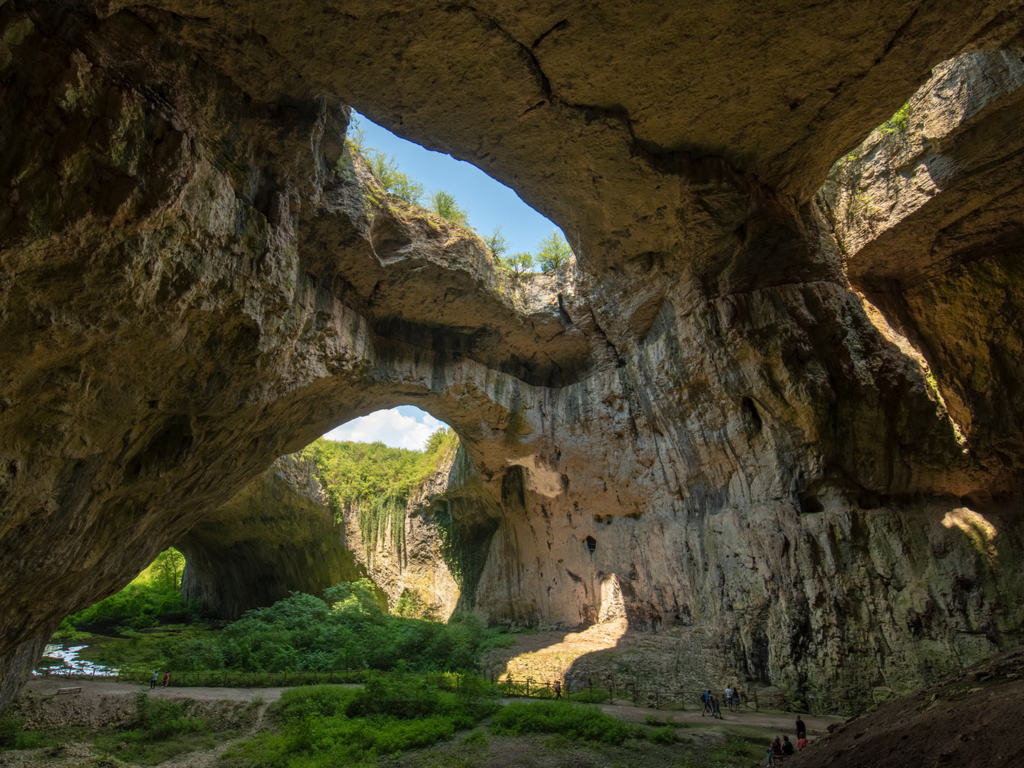
Stunning view from inside Devetashka Cave looking out to the bright outside world, a contrast of light and shadow
Marvel at the stunning views from inside Devetashka Cave, a dramatic play of light and shadow in Bulgaria.

There is an assortment of rock specimens available here, which include stalactites, stalagmites, and speleothems. The numerous naturally formed domes and rivulets only add to the charm of this ancient cave structure.

The entire cave is bathed in natural light that allows you to behold the natural beauty that surrounds you. You will want to keep visiting it again and again.
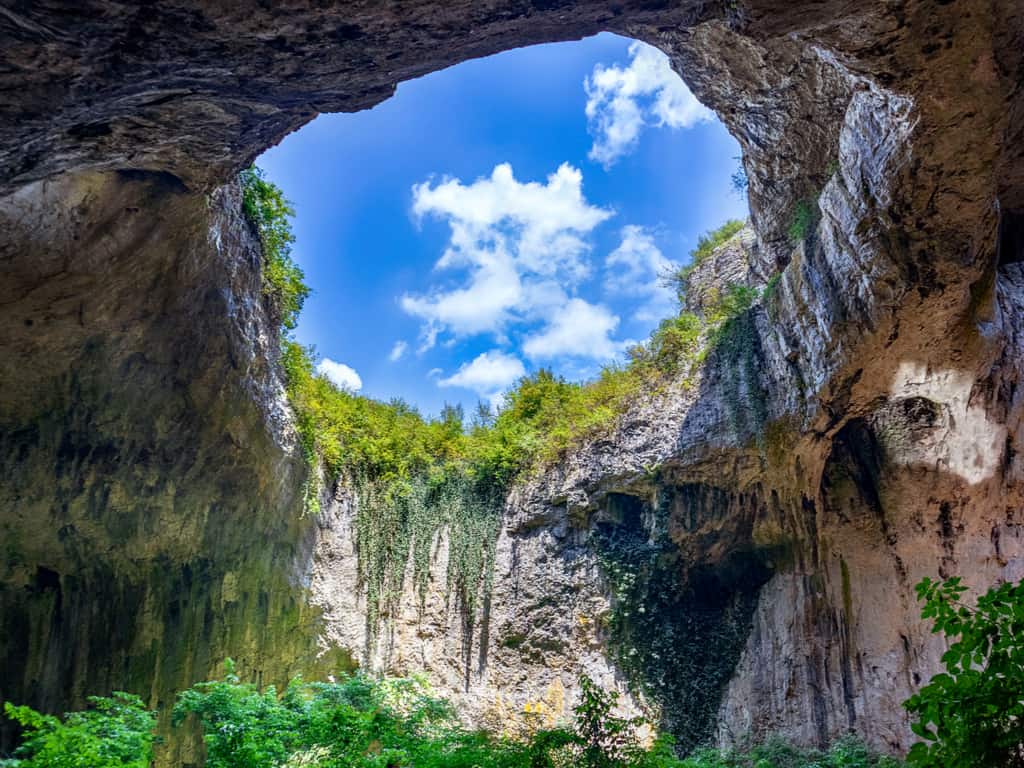
The Devetashka Cave's unique skylight openings, allowing sunlight to illuminate the cave's interior
Witness the breathtaking natural skylights of Devetashka Cave, where sunlight dances through the caverns.

How to get to Devetashka Cave?

Reaching Devetashka is quite easy if you are approaching it from Devetaki village, which is just two kilometers away. You can hike to the cave by following the path beside the village river.

Those who wish to opt for a more relaxing journey might ride a car on Road 301. You will have to cover a short distance on a concrete bridge and a dirt road and you will soon reach Devetashka Cave.

What is the entrance fee for Devetashka Cave?

The entrance fee for the cave is quite reasonable considering its astounding beauty.  to gain access to this beatific cave Students and adults are charged 2 and 3 leva – something between 1 and 2 USD.
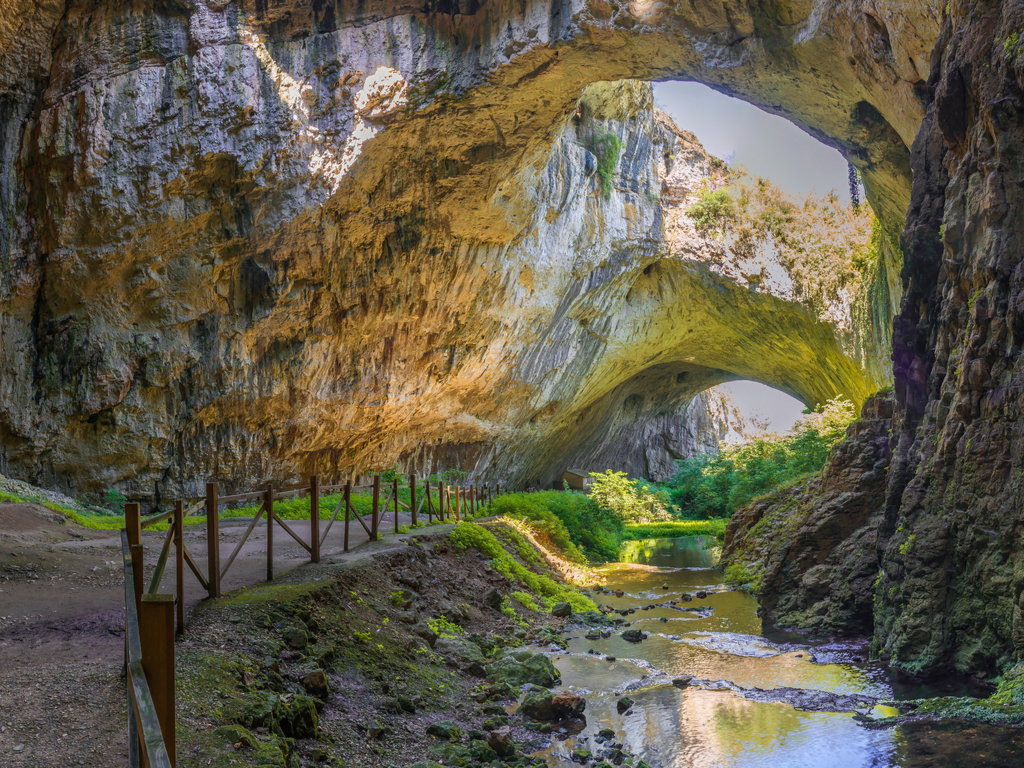
Interior of Devetashka Cave with its large caverns and distinctive skylights, creating a mystical atmosphere
Discover the mystical interior of Devetashka Cave, famed for its expansive caverns and natural skylights in Bulgaria

What can you do on Devetashka Cave?

Devetashka Cave offers diverse attractions to tourists, including waterfall sightseeing, information gathering about the bats that inhabit the cave, photography, and exploring the historical points of interest.

Nowhere you do see as much multi-faceted beauty as you do in Bulgaria. While the scenic landscapes, pristine coastlines, and mountains are astoundingly beautiful, Devetashka Cave stands a class apart.

What is the best time to visit Devetashka Cave?

The best time to visit this magic Cave is during autumn, as the weather is neither too cold nor too hot during this time. Moreover, seasonal changes can be witnessed quite clearly.
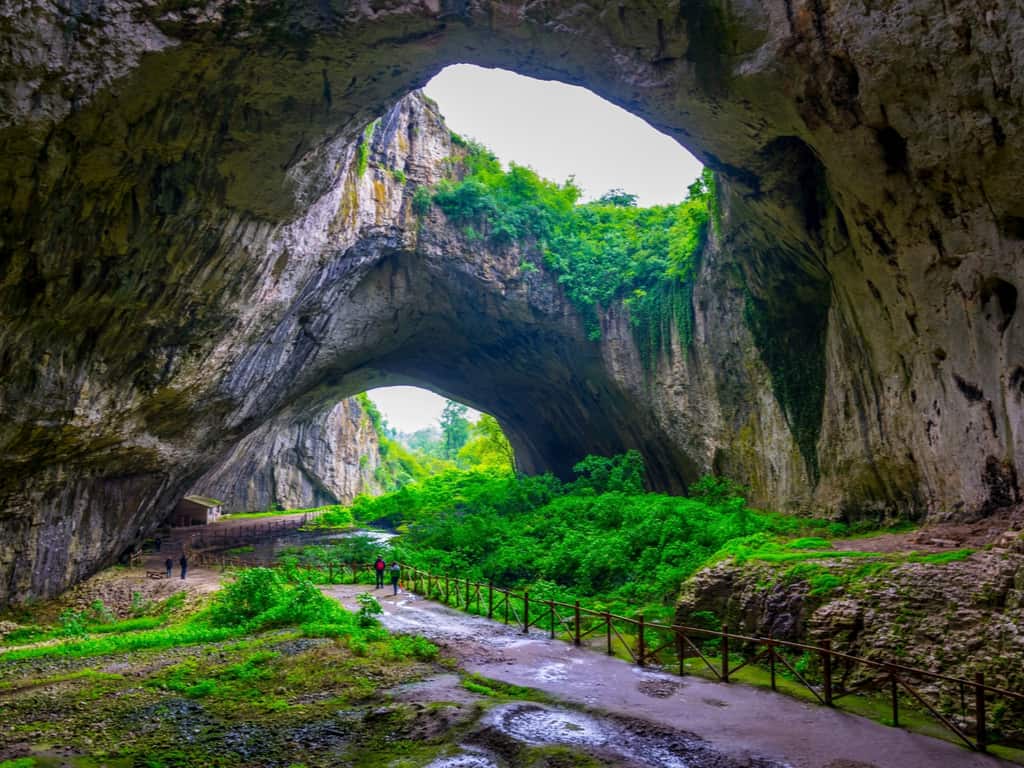
Entrance to the magnificent Devetashka Cave in Bulgaria, showcasing its vast opening and lush surroundings
Explore the grand entrance of Devetashka Cave, a natural wonder and a gateway to Bulgaria’s subterranean beauty

Where to stay nearby of Devetashka Cave?

Some of the amazing accommodations that you can try out while visiting are:

  • Guest House Ongal
  • Guest House Bigora
  • The White House
  • Krai Potoka
  • Hotel & Relax Zone Cattleya
Kjeragbolten – For those daredevil hikers out there

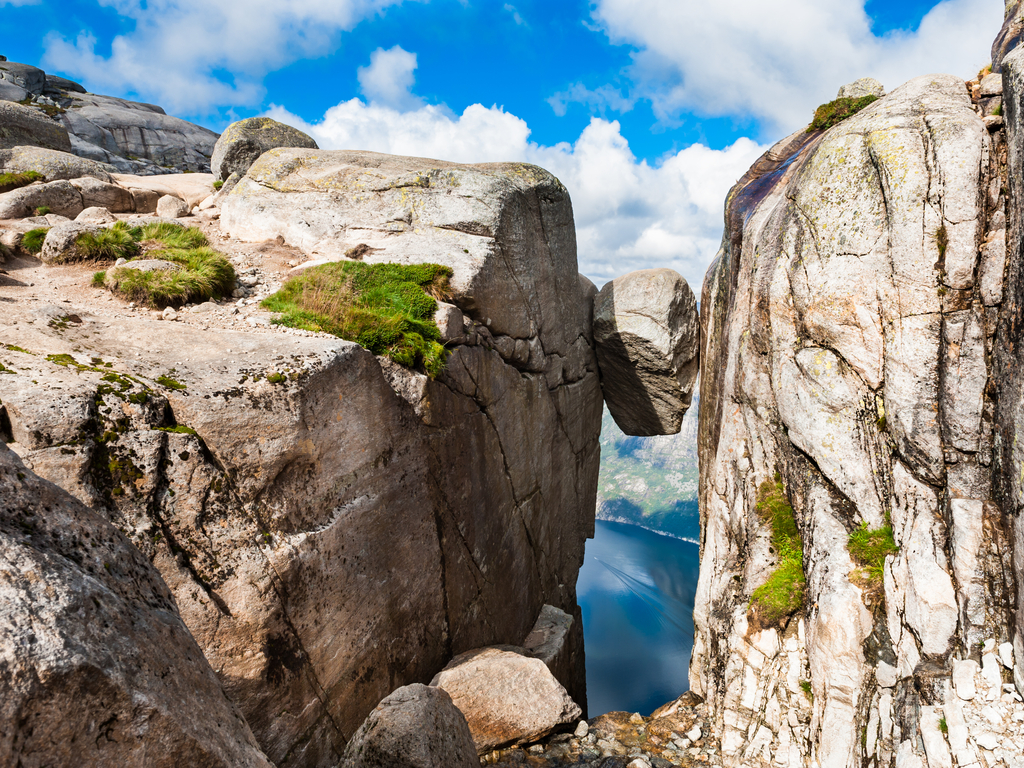
Aerial view of Kjeragbolten, illustrating its precarious position and the sheer scale of the surrounding cliffs

Kjeragbolten is a boulder that is wedged into a deep crevice in the Kjerag hill. It is suspended in the crevice and below it, is a 984-meter deep abyss. It was a result of recurrent reformations of the valleys in between the several ice ages.

The Kjeragbolten in Norway was formed in around 50,000 B.C. during the last glacial period.

Where is Kjeragbolten in Norway?

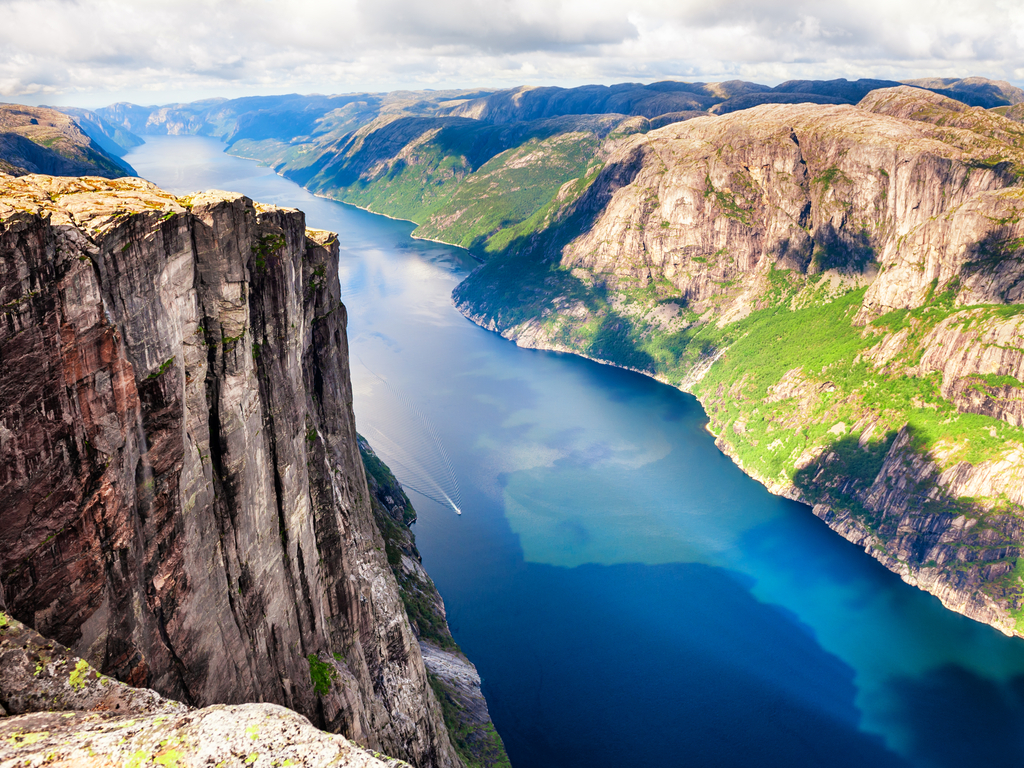
The Kjeragbolten sits on the Kjerag hill, which is located on the shore of Lysefjord. Lysefjord, in turn, is a fjord that you find towards the southwest of Lysebotn village. A fjord is a narrow extension of the sea in between the mountains and is a speciality of Norway.

Aerial view of Kjeragbolten, illustrating its precarious position and the sheer scale of the surrounding cliffs
Capture your own unforgettable moment on Kjeragbolten, with Norway’s breathtaking fjord as your backdrop.

Let’s get you a route from Oslo to Kjeragbolten, since Oslo is the starting point of all Norway vacations.

From Oslo to Lysebotn: Lysebotn is the closest town to Kjeragbolten and is just 15 minutes away. You can fly from Oslo to Lysebotn or you may as well choose a car ride from Oslo to Lysebotn, which takes around 7 to 8 hours

From Lysebotn to Kjeragbolten trail:
By car, it takes hardly 15 minutes to reach the bottom of the Kjeragbolten hike trail.

Panoramic view of the scenic landscape around Kjeragbolten, with the vast Lysefjord below
Marvel at the panoramic beauty of Lysefjord from Kjeragbolten, a stunning viewpoint in Norway’s rugged landscape.

Why do people climb Kjeragbolten, Norway?

Most people – if not all – visit the Kjeragbolten in Norway for the daring Kjeragbolten hike and for the breathtaking landscape views. You get to see from a thousand meters above and from the Kjerag plateau. The climax of the trip is almost always a photograph posed on top of Kjeragbolten.

What is the best time for the Kjeragbolten hike?

The summer season, of course. The Kjeragbolten hike follows a strict seasonal pattern to avoid fogs, rains, and harsh climate.

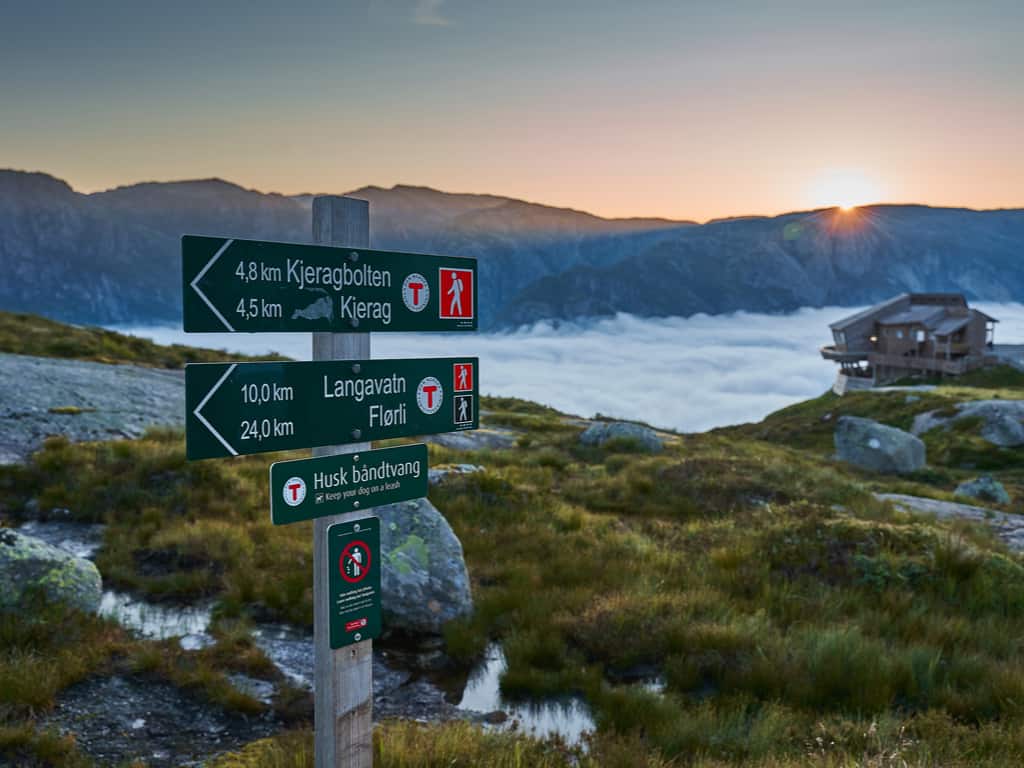
Hikers en route to Kjeragbolten, traversing the challenging yet scenic trails of the Norwegian landscape
Embark on a hiking adventure to Kjeragbolten, a rewarding journey through Norway’s stunning natural terrain.

Is Kjeragbolten hike safe?

As challenging a climb Kjerag is, you find a couple of chains to assist you at the steepest parts. Furthermore, some red-colored T’s are painted on the rocks along the path, and thus you just can’t get lost or diverted. Fog and rain, if present, happens to be your worst enemies at the climb.

As of the infamous Kjeragbolten deaths, nobody has yet died from the Kjeragbolten hike itself. The few Kjeragbolten deaths were all due to base jumping from the boulder and not because of merely standing and falling from Kjeragbolten.

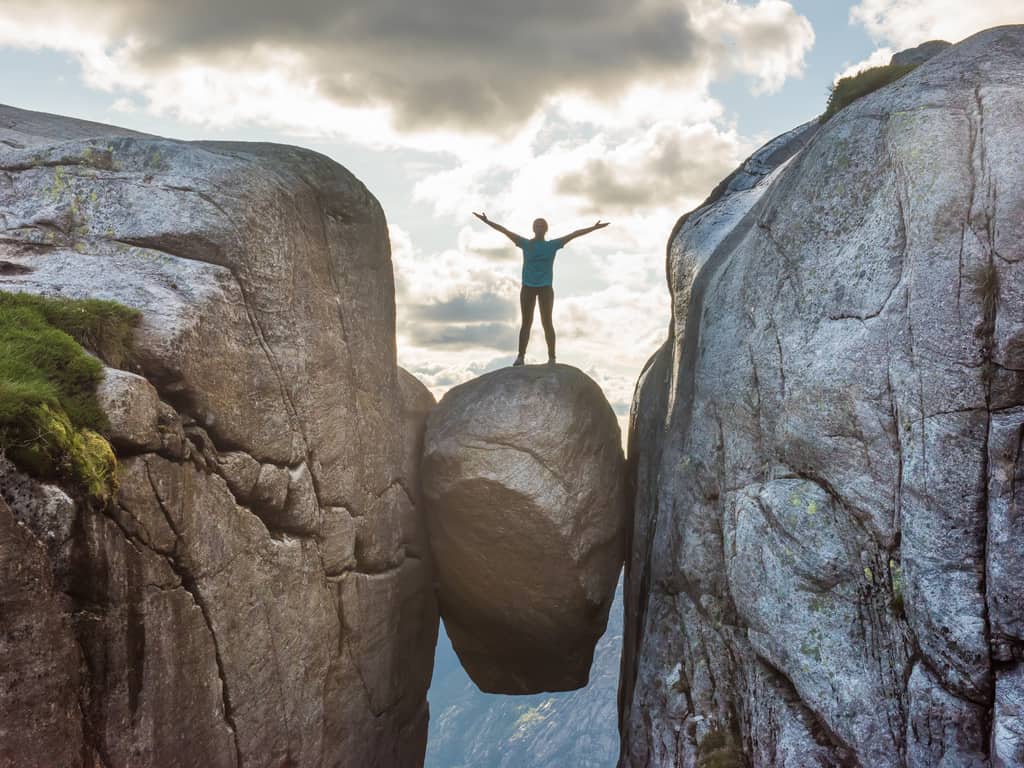
Adventurous hiker standing on Kjeragbolten, the suspended rock between two cliffs in Norway, with a breathtaking view
Experience the thrill of standing on Kjeragbolten, a unique rock suspended above a fjord in Norway, offering an adrenaline-pumping adventure.

How long does it take to hike Kjeragbolten?

The hike is bound to take a good 6 to 7 hours which includes both the uphill and downhill journey.

If you are a hiking daredevil, you surely can’t miss Kjeragbolten, Norway. Hike the Kjerag hill and enjoy the spectacular views of mountains and fjords and visualize the incredibly beautiful impact the ice ages have left on Norway.

Where to stay for the hike – Lysebotn, Norway?

The best possible way to spend nights is by camping out in the open, for an altogether magical experience. Make sure to bring a tent and other necessities if you prefer this option. However, in case you want to comfortably spend your nights indoors, check out on these:

  • Stavanger Bed and Breakfast:
  • Flørli 4444 Hostel: An affordable lodging that comes with dorms and also provides spectacular views of Lysefjord.
  • Lysefiorden Tourist Cabin
  • Sirdal Hoyfjellshotell

Bora Bora Island – The beautiful paradise in turquoise

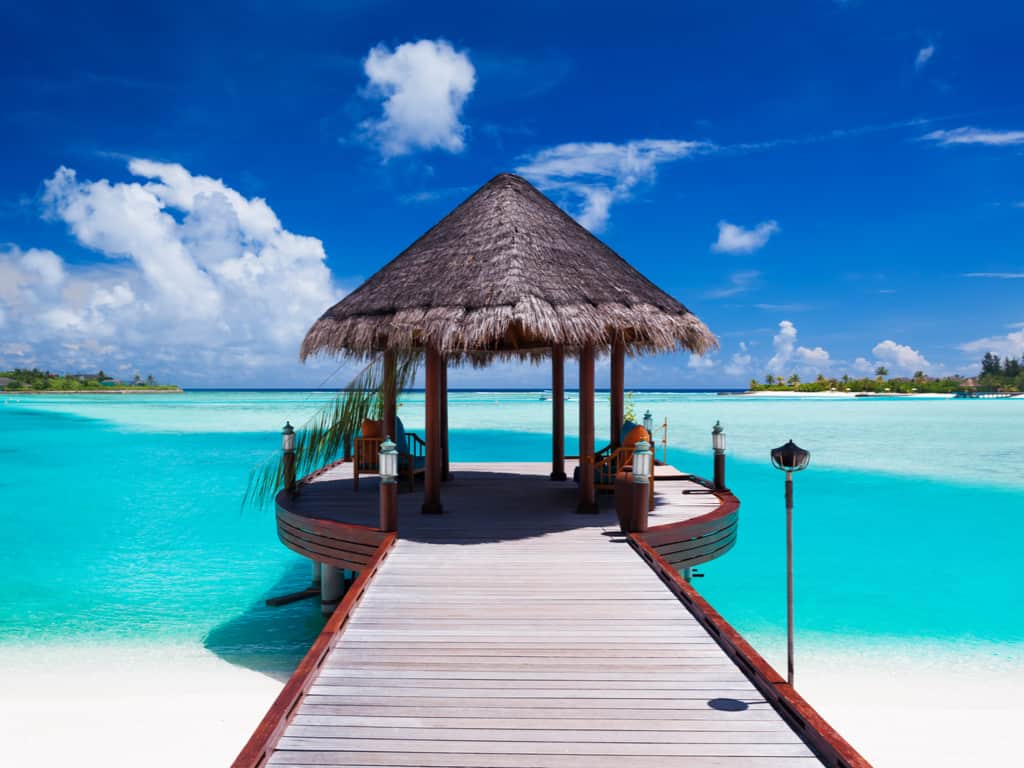
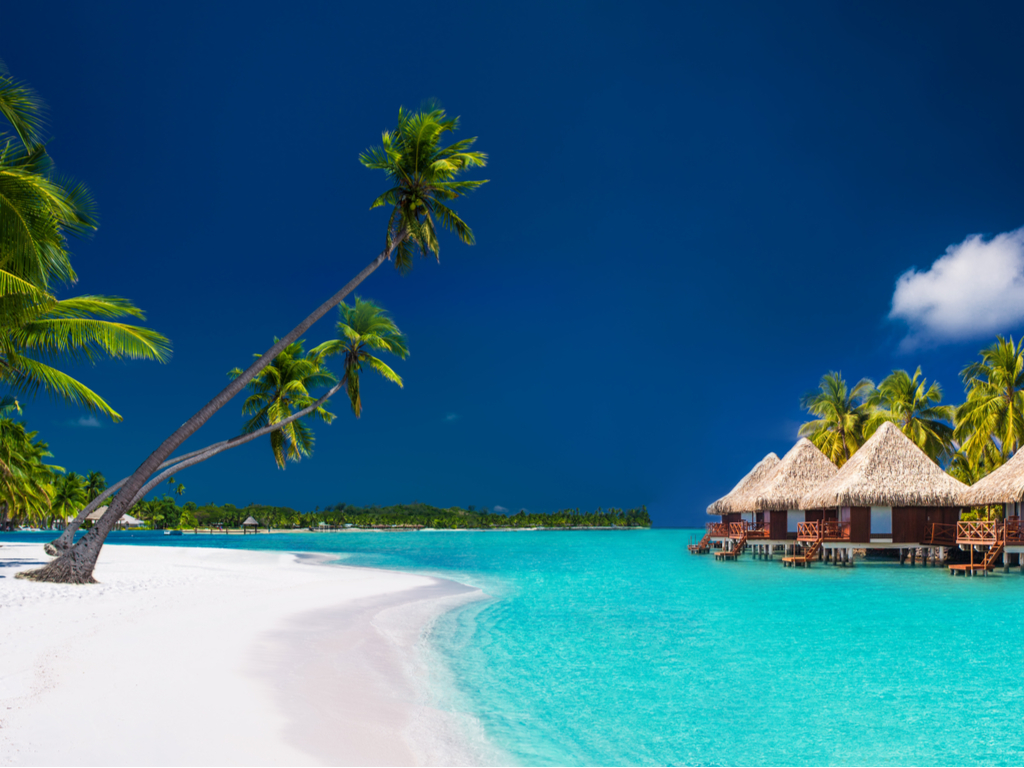
Luxurious overwater bungalows in Bora Bora, offering an exclusive retreat with direct ocean access

Bora Bora is a wild and beautiful island located in the heart of the South Pacific Ocean and is one of the world’s most relaxing destinations. Discover how this tiny little place is filled with life and treasures.

Go forth and explore this paradise, and we guarantee you won’t find enough words to describe this hidden place.

Where exactly is the island of Bora Bora located?

Bora Bora is one of the islands in the Society Islands of French Polynesia. It is situated at the central Pacific Ocean, 230 miles towards the northwest of Tahiti, and is surrounded by a barrier reef.

Luxurious overwater bungalows in Bora Bora, offering an exclusive retreat with direct ocean access
Experience the ultimate luxury in Bora Bora’s overwater bungalows, a serene escape amidst the azure waters.

How much does a trip to the Bora Bora Island cost?

The average cost, including international and inter-island flights to Bora Bora, food, accommodation, drinking, and recreational activities, rounds off to 7,000 – 9,000 USD considering a 7 day trip for a couple. It is hell expensive, thus.

How to get to Bora Bora Island?

Book your tickets really early if you don’t want to drill a hole in your pockets!

  1. First fly to the Faa’s international Airport at Papeete, Tahiti.
  2. From Tahiti, take another flight to Mote Mute, an islet of the Bora Bora main island.
  3. From this Bora Bora main airport, take the ferry across the turquoise blue lagoon to the main island of Bora Bora.
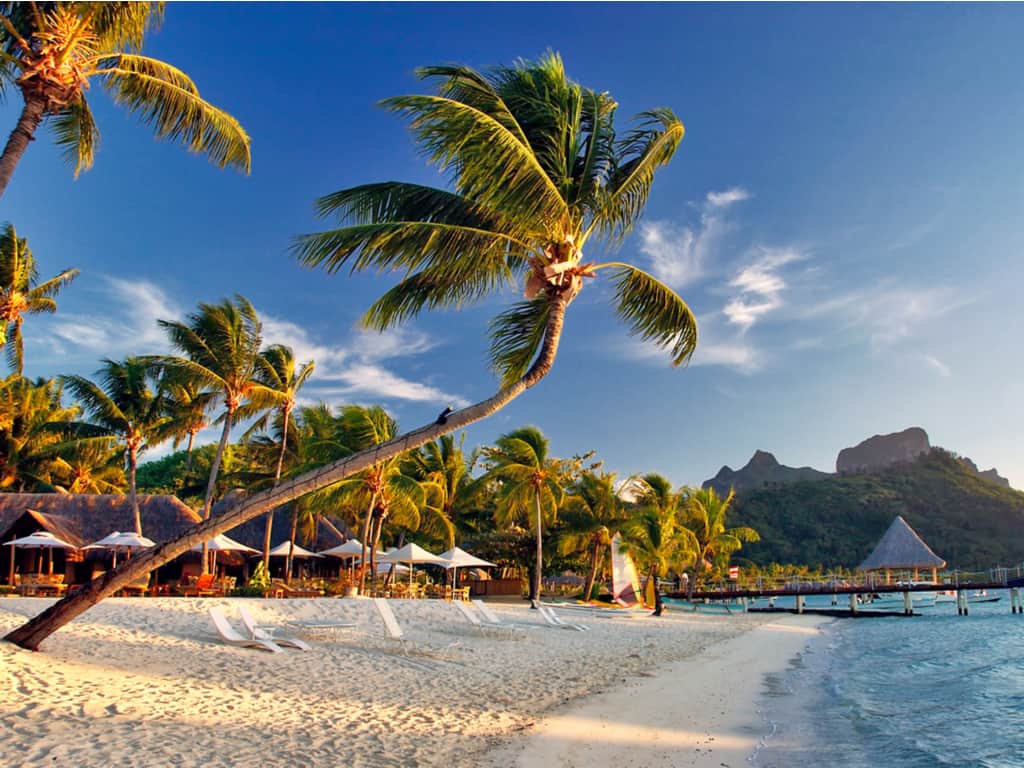
Panoramic view of Bora Bora Island's crystal-clear turquoise waters and lush mountainous landscape
Discover the stunning panoramic beauty of Bora Bora Island, a tropical paradise in French Polynesia.

Why to visit Bora Bora Island?

Step ashore and there you are, all welcomed by the natives with their sweet and happy island songs. From the breathtaking views of the mountain Otemaruto the crystal clear waters brimming with life – You can’t get just one reason to get here.

You get to enjoy your personal overwater or beachfront Resort. This place is an exotic honeymoon destination, and the relaxation it offers is unbelievably priceless.

"Luxurious spa resort in Bora Bora, nestled amidst tropical gardens and offering stunning lagoon views
Indulge in ultimate relaxation at a luxurious spa resort in Bora Bora, surrounded by breathtaking natural beauty.

What to do in Bora Bora Island?

  • Spend a day exploring the lagoon and its vibrant marine life with a snorkel.
  • Savor the fresh beachy flavors of local dishes; we highly recommend checking out the famous Bloody Mary restaurant.
  • Relax at your bungalow.
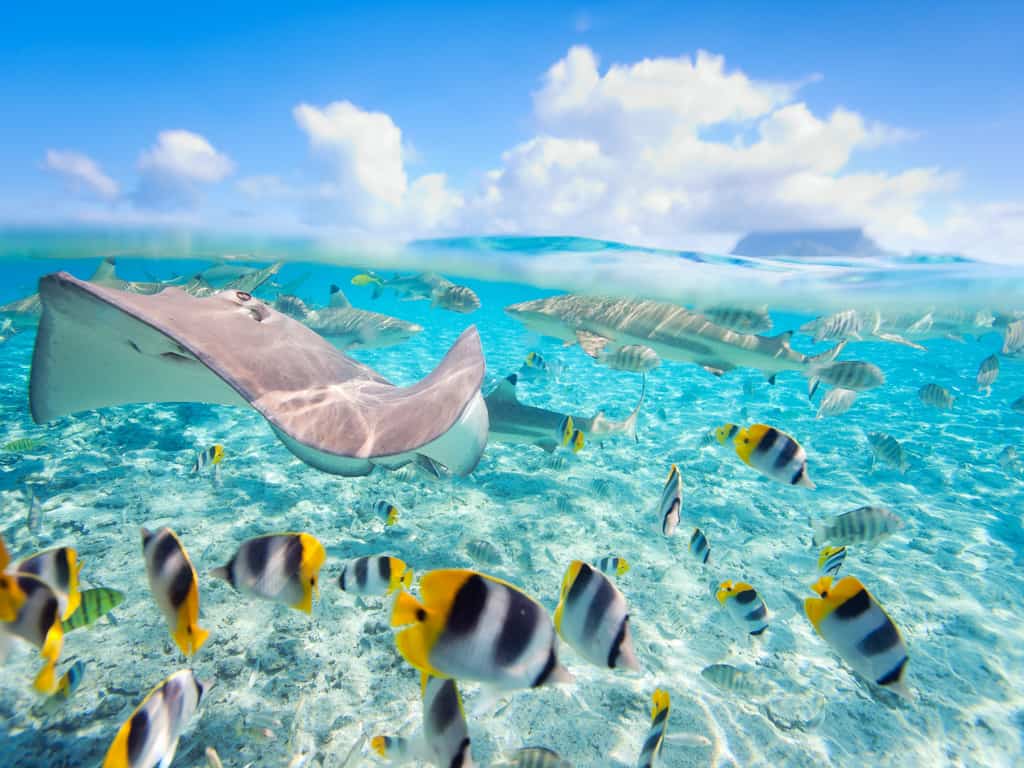
  • Jump into the water and meet Bora Bora’s friendly stingrays and reef sharks. 
  • Hire a bike and explore the island, and don’t forget to chill out at the local cafes.
  • Lounge the afternoon away at the Matira beach, the most popular beach of Bora Bora.
  • Take something luxury home: get your own deep-sea pearls from the market here.

Is the island of Bora Bora safe?

There is a little risk of theft when you are at Bora Bora, so make sure you secure yourself and your valuables well enough.

Vibrant coral reefs surrounding Bora Bora Island, ideal for snorkeling and exploring marine life
Dive into the vibrant underwater world of Bora Bora’s coral reefs, a haven for snorkelers and divers.

Which is better, Bora Bora or the Maldives?

When it comes to accessibility, Maldives is easily reachable, but Bora Bora trips are to go for if you travel from the United States. Also, Maldives is far less expensive than Bora Bora in terms of accommodation and food. All said, when it comes to adventure, Bora Bora Island beats the Maldives. The snorkeling experience with friendly rays and sharks is beyond anything.

Discover how this tiny little place is filled with life and treasures. Go forth and explore this paradise, and we guarantee you won’t find enough words to describe this hidden place.

Black Beach of Vik – The magic of Volcanoes

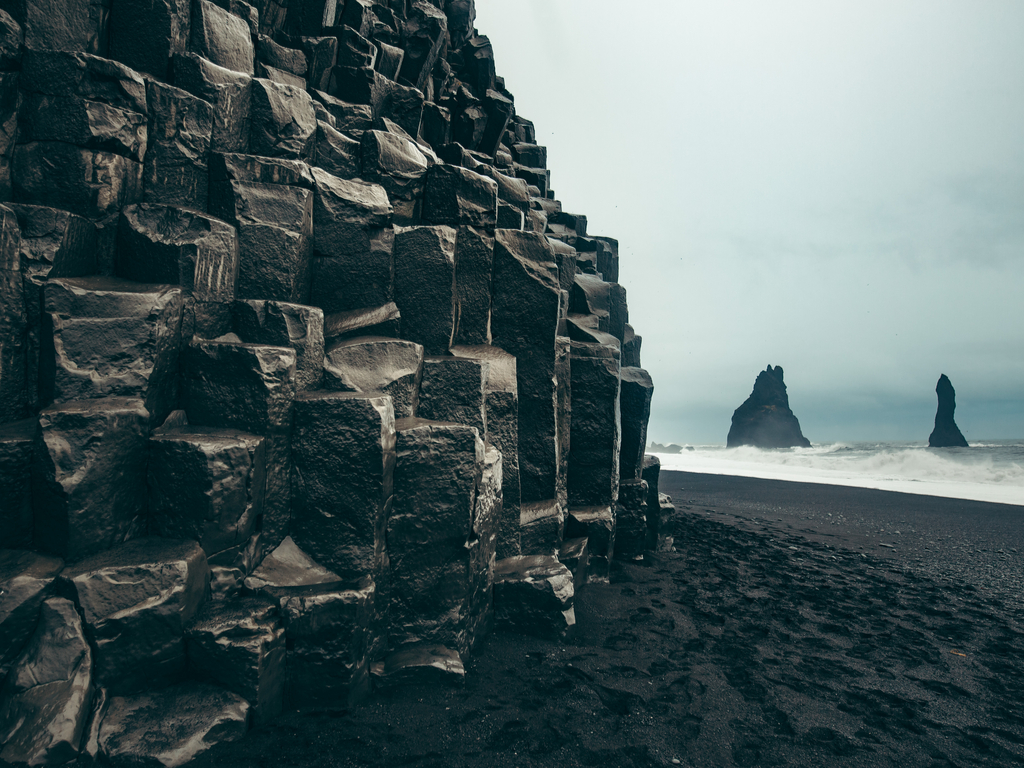
The iconic Reynisdrangar sea stacks seen from the Black Beach of Vik, creating a dramatic and picturesque scene

The black sand beach of Vik is the stupendous creation of nature. With the smooth black sand along the sea coast, the mesmerizing, powerful, beautiful, and magical beaches will be classic. The popular arctic country with the most amazing beaches and the mind-blowing environment makes the trip of the black sand beach Vik Iceland memorable.

The cold breeze, clear water, dark-beauty beaches, and the splendid sky above create a paradise in Iceland.

Where is the Vik black sand beach?

The alluring Vik black sand beach is located Iceland’s south coast, about 2.5 hours away from Reykjavik. Located by the beautiful small town of Vik I Myrdal, this beach is no less than a paradise.

The sparkling black sand, large basalt columns and turquoise blue sea is home to the spectacular biodiversity and various nesting birds. The exclusive home of puffins, guillemots, and fulmars is just mesmerizing and pleasant.

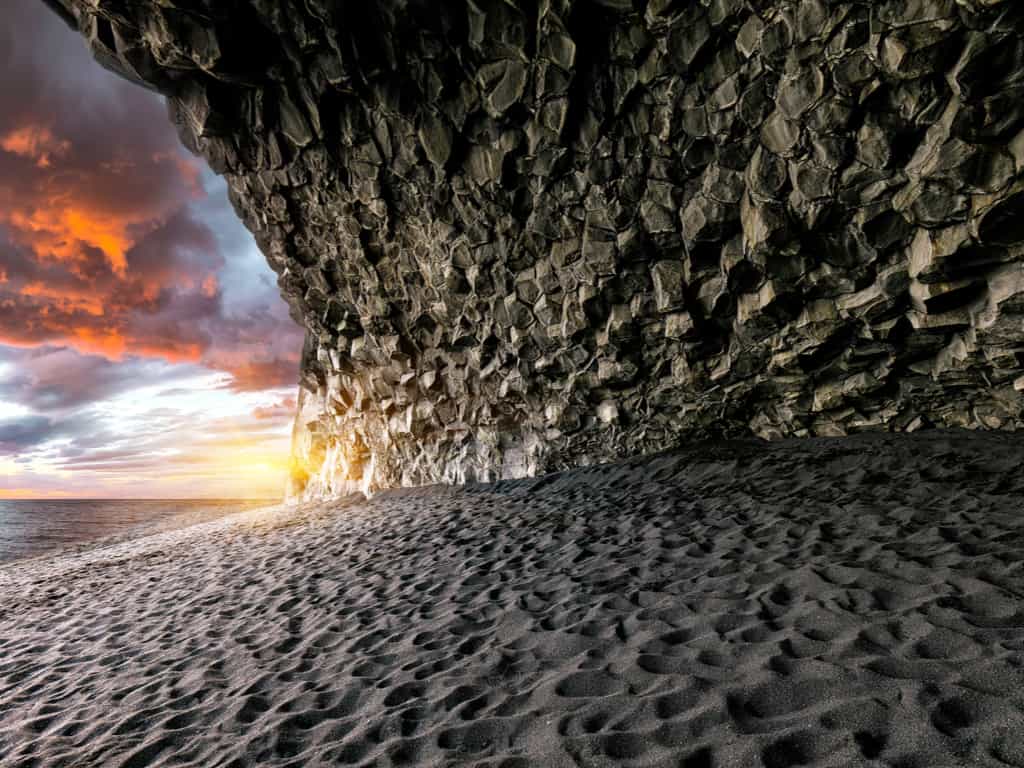
Sunset over the Black Beach of Vik, with the sky and sea reflecting a kaleidoscope of colors
Enjoy a breathtaking sunset at Vik’s Black Beach, where the sky and sea unite in a display of vibrant colors in Iceland

What is the best time to visit Vik black sand beach?

With the natural beauty scattered everywhere and the soothing environment, the black sand beach is breathtaking. With the beauty of cool Iceland and the most dramatic landscapes right from the phenomenal volcanoes to cascading waterfalls, breathtaking ice caves, and mystical mountains, the place is awe-interesting.

Visiting this white fairyland of ice and black sand is incredible throughout the year. The best time for the Black beach of Vik is between 2-5 PM during the day.

The rugged coastline and natural arches near Vik's Black Beach, highlighting Iceland's dramatic coastal scenery
Explore the rugged coastline and natural arches near Vik’s Black Beach, a journey through Iceland’s spectacular landscapes.

What types of rocks is the Vik black sand beach made of?

The dark-beauty of nature is alluring and soothing. The volcanic rocks formed after the lava condensed at this place makes it even more beautiful. When the rock starts to get worn, the tiny pebbles are formed. The sparkling turquoise sea, black sand, and crystal clear ice reflecting the rainbow lights create the image of the paradise at the Black beach of Vik.

The iconic Reynisdrangar sea stacks seen from the Black Beach of Vik, creating a dramatic and picturesque scene
Witness the majestic Reynisdrangar sea stacks from Vik’s Black Beach, an iconic sight along Iceland’s coastline.

What to do at Vik black sand beach?

The marvelous and classic black sand beach is beautiful in all aspects. With so much to explore and travel, the black sand beach is alluring and phenomenal. With the beauty scattered all around this black sand beach is just thrilling. 

The best things to do here are:

  • Explore the black sand beach
  • Take a trip of the alluring caves
  • Visit the enormous cliff of Dryholey
  • Adore the Diamond Beach
  • Get amazed with the northern lights
  • Hike on the Glacier
  • Explore the Eldhraun Lava Fields
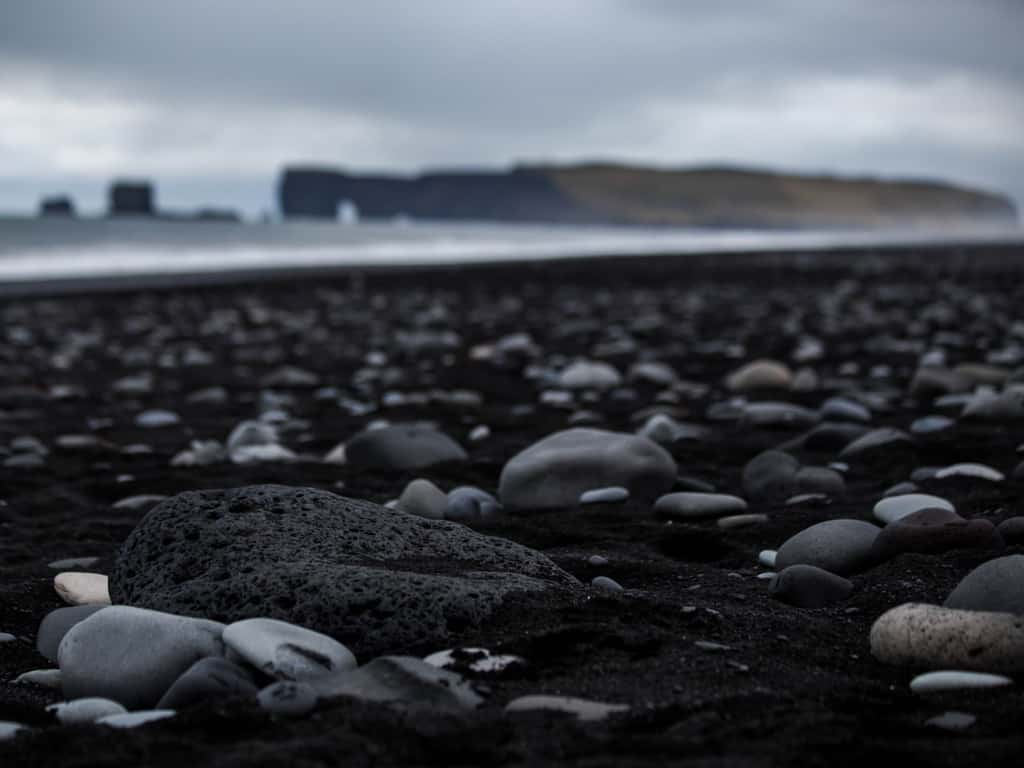
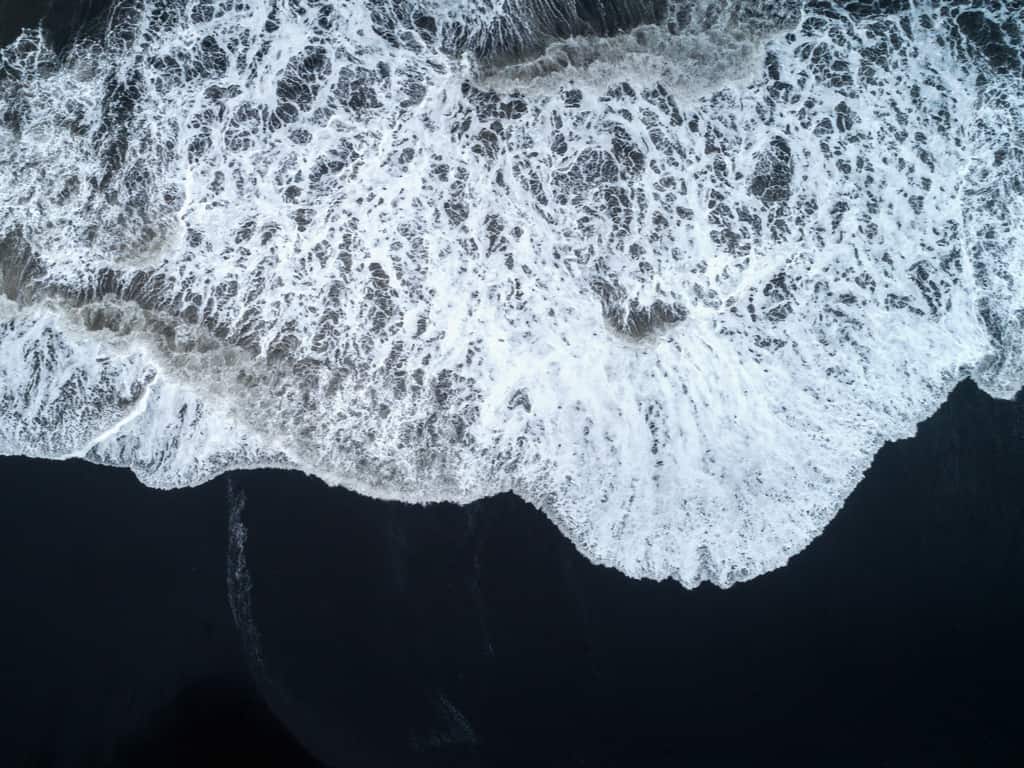
Stunning view of the black sand beach in Vik, Iceland, with its distinctive dark shoreline and powerful waves
Explore the unique beauty of Vik’s black sand beach, a natural wonder with its striking dark sands and dramatic waves in Iceland.

Where to stay in Vik black sand beach?

Spending time in the lap of nature at the black sand beach Vik Iceland is an awe-inspiring experience. The beauty of the sand and coolness of air creates magic at this place. The best places to stay at this glorious location which offer luxury are:

Black Beach Suites: The best and the modest hotel near the astounding beaches offers the polished stay studios free WiFi, and shared kitchen.

Vik Cottages: The stupefying collection of cottages with countryside views, a restaurant, and a gym.

The Barn: The well-settled line of dorms and private rooms in a warehouse-cum-chic hostel offering a bar, a kitchen, and Wi-Fi, the stay would be pre sheer luxury.

Vik Apartments: The budget-friendly apartments with kitchens, living rooms, and countryside views, topped with high-speed Wi-Fi. 

Hotel Kria: The luxurious and modern hotel blended with the authentic Iceland kitchen, and a bar with the free breakfast accompanied by an adoring view of the northern lights, this is amazingly cozy.

The beauty of the sand mixed with the calmness of the sea and cool breeze creates an alluring and phenomenal picture at the Vik black sand beach. Visit this place to explore the untouched beauty of ice and water!

Plitvice Lakes National Park – Makes Croatia ‘Full of Life’

Early morning mist rising over the waterfalls and lakes of Plitvice, adding a mystical atmosphere to the park

Plitvice Lakes National Park is the crowning jewel of Croatia. The erstwhile chalk and limestone have been overflown with tumultuous waters over several years to create organic dams, Croatia waterfalls, and lakes. The coastline itself spans 1.778 kilometers and a whopping 1185 islands.

The natural beauty of the park is amplified by the surrounding forests that house exotic animals such as wolves and bears.

How to reach Plitvice Lakes National Park?

Here are a few routes that you can take to reach Plitvice Lakes, National Park:

From Zagreb to Plitvice Lakes: You can opt for a connecting bus from the terminal building at the Zagreb Airport to the Zagreb bus station. Take another bus from this station. You will reach Plitvice Lakes within three hours.

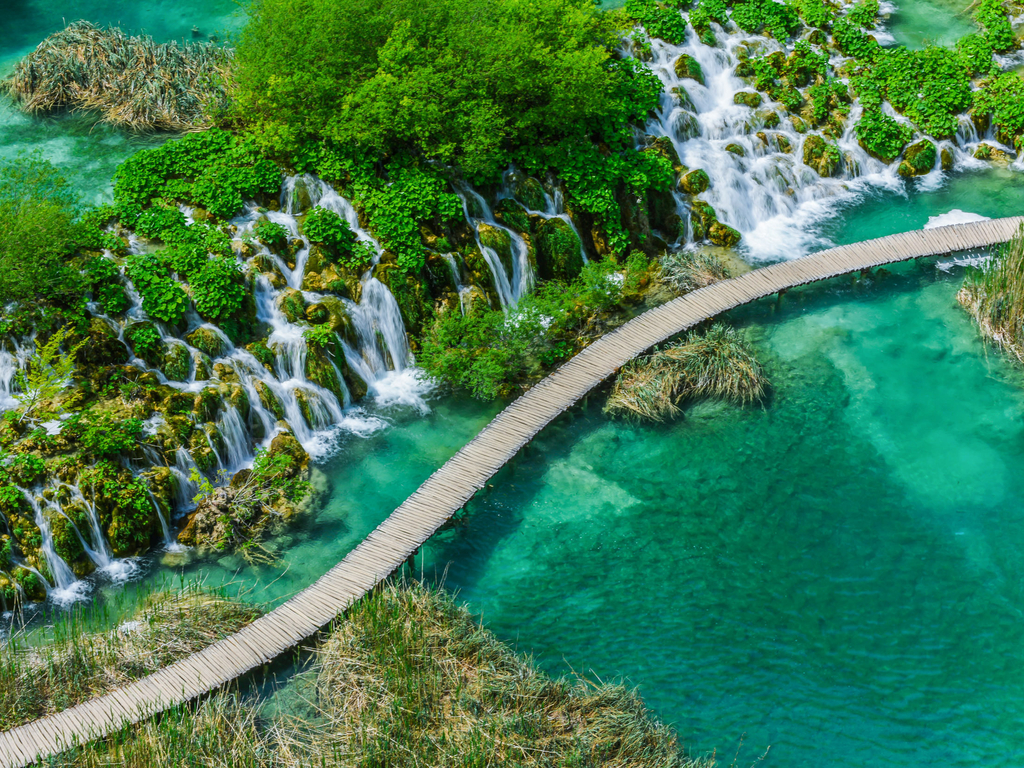
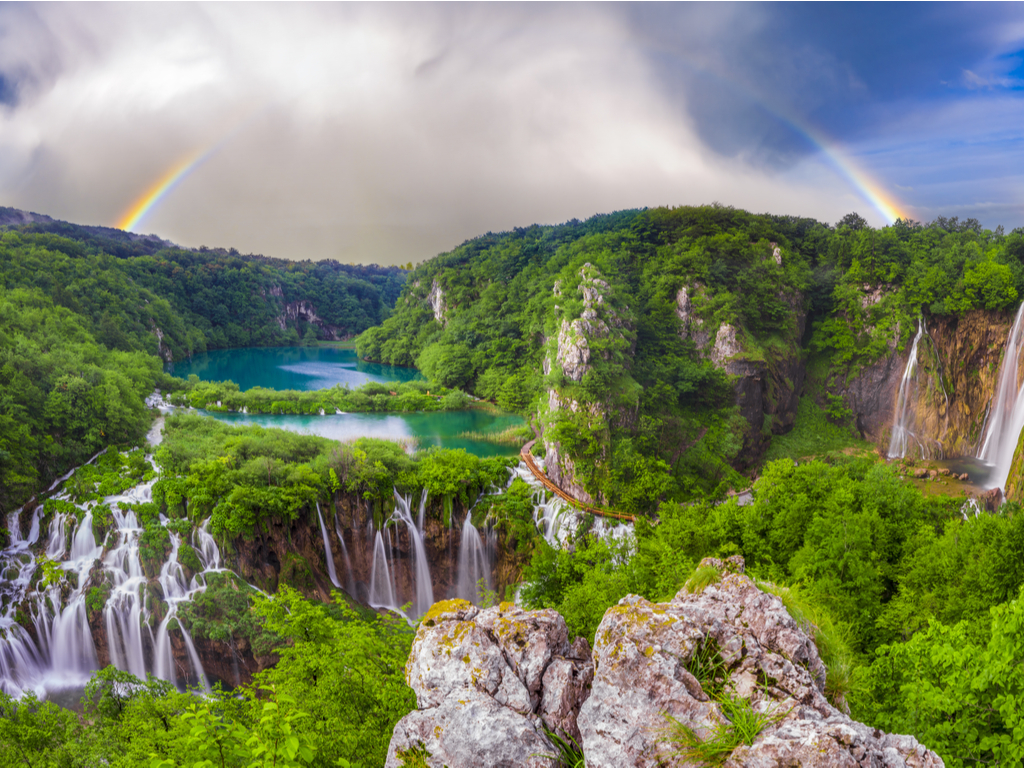
Panoramic view of the cascading waterfalls at Plitvice Lakes National Park, showcasing the park's lush greenery and pristine waters
Experience the majestic waterfalls of Plitvice Lakes National Park, a breathtaking natural wonder in Croatia.

From Split to Plitvice Lakes: Buses are the only modes of public transport from Split to Plitvice Lakes. You can also sign up for the organized day tours to reach the Croatia National Park. It will take around four hours to reach Plitvice Lakes from Split through the bus service.

From Zadar to Plitvice Lakes: Plitvice Lakes National Park is approximately 130 kilometers away from the Zadar Airport. You can take a connecting bus from this airport to Zadar Bus Station and then venture toward Plitvice by boarding a different bus. The entire journey spans two hours.

In case you are in any other part of Croatia and wish to visit the Plitvice Lakes, you may board a bus to any of the three locations mentioned above and take another bus once you reach there.

Early morning mist rising over the waterfalls and lakes of Plitvice, adding a mystical atmosphere to the park
Witness the enchanting morning mist at Plitvice Lakes, a magical start to any day in this Croatian paradise.

When to visit Plitvice Lakes National Park?

Our recommendation will be to visit this Croatia National Park between June and September. There’s a significant influx of tourists between July and August and during the morning hours. The scenery is picturesque and the crowds are sparse from 7 a.m. onwards so you should seriously consider exploring this part during this tranquil time.

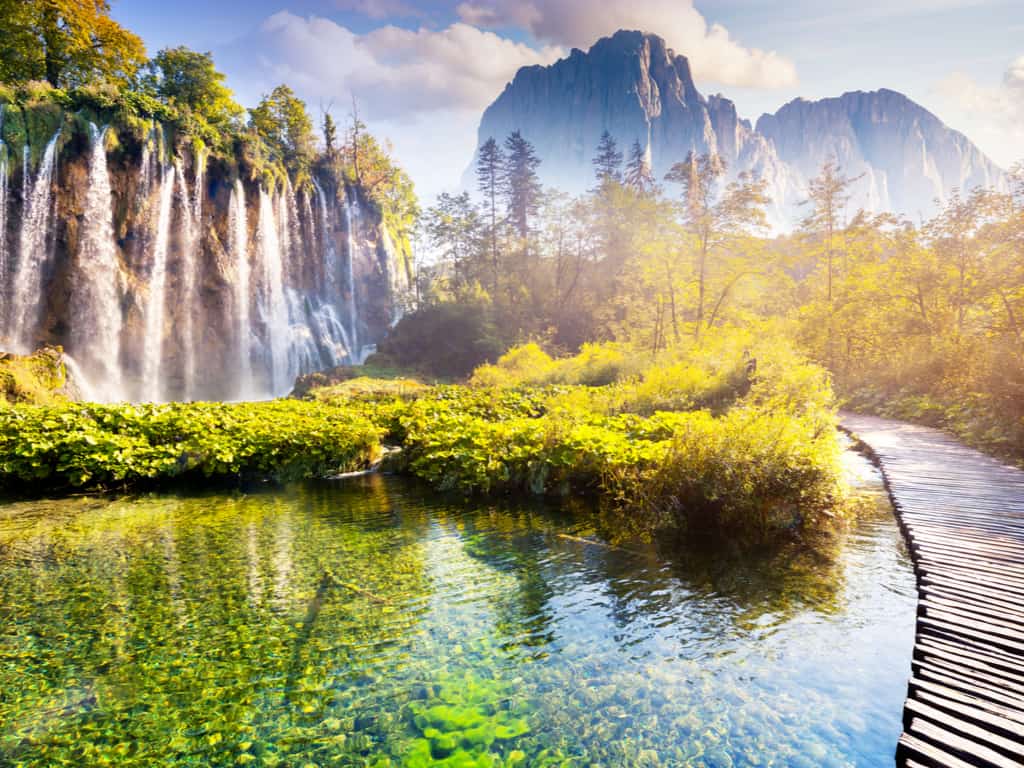
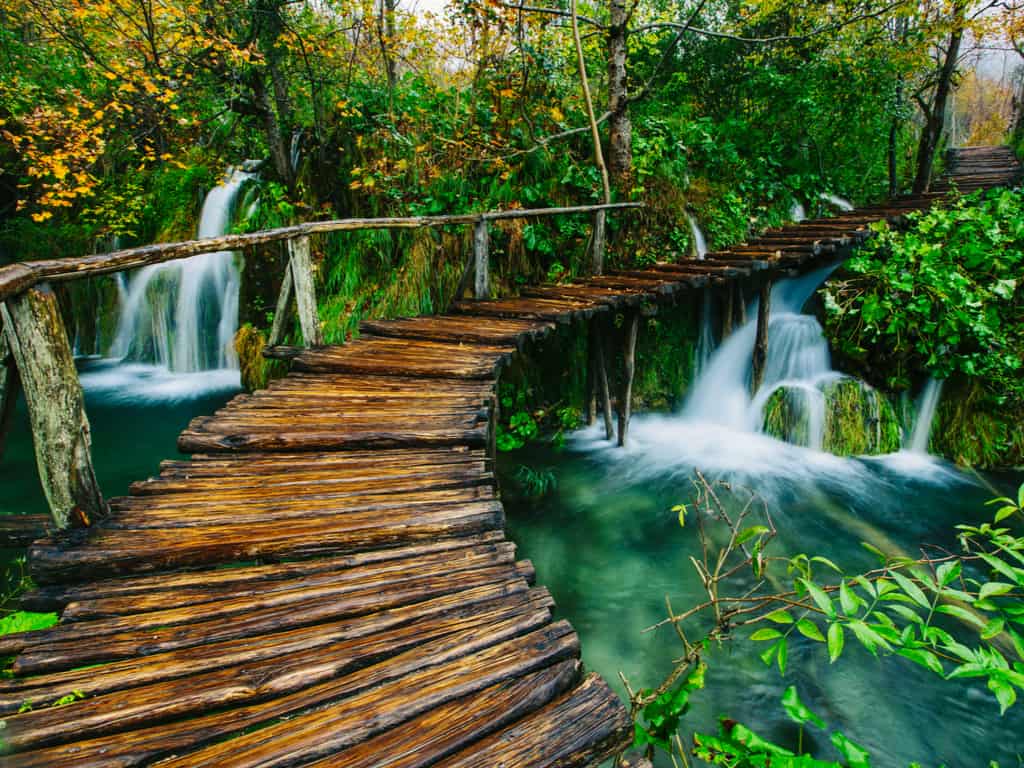
Wooden walkway winding through the scenic landscape of Plitvice Lakes National Park, offering an immersive nature experience
Stroll along the charming wooden paths of Plitvice Lakes National Park for an up-close encounter with Croatia’s natural beauty.

However, don’t let this restrict you. There’s a seasonal perk to visiting this during all seasons – the beauty of the peak of the waterfalls during spring as the water levels increase. On the other hand, fall showcase the wondrously changing colors of nature while winter allows visitors a look at the frozen lakes and the winter wonderland in general.

What should you visit when come to Plitvice Lakes National Park?

It lives up to its status as a UNESCO World Heritage site. The park comprises around 90 waterfalls, lakes that date back to thousands of years, and a diverse ecosystem with different varieties of flora and fauna.

Plitvice is a great place for adventure lovers. You can go hiking on the mountains or forest trails, opt for horse riding or kayaking, or just book a buggy ride.

You can fit in a trip to Smiljan, which is the birthplace of Nikola Tesla, and houses a museum with his mementos. It is only 65 kilometers away, so the opportunity is ripe!

Crystal-clear turquoise waters of the Plitvice Lakes surrounded by dense forest, reflecting the serene beauty of the park
Discover the tranquil turquoise waters of Plitvice Lakes, nestled in the heart of Croatia’s lush forests.

If you wish to kick things up a notch and visit a unique tourist destination that puts you at peace, Plitvice Lakes is the place to be!

Salar de Uyuni – Find yourself in the World’s Largest Mirror

Expansive view of the Salar de Uyuni salt flats in Bolivia, showcasing the vast, white landscape under a clear blue sky

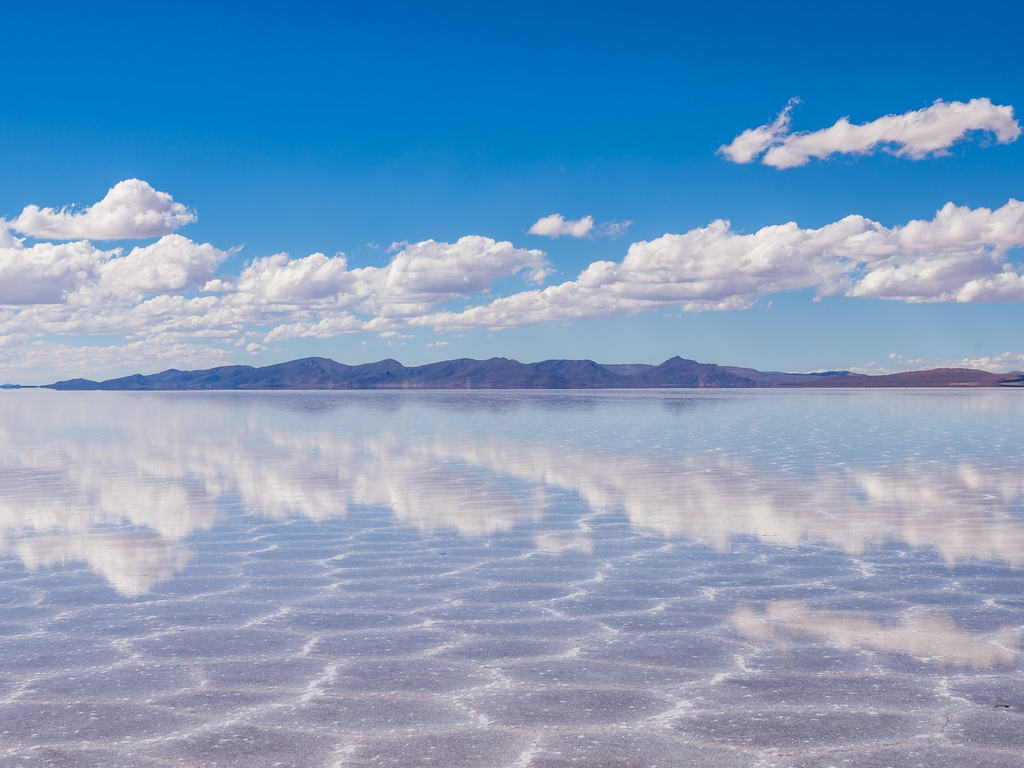
Nature can do things that sometimes Photoshop can’t – Salar de Uyuni in Bolivia is the perfect example. It is probably the world’s largest mirror, and the best part about this ‘mirror’ is that it is entirely natural.

Where is the flattest place on Earth?

Salar de Uyuni or Uyuni salt flat is the world’s largest salt flat. It extends to a massive 11,000 square kilometers, located in Bolivia, South America. It is a huge flat piece of land covered with layers and layers of salt, which manifests itself as polygonal patterns on the surface when there is no water. All this is a remnant of a prehistoric lake, which gradually dried up. It is located at a shocking 12,000 feet above the sea level.

Expansive view of the Salar de Uyuni salt flats in Bolivia, showcasing the vast, white landscape under a clear blue sky
Experience the breathtaking expanse of Salar de Uyuni, the world’s largest salt flat in Bolivia.

What is the best time to visit the flattest place on earth?

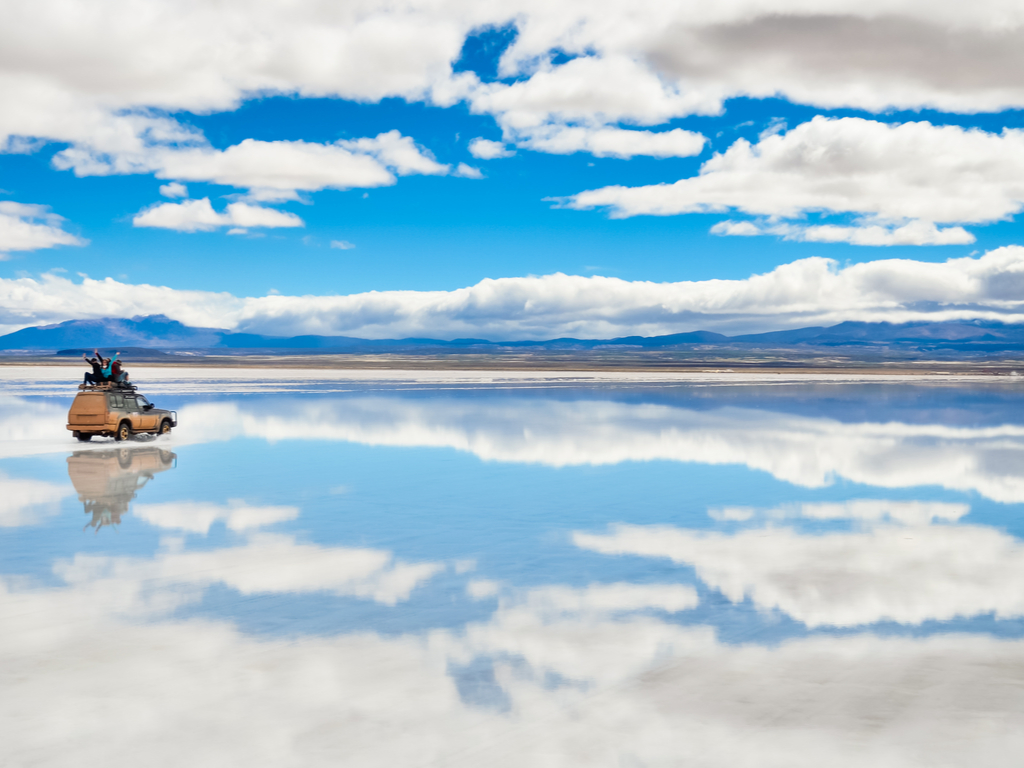
This incredible mirror phenomenon is only visible after rains. So you should be lucky enough to experience it if you come between January and March, that is, the wet season in Bolivia.

How to get to Salar de Uyuni in Bolivia?

There are many possible paths, as this salt flat in Bolivia shares borders with both Chile and Argentina. The most commonly followed route is from Uyuni, Bolivia. You just need to book a Salar de Uyuni tour, which is mostly a one-day trip.
But the best location to start off is from Tupiza, Bolivia. It is a four day trip by a tour operator, Salar de Uyuni, being the final destination.

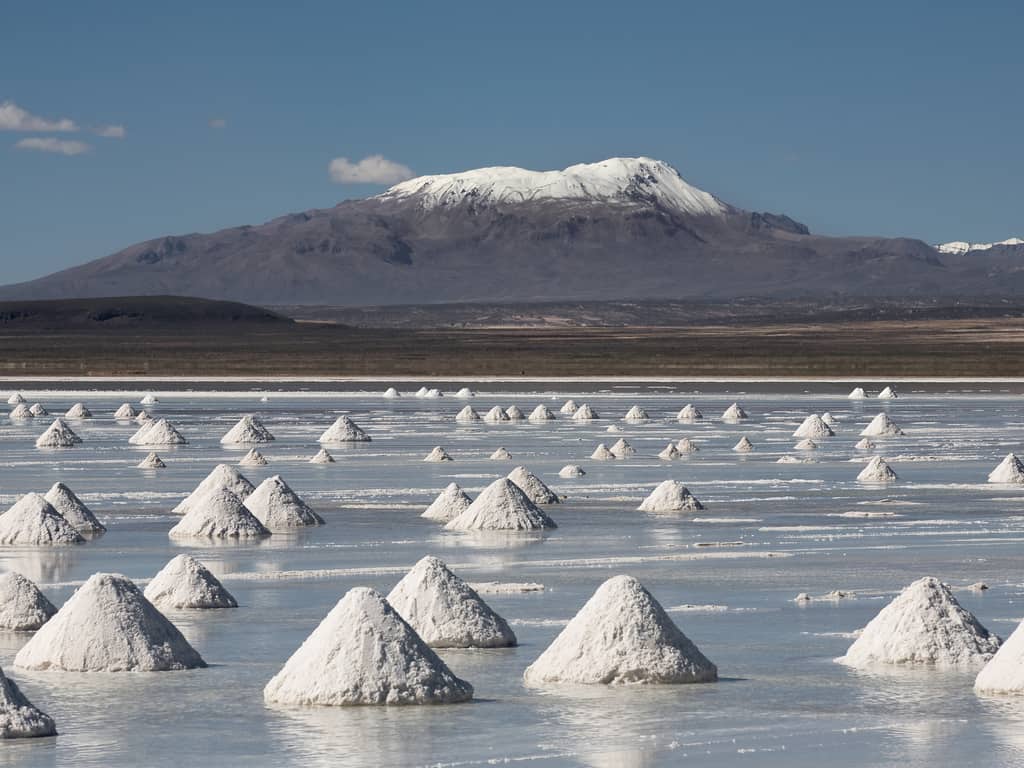
Traditional salt harvesting in progress at Salar de Uyuni, showcasing the local culture and industry
Discover the traditional art of salt harvesting at Salar de Uyuni, a unique aspect of Bolivian culture.

Important information about Salar de Uyuni tours

Salt flats are indeed the most popular of the Bolivia attractions. Instead of indulging in only the Uyuni salt flats, it is recommended to arrange the other incredible Bolivia attractions along with it. They include volcanoes, caves, geysers, hot springs, lakes, deserts etc. and need a minimum of three days to explore. Scheduled tours are always available to drive you through all these places.

Depending upon your budget, you may choose between a shared tour or a private tour. Private Uyuni salt flat tours are better and flexible as they come with a customizable itinerary and English speaking drivers. Also, you get what you pay for, so don’t indulge in any kind of cheap deals out there as it may lead to you getting a drunk driver and/or a damaged car.

At such challenging venues, these setbacks are not only inconvenient but also can endanger one’s life. So make sure you do your research before booking a particular Uyuni Salt Flat tour.

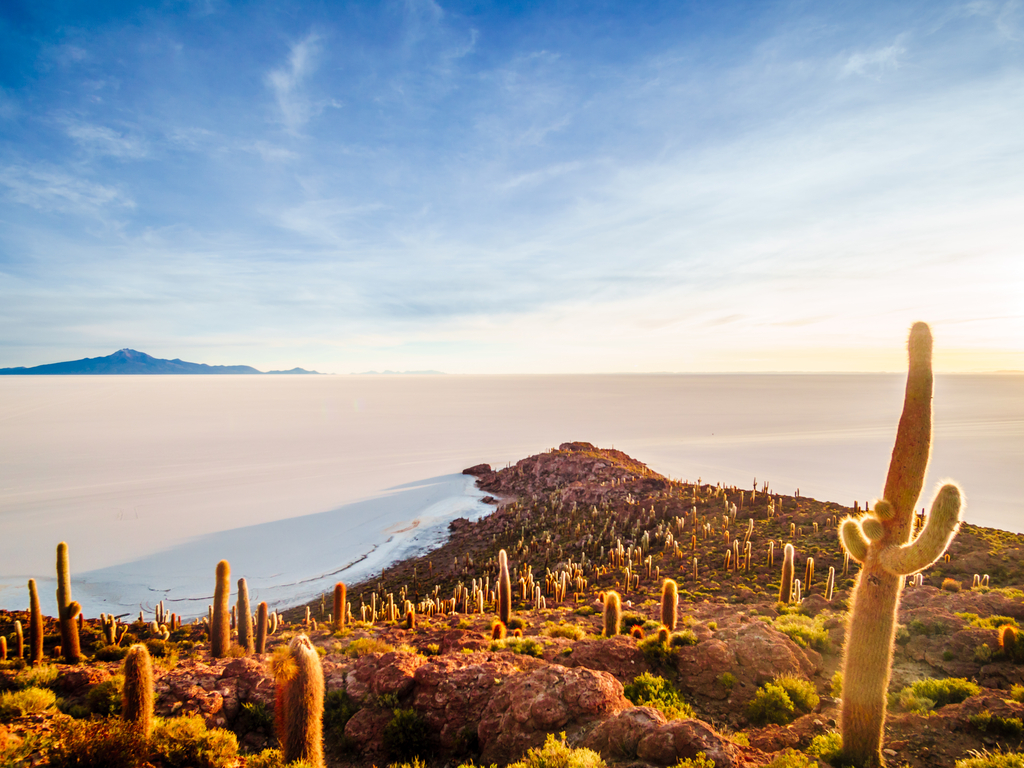
The mirror effect is totally unbelievable. You must as well visit the Incahuasi Island, which is located in the middle of the prehistoric lake. Make sure you carry all your essentials, as this trip is way more difficult than it seems. Illusions related to distance, altitude sickness, etc. are fairly common.

The picturesque Isla Incahuasi, an oasis of cacti and rock formations in the midst of Salar de Uyuni
Explore Isla Incahuasi, an island of cacti and ancient rocks amidst the salt flats of Salar de Uyuni.

Where to stay near Salar de Uyuni, Bolivia?

Several hotels in Uyuni are completely made of salt- The wall, floor, staircase, furniture, including beds! Staying in these is a once in a lifetime experience. Below are a few recommendations:

  • Hotel de Sal Cristal Samana
  • Casa de Sal – Salt Hotel
  • Hotel Boutique Atipax
  • Hotel Palacio de Sal
stunning mirror effect of Salar de Uyuni's wet season
Capture the stunning mirror effect of Salar de Uyuni’s wet season, a photographer’s dream in Bolivia

Okavango Delta – See the gorgeous Inland Delta of Botswana

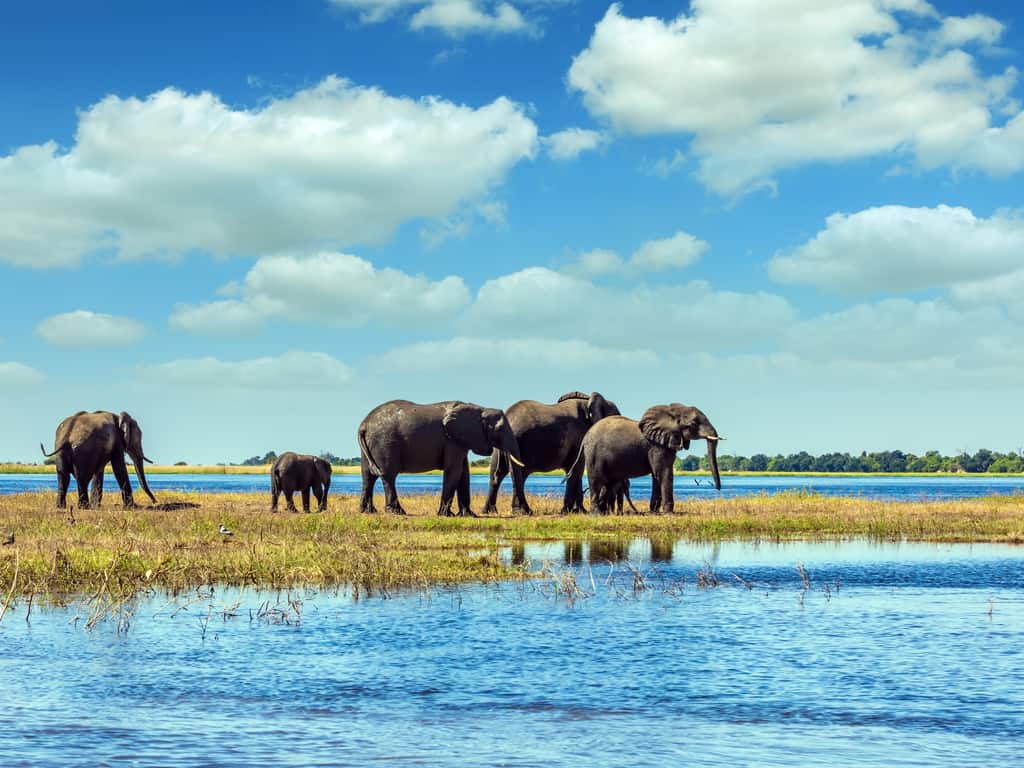
Elephants bathing in the clear waters of the Okavango Delta, exemplifying the region's rich wildlife

When UNESCO qualified Okavango Delta as the 1000th World Heritage site, the world truly took notice. This prominent wildlife location was catapulted to overnight popularity in 2014. In northern Botswana, this delta originates out of the Okavango River and spans over 15.000 square kilometers of the Kalahari Desert.

Okavango Delta, Botswana has slowly but steadily climbed the charts to be the location of African lodges and camps due to the adventure activities that it offers.

Where is the Okavango Delta to find on a map?

This Delta is naturally formed in the area of Botswana where the Okavango African river creates a tectonic trough in Kalahari’s endorheic basin. It is believed that the Delta constitutes a part of what used to be Lake Makgadikgadi, a lake from which all water had evaporated in the early Holocene era.

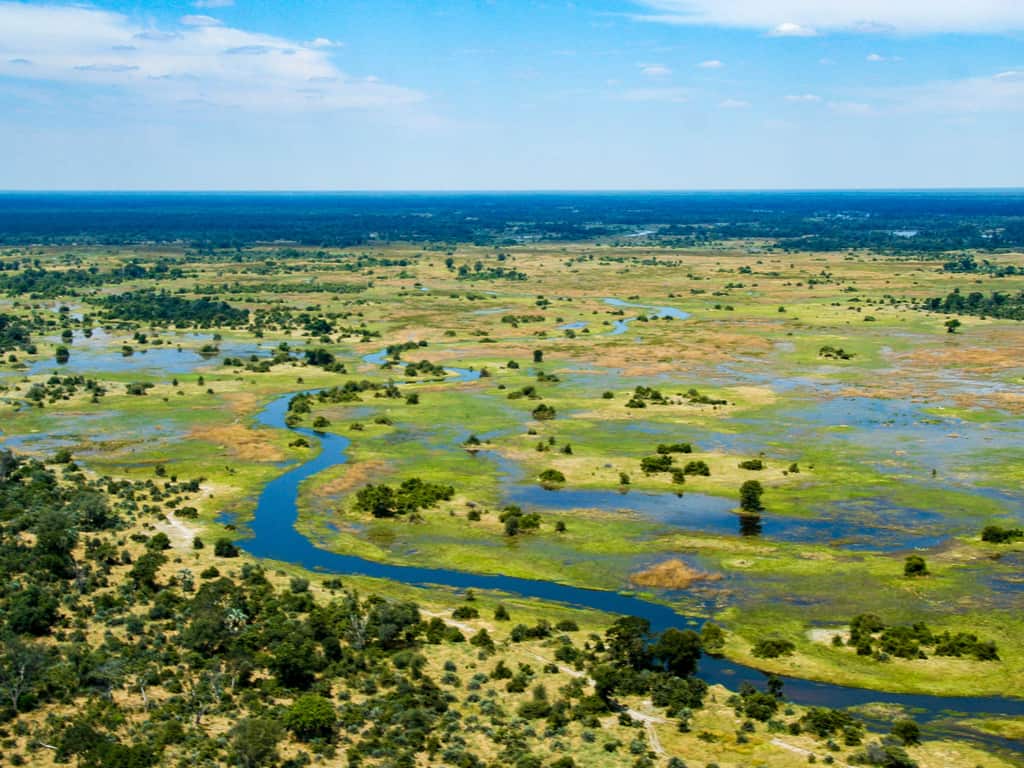
Aerial view of the Okavango Delta in Botswana, showcasing its vast, intricate network of waterways and lush greenery
Explore the breathtaking aerial perspective of the Okavango Delta, a gem of Botswana’s natural landscape.

What is so unique about Okavango Delta?

Okavango Delta is one of the few inland deltas on Earth. It is exceptionally unique because the Okavango River discharges water to open land, unlike other deltas that empty into an ocean.

This African river floods the savanna with 11 * 1013 liters of water on average, thereby creating an inland delta that is always changing. Seasonal flooding, therefore, is often witnessed from March to June.

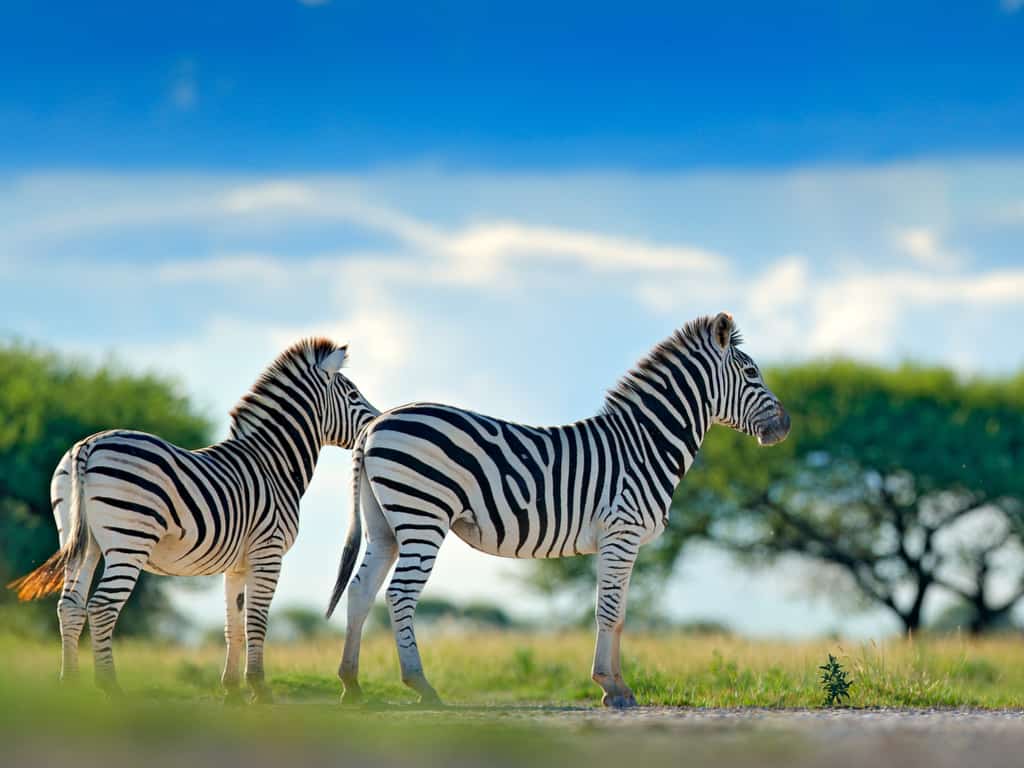
Consequently, small islands are formed and the Chief’s Island becomes more prominently visible. This African delta has single-handedly made Botswana water safaris a reality. It is also known for the diverse wildlife, including 530 bird species, giraffes, elephants, hyenas, buffaloes, leopards, crocodiles, zebras, and antelopes.

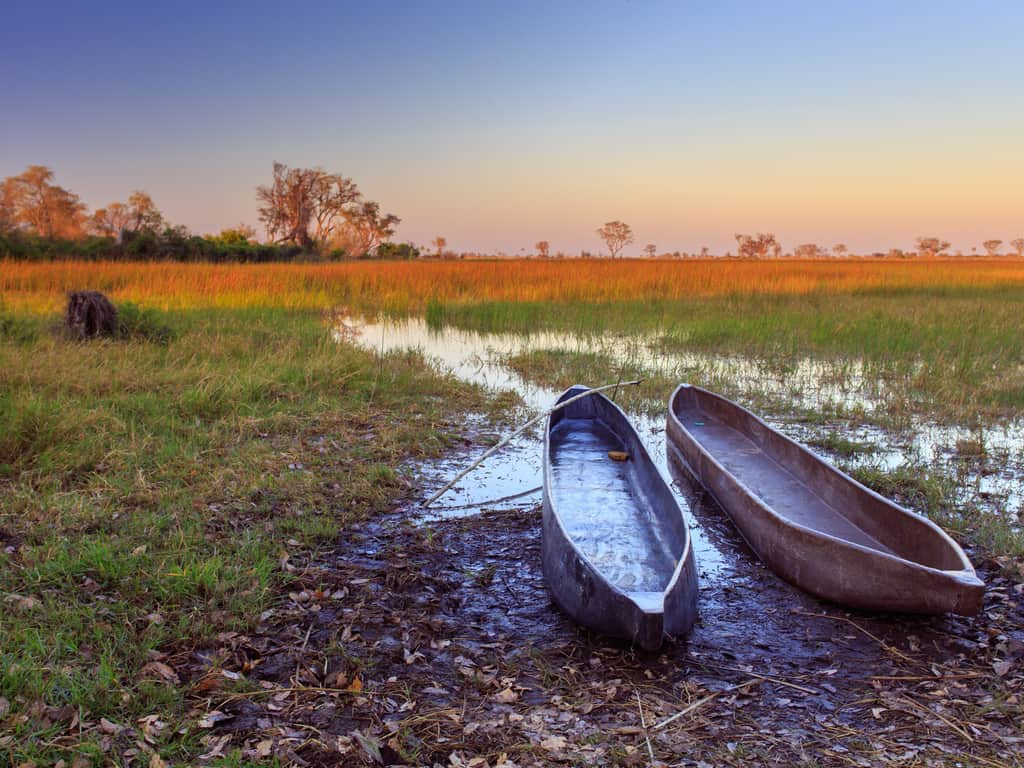
"Local guide leading a walking safari in the Okavango Delta, offering an up-close experience with nature
Join a guided walking safari in the Okavango Delta for an unforgettable encounter with Botswana’s wilderness.

How to get to Okavango Delta?

You can reach the Okavango Delta in Botswana by opting for flight service. There are airstrips located just a few minutes away from the Kasane and Maun airports. These flights are often included with tours that also incorporate overnight stay in a hotel. You can also opt for inter-camp air transfer or charter flights. Most of these flights cover the entire journey within one hour at a maximum.

Elephants bathing in the clear waters of the Okavango Delta, exemplifying the region's rich wildlife
Witness the majestic elephants enjoying the pristine waters of the Okavango Delta, a haven for wildlife enthusiasts.

What is the best time to visit Okavango Delta?

Okavango Delta allures tourists with its diverse attractions throughout the year. However, the best time to visit this delta in Botswana is during the dry season, that is, from June to September. This is because you will be able to spot wildlife easily while you are on a Botswana safari due to the lesser vegetation. Furthermore, the mosquito population retreats during this time, thereby paving the path for bright and clear skies.

Sunset over the Okavango Delta, with the sky painted in vibrant hues, reflecting in the water
Experience the stunning sunsets of the Okavango Delta, where the sky meets the water in a spectacular display.

Where to stay in Okavango Delta?

We recommend the following hotels and lodges for accommodation when visiting Okavango:

  • Crocodile Camp Safari & Spa
  • Okavango Hidden Gems
  • Jumbo Junction Camp
  • Maun Lodge
  • Laha Hotel.

You might want to avoid visiting Okavango Delta Botswana during the months of January and February, which comprise the wet season peak.

Botswana is oriented toward protecting the thriving ecosystem of the Okavango Delta to ensure its relevance in the future. Even the walking, riding and photographic safaris are uniquely crafted for the tourists’ pleasure.

Japan in Cherry Blossom Season – Celebrate Life

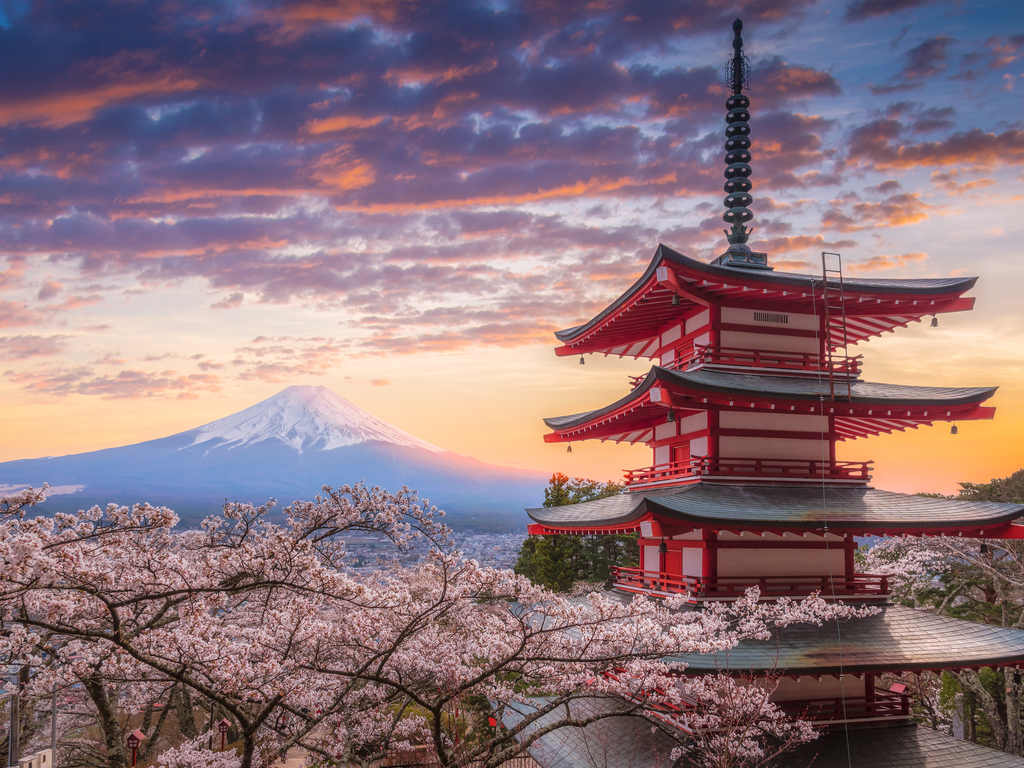
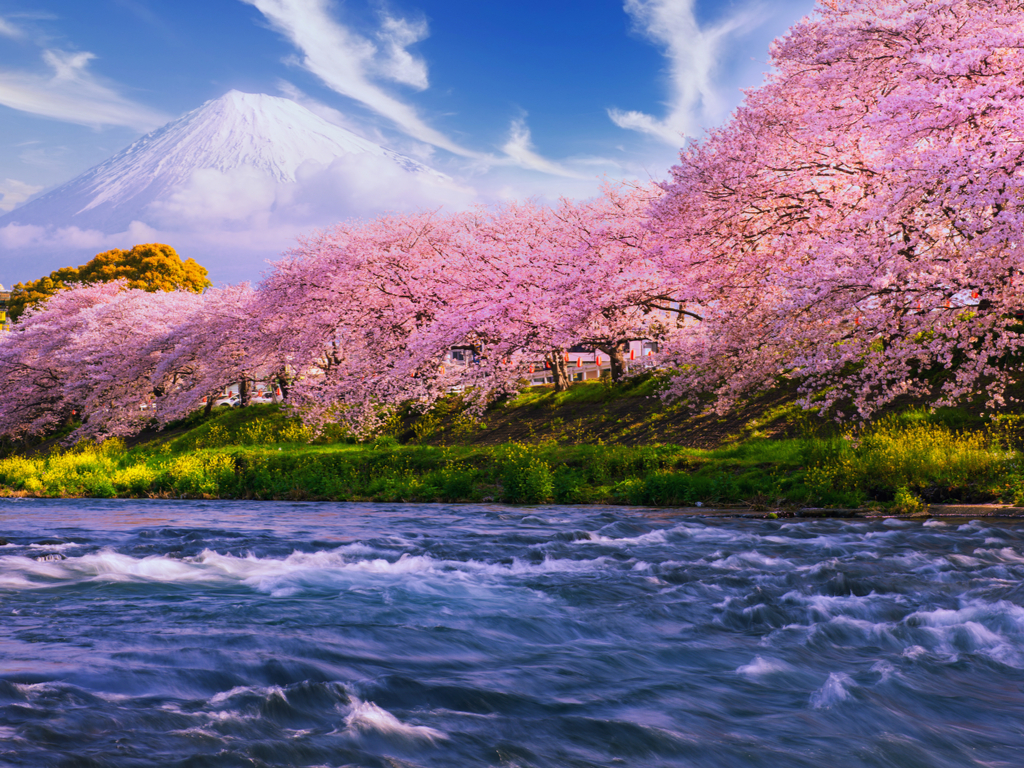
Scenic view of Mount Fuji framed by cherry blossoms, symbolizing the picturesque harmony of Japan's nature

Japan in Cherry Blossom Season is bliss to eyes and soul. The shades of pink scattered on the trees welcome the warm season. Sakura, the welcoming of the spring is celebrated by going out for a picnic and spending time with family. The time is cherished for viewing beautiful flowers or Hanami.

Springtime in Japan is undoubtedly the prettiest period. The icy winds of the winter turn to the cool breeze of summer, the clouds are full of flowers pink hue, and all these are celebrated by Japan Cherry Blossom Festival.

Here is a detailed trip guide along with some amazing facts of Japan during the Cherry Blossom Festival. Keep reading to find out more!

Why do Japanese celebrate Cherry Blossom Season?

Japan in the Cherry Blossom Season is sheer beauty. The shades of pink fill the skies of Japan, and the beauty of flowers are scattered everywhere. The delicate and fragile flowers, the romantic weather, and the perfect background to click pictures, make the period just mesmerizing and breathtaking, perhaps a perfect environment for a romantic date.

The Japanese celebrate the beauty and fragility of life during cherry blossom. The land of Japan during the Cherry Blossom Season is rejuvenated, and the Japanese celebrate this new life by celebrating Japan Cherry Blossom Festival.

Crowds enjoying Hanami, the cherry blossom viewing festival, in a vibrant park setting in Japan
Join in the joyful celebration of Hanami, Japan’s cherished cherry blossom viewing tradition.

When is the Cherry Blossom season in Japan?

March to May is a blooming period of cherry blossoms. When the climate is soothing, the breeze is cool, and the temperate is warm, the beautiful pink, red and orange flowers start blooming and spreading love. Japan in Cherry Blossom Season is perfect for everything. The Cherry Blossom makes the paths look like a dreamland with the flowers above head and flowers scattered everywhere.

Enjoying the mouth-watering home-cooked food while watching the Cherry Blossom with family is no less than a joy. So, try to visit Japan between March to May to attend the mesmerizing and perfectly beautiful Japan Cherry Blossom Festival.

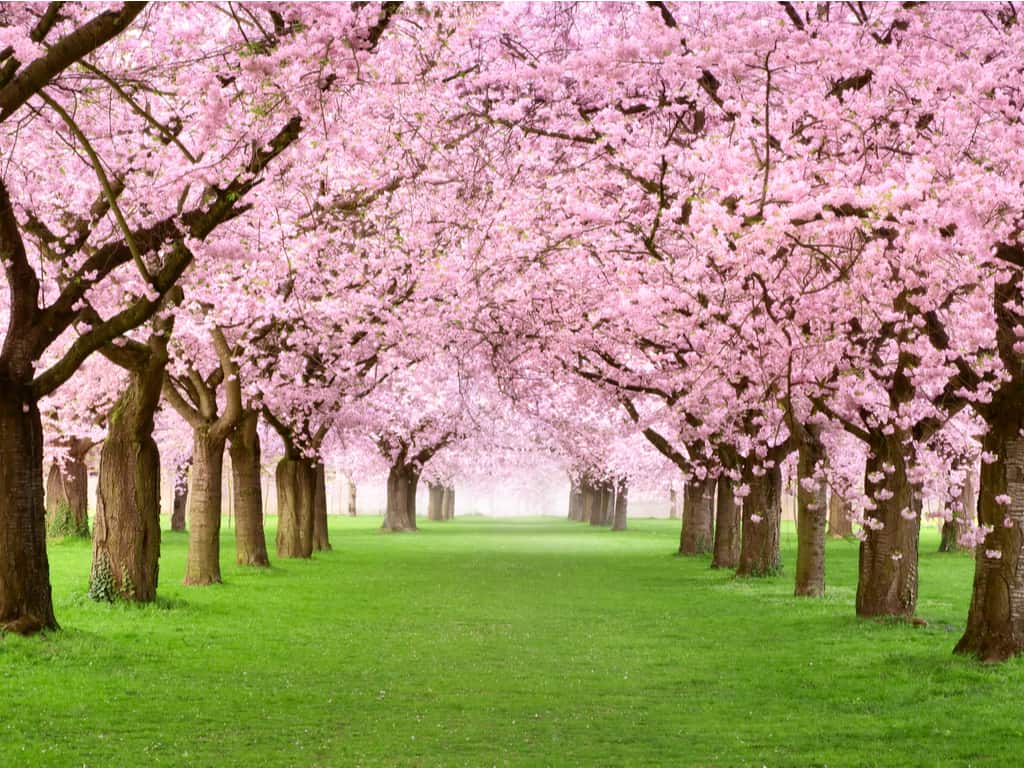
Cherry blossoms in full bloom creating a picturesque pink canopy, typical of Japan's cherry blossom season
Embrace the stunning beauty of cherry blossoms in full bloom, a hallmark of spring in Japan.

How long is the Cherry Blossom season in Japan?

Japan during Cherry Blossom Festival turns to the land painted with shades of pink. Imagine going to cities like Tokyo, Osaka, Hiroshima, Sapporo, and finding the beautiful, delicate, and sweet pink flowers on the trees and in the skies welcoming you. This would be just bliss and fairytale-like.

Japan in Cherry Blossom Season in soothing to the soul, and to capture all the beauty at once is hard, but the period is short-lived for 10-14 days. The period is not spread all-over the spring, but a small part of it. So, plan your calendar according to Sakura dates and enjoy the beauty of nature.

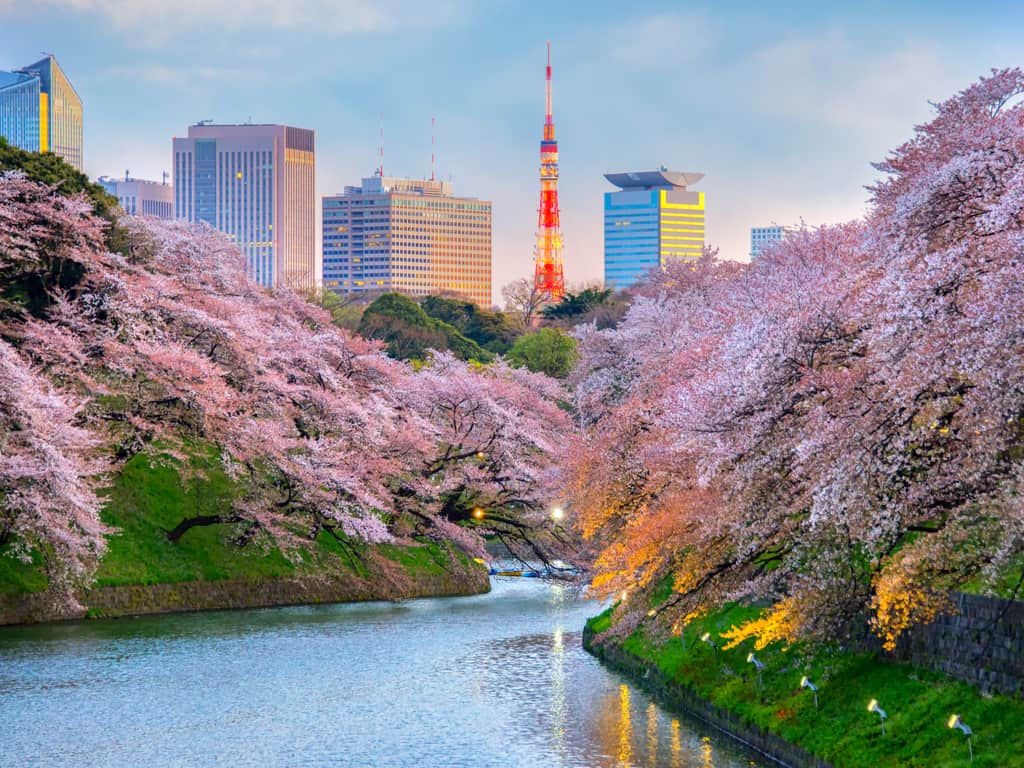
Breathtaking view of cherry blossoms in full bloom along the Meguro River in Tokyo, Japan, during cherry blossom season
Experience the stunning cherry blossom season along Tokyo’s Meguro River, a quintessential Japanese spring sight.

The dates to visit some of the prominent cities of Japan during cherry blossom season are:

  • Tokyo – March 16 to 24
  • Sapporo – May 1 to 7
  • Osaka – March 23 to 31
  • Hiroshima – March 20 to 30
  • Nagano – April 5 to 11

What is the symbolization of the Cherry Blossom Festival?

The Japan Cherry Blossom festival is all about celebrating beauty. The beautiful and fleeting cherry blossom fill the trees and skies, the weather turns romantic and warm, the scenic beauty is at its peak, and the life is blooming everywhere. The festival celebrates life.

Scenic view of Mount Fuji framed by cherry blossoms, symbolizing the picturesque harmony of Japan's nature
Marvel at Mount Fuji surrounded by delicate cherry blossoms, an iconic image of Japan in spring.

What you can do at the Cherry Blossom Festival?

Japan in Cherry Blossom season is welcoming, and people go around to click pictures. The official stalls of local street food are set to tickle your tastebuds. Though the festival is short, the delight of viewing flowers is unlimited.

Under the shade of Sakura and the smell of blossoms, the Japan Cherry Blossom festival is perfect. Embrace the flawless beauty of pink flowers under the pink sky and enjoy some hot snacks in the cool spring breeze, and just relax.

Once you know about the Japan Cherry Blossom Festival, it is time to mark your calendar and book a trip to celebrate life and beauty!

Angkor Wat – Discover the Wonder of Ancient Civilization

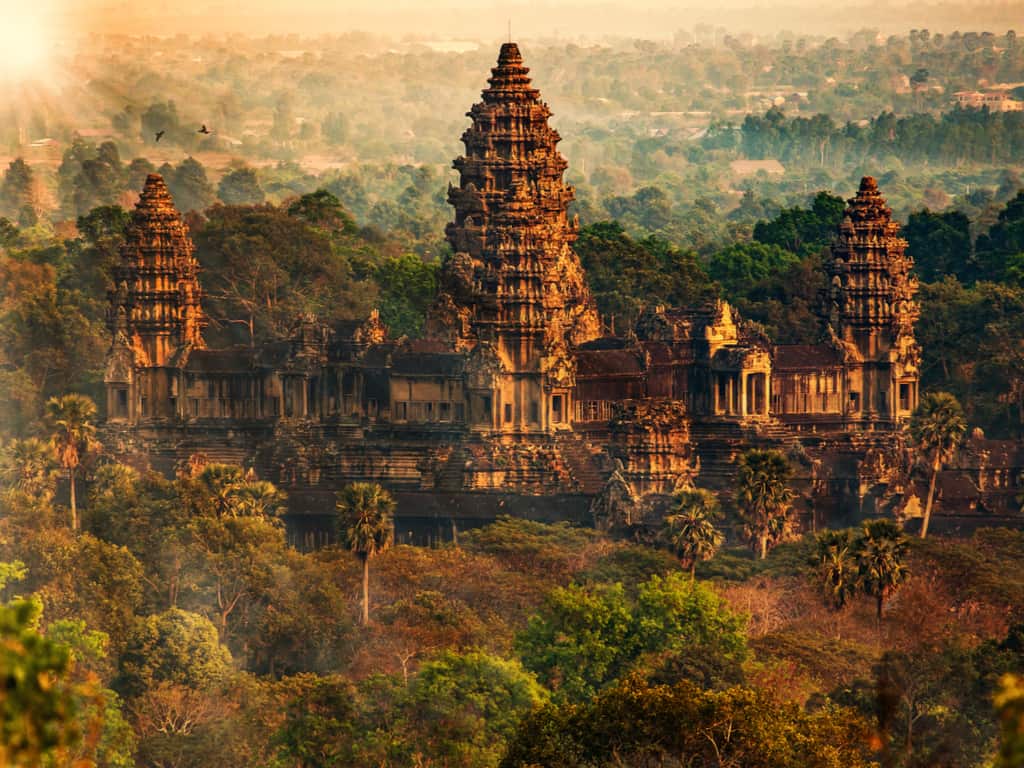
Aerial view of Angkor Wat Temple surrounded by lush greenery in Siem Reap, Cambodia, showcasing its vast scale and layout

The first rays of dawn crept over the treeline, painting the sky in shades of amber and rose. Before me, reflected perfectly in the still lotus pond, stood Angkor Wat—a silhouette so magnificent it seemed to belong more to myth than reality. In that moment, surrounded by hundreds of other travelers yet feeling completely alone with history, I understood why this place draws over two million visitors each year.

Angkor Wat isn’t just a temple. It’s a testament to human ambition, spiritual devotion, and artistic mastery that has endured for nearly a millennium.